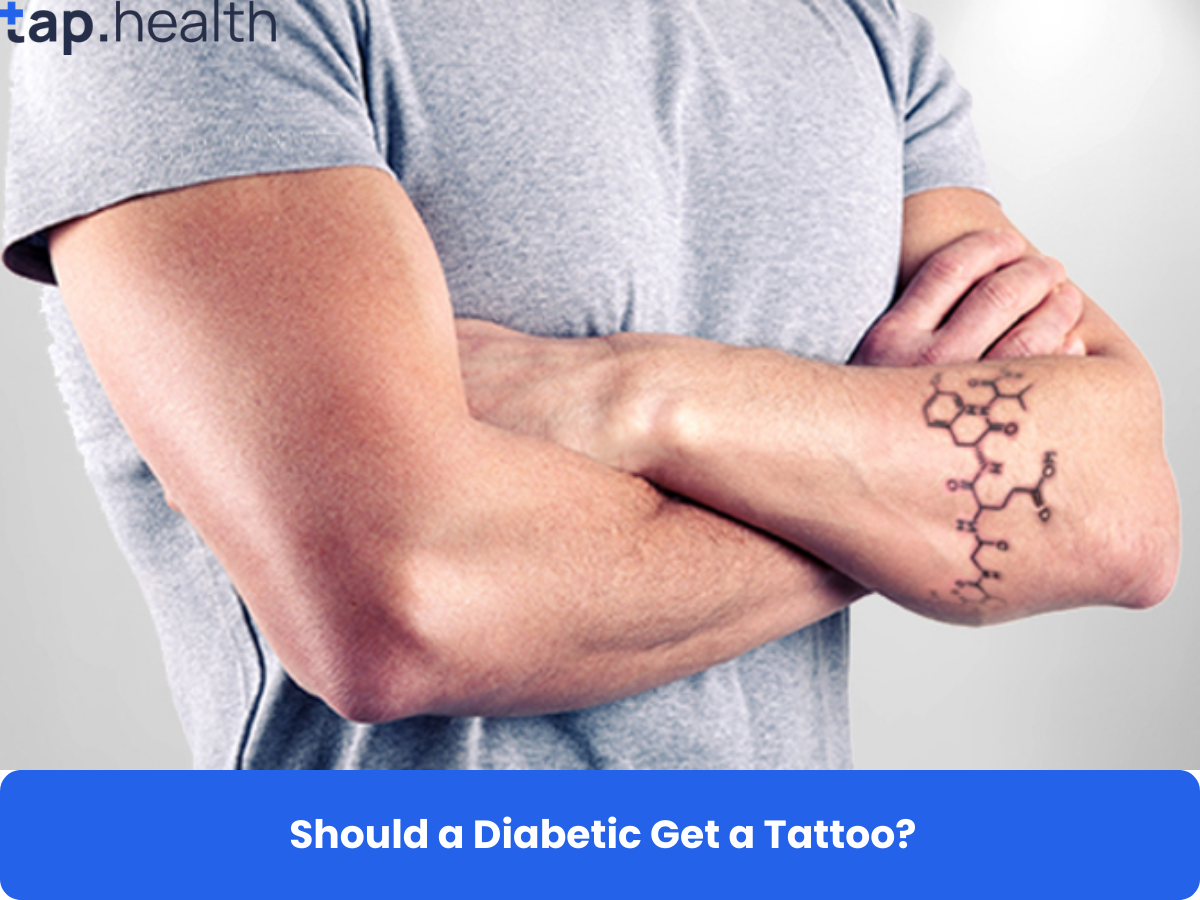
Tattoos are more than just ink on skin; they are a form of self-expression, memory, and art. Walk down any busy street in Mumbai or Delhi, and you will see people proudly displaying their ink. But if you are living with diabetes, the decision to get a tattoo is not just about choosing a design—it is a medical decision.
You might have heard conflicting advice. Some friends say, “No way, it’s too dangerous!” while others say, “My uncle has diabetes and he has full sleeves.” So, what is the reality?
If you are typing “Should a diabetic get a tattoo?” into your search bar, you are looking for a clear, honest answer. The short answer is: Yes, most diabetics can get a tattoo, but it comes with a big “Condition Apply” tag.
It is not as simple as walking into a studio and sitting in the chair. Your blood sugar levels, your choice of body part, and your healing ability play a massive role. This guide will uncover the behind truth of tattooing with diabetes, breaking down the science into simple, easy-to-understand language.
The Connection Between Diabetes and Your Skin
To understand the risks, we first need to look at how diabetes affects your body. Diabetes is not just about sugar; it is a condition that affects your blood circulation and your immune system.
When you get a tattoo, the artist uses a needle to puncture your skin thousands of times to deposit ink into the dermis (the second layer of skin). This is technically a wound. For a healthy person, this wound heals in a few weeks.
However, for a diabetic, two major things happen:
- High Blood Sugar Feeds Bacteria: If your glucose levels are high, your blood effectively becomes “sweet.” Bacteria love sugar. This increases the risk of the tattoo getting infected.
- Poor Circulation Slows Healing: High sugar levels over time can narrow your blood vessels. This means less oxygen and fewer nutrients reach the skin to repair the wound. A tattoo that takes two weeks to heal for someone else might take four or five weeks for you.
The Importance of HbA1c Levels
Before you even book an appointment, you need to look at your numbers. Your HbA1c level (which shows your average blood sugar over the last 3 months) is your “green light” or “red light.”
- The Green Zone: Most doctors suggest that if your A1C is under 7%, your body is likely healthy enough to handle the stress of a tattoo and heal properly.
- The Danger Zone: If your A1C is above 8% or 9%, your diabetes is considered “poorly controlled.” In this state, your immune system is weak. Getting a tattoo now is a gamble with your health. The risk of serious infection, gangrene, or a tattoo that refuses to heal is much higher.
Expert Tip: Do not hide your condition from your tattoo artist. A professional artist will appreciate your honesty and may ask for a doctor’s clearance if they know you are diabetic.
choosing the Right Spot: Where to Ink and Where to Skip?
Not all body parts are equal, especially for diabetics. The location of your tattoo can determine whether you heal perfectly or end up with a medical complication.
The “No-Go” Zones
You should strictly avoid areas with poor circulation or where you have nerve damage (neuropathy).
- Feet and Ankles: This is the most dangerous area. Diabetics often suffer from reduced blood flow to the feet. A tattoo here is very prone to infection and takes the longest to heal.
- Lower Legs (Shins): Similar to feet, the skin here is thin and circulation is slower.
- Insulin Injection Sites: Do not tattoo over areas where you frequently inject insulin (like the stomach or thighs). The scar tissue from the tattoo can affect how your body absorbs insulin.
The Safer Zones
Stick to areas where muscle is thicker and blood flow is strong.
- Arms (Biceps and Forearms): These areas usually have good circulation and are easy to keep clean.
- Chest and Back: These are generally safe spots, provided you can care for them properly.
The Risk of Infection: What You Need to Know
Infection is the biggest worry when answering “Should a diabetic get a tattoo?”. Because your white blood cells (the soldiers that fight infection) are slower when blood sugar is high, a minor infection can turn severe very quickly.
Signs of a tattoo infection include:
- Redness that spreads outward from the tattoo after the first few days.
- Skin feeling hot to the touch.
- Pus or yellow fluid oozing from the ink.
- Fever or chills.
If you see these signs, you cannot “wait and see.” You must visit a doctor immediately.
Diabetic Medical Alert Tattoos: A Growing Trend
Interestingly, many diabetics are now getting tattoos because of their condition. Instead of wearing medical bracelets that can break or get lost, people are tattooing “Type 1 Diabetic” or “Insulin Dependent” on their wrists.
This is a practical idea. In an emergency, if you pass out from low blood sugar (hypoglycemia), paramedics will look for a medical ID. A tattoo is permanent and clearly visible.
If you choose this:
- Keep the design simple and easy to read.
- Do not use fancy, unreadable fonts.
- Place it on the wrist where a pulse would be checked.
How to Prepare for Your Tattoo Appointment
If your doctor has given you the thumbs up and your sugar levels are stable, preparation is key. You cannot just show up empty-handed.
- Eat a Solid Meal: Pain causes blood sugar to fluctuate. Eating a high-protein, balanced meal beforehand keeps your glucose stable.
- Bring Snacks: Tattoo sessions can be long. Bring a sugary drink or glucose tablets in case your sugar drops suddenly (hypoglycemia) during the process.
- Check Your Sugar Before You Start: If your reading is too high (e.g., above 200 mg/dL) or too low, reschedule. It is not worth the risk.
- Hydrate: Drink plenty of water the day before. Hydrated skin takes ink better and heals faster.
The Critical Aftercare Phase
For a diabetic, the work really begins after you leave the studio. Your aftercare routine must be stricter than the average person’s.
- Keep it Clean: Wash the tattoo gently with lukewarm water and mild, fragrance-free soap twice a day.
- Moisturise: Use a thin layer of specific tattoo ointment or a gentle lotion. Do not drown the tattoo; it needs to breathe.
- Monitor Daily: Inspect the area every single day for any changes.
- Avoid Soaking: No swimming pools, hot tubs, or long baths until it is fully healed. Bacteria love water.
Real-Life Scenario
Let us look at Rohan, a 28-year-old software engineer from Bangalore with Type 1 Diabetes.
The Situation: Rohan wanted a tattoo on his calf. His HbA1c was 7.2% (decent control), but he often had numbness in his toes.
The Mistake: He didn’t tell the artist he was diabetic. He sat for a 4-hour session. Because of his neuropathy (nerve damage), he didn’t feel much pain, so he thought everything was fine.
The Complication: Two days later, his leg was swollen and red. Because sensation was reduced in his leg, he didn’t feel the “throbbing” pain that usually signals infection. By the time he went to the doctor, he needed strong antibiotics.
The Lesson: If Rohan had consulted his doctor, they would have told him to avoid the leg area due to his neuropathy and choose his arm instead. The location matters as much as the sugar level.
Expert Contribution
We consulted medical professionals to get the final word on this topic.
Dr. Meera Singh, a Dermatologist, states:
“I never tell a diabetic patient ‘No’ outright. I say ‘Not yet.’ We need to see stable blood sugar logs for at least three months. I also advise against tattoos on the lower extremities (legs/feet) because the healing time there is double for diabetics. If you control your sugar, you can enjoy your ink. If you don’t, you are inviting a non-healing ulcer.”
The consensus is clear: The needle isn’t the problem; the healing is.
Recommendations Grounded in Proven Research and Facts
Scientific studies and health organisations like the American Diabetes Association and the NHS provide clear guidelines:
- The Hemoglobin Link: Studies show that wound healing is significantly delayed when blood glucose is elevated because high glucose makes red blood cells stiff, making it hard for them to deliver nutrients to the wound.
- Neuropathy Warning: Research indicates that tattooing over skin with neuropathy is dangerous because the patient cannot feel if the artist is going too deep or if the skin is becoming traumatised.
- Immune Response: Diabetics have a slightly suppressed immune response. Proven facts suggest that prophylactic care (keeping the area extra clean) is non-negotiable.
Myths vs. Facts regarding Diabetes and Tattoos
Myth: Diabetics bleed more during tattoos. Fact: Not necessarily. Unless you are on blood-thinning medication for heart issues, your bleeding should be normal.
Myth: You cannot get a tattoo if you take insulin. Fact: You absolutely can. Insulin dependence does not disqualify you. It is about how well that insulin is working to control your levels.
Myth: A tattoo will heal in 2 weeks like everyone else. Fact: Expect a 4 to 6-week healing window. Patience is required.
Key Takeaways
To summarise the answer to “Should a diabetic get a tattoo?”:
- Control is King: Only get tattooed if your blood sugar is stable (A1C < 7%).
- Location Matters: Avoid feet, ankles, and shins. Choose arms, chest, or back.
- Consult First: Speak to your doctor or endocrinologist before booking.
- Be Honest: Tell your artist you have diabetes so they can take extra hygiene precautions.
- Watch Like a Hawk: Monitor the healing process daily for signs of infection.
You can have diabetes and still live a life full of colour and art. It just requires a little more planning and care.
Frequently Asked Questions (FAQs) on Should a Diabetic Get a Tattoo?
Can Type 2 diabetics get tattoos?
Yes, Type 2 diabetics can get tattoos. The rules are the same as Type 1: your blood sugar must be well-controlled. If you manage your diabetes with diet or pills and your A1C is stable, it is generally safe.
Is it safe to get a tattoo on my foot if I have diabetes?
No, it is not recommended. Feet and ankles have the poorest blood circulation in the body. For diabetics, a tattoo here carries a very high risk of infection and may take months to heal properly.
Will my tattoo heal slower because of diabetes?
Yes, it is very likely. High blood sugar levels can thicken blood vessels and slow down circulation. This means oxygen and nutrients reach the wound slower, extending the healing time from the usual 2 weeks to 4 weeks or more.
What should I eat before my tattoo appointment?
Eat a balanced meal with protein and complex carbohydrates (like oats or whole wheat) about an hour before your appointment. This keeps your blood sugar stable. Avoid alcohol completely as it thins the blood.
Can I get a tattoo over my insulin injection site?
You should avoid this. Tattooing creates scar tissue. If you tattoo over your stomach or thighs where you inject insulin, it might make the skin tougher and affect how well your body absorbs the insulin in the future.
What happens if my blood sugar is high during the tattoo?
If your sugar is high, you are more sensitive to pain, and you might bleed more. More importantly, high sugar in your blood feeds bacteria, increasing the immediate risk of an infection starting while you are still in the chair.
Do tattoo artists need to know I am diabetic?
Yes, absolutely. A professional artist needs to know so they can be prepared for any sudden drop in your blood sugar (hypoglycemia) and can offer you specific aftercare advice tailored to slow healing.
References
NHS (UK): Looking after your feet with diabetes
Mayo Clinic: Diabetes management: How lifestyle, daily routine affect blood sugar
Healthline: Tattoos and Diabetes: Safety, Risks, and Precautions