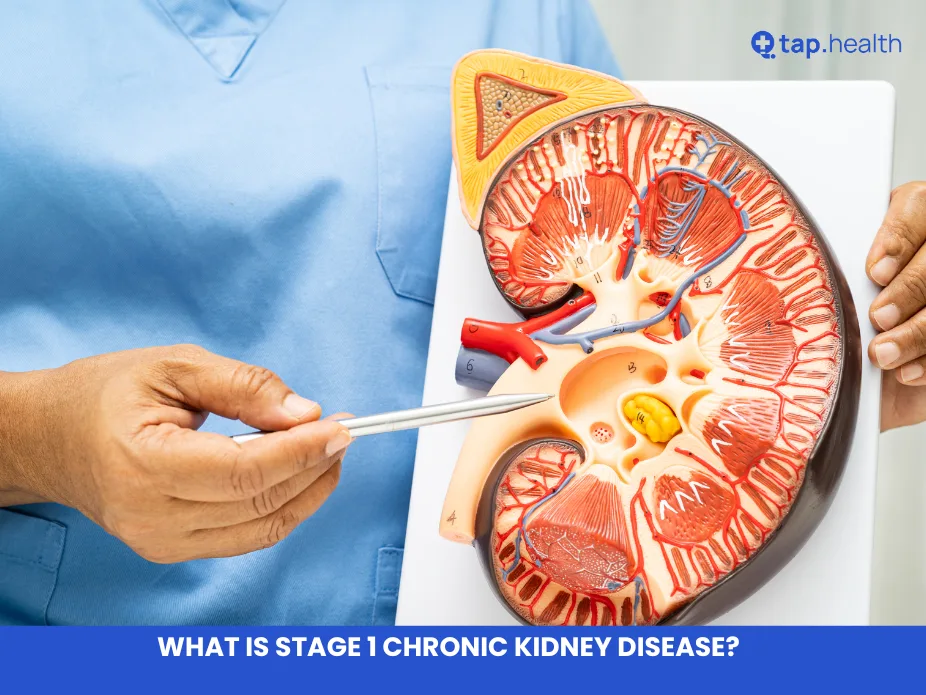
Chronic Kidney Disease (CKD) is a condition where the kidneys gradually lose their function over time. Stage 1 CKD is the earliest phase, characterized by kidney damage with a normal or high glomerular filtration rate (GFR) of 90 mL/min/1.73 m² or more. Despite the normal GFR, kidney damage is present, often indicated by the presence of protein in the urine (albuminuria).
Understanding Glomerular Filtration Rate (GFR)
GFR is a test used to check how well the kidneys are filtering blood. A normal GFR is 90 mL/min/1.73 m² or higher. In Stage 1 CKD, the GFR remains normal, but kidney damage is evident through other tests.
Signs and Symptoms
In Stage 1 CKD, there are typically no noticeable symptoms. The kidneys are still functioning well enough to maintain normal health. However, kidney damage can be detected through:
- Protein in Urine: The presence of protein (albumin) in the urine is a key indicator of kidney damage. National Kidney Foundation
- Imaging Tests: Ultrasounds or CT scans may reveal structural abnormalities in the kidneys.
- Blood Tests: Elevated levels of waste products like creatinine can suggest kidney issues.
Importance of Early Detection
Detecting Stage 1 CKD is crucial because it allows for early intervention to slow the progression of kidney damage. Managing underlying conditions such as diabetes and hypertension, adopting a kidney-friendly diet, and avoiding nephrotoxic substances can help preserve kidney function.
Real-Life Scenario
Consider Rajesh, a 45-year-old man from Mumbai. During a routine check-up, his doctor found protein in his urine, indicating kidney damage. Despite having a normal GFR, Rajesh was diagnosed with Stage 1 CKD. With early detection, he was able to manage his condition through lifestyle changes and medication, preventing further kidney damage.
Expert Contributions
Dr. Anjali Sharma, a nephrologist at AIIMS, Delhi, states, “Early detection of kidney damage, even when GFR is normal, is vital. It allows for interventions that can significantly slow the progression to more severe stages of CKD.”
Recommendations Grounded in Proven Research and Facts
- Regular Screening: Individuals at risk, such as those with diabetes or hypertension, should undergo regular kidney function tests.
- Healthy Lifestyle: Maintaining a balanced diet, engaging in regular exercise, and avoiding smoking can support kidney health.
- Medication Adherence: Taking prescribed medications as directed can help control conditions that may lead to kidney damage.
- Hydration: Drinking adequate water helps the kidneys remove waste effectively.
- Avoiding Nephrotoxic Substances: Limiting the use of over-the-counter pain relievers and avoiding exposure to harmful chemicals can protect kidney function.
Factual and Reliable Information
According to the National Kidney Foundation, “Stage 1 CKD means you have a normal GFR of 90 or greater and mild damage to your kidneys. Your kidneys are still working well, so you may not have any symptoms.”
FAQ on What is Stage 1 Chronic Kidney Disease?
Q1: Can Stage 1 CKD progress to kidney failure?
Yes, without proper management, Stage 1 CKD can progress to more severe stages, potentially leading to kidney failure.
Q2: Are there any symptoms in Stage 1 CKD?
Typically, there are no noticeable symptoms in Stage 1 CKD.
Q3: How is Stage 1 CKD diagnosed?
Through urine tests that detect protein, imaging studies, and blood tests to assess kidney function.
Q4: Is Stage 1 CKD reversible?
While the damage is not reversible, with early intervention, the progression can be slowed or halted.
Q5: What lifestyle changes can help manage Stage 1 CKD?
Adopting a kidney-friendly diet, exercising regularly, controlling blood pressure, and avoiding nephrotoxic substances.
Q6: How often should I get tested if I have Stage 1 CKD?
Regular check-ups are essential; the frequency should be determined by your healthcare provider.
Q7: Can medications help in Stage 1 CKD?
Yes, medications can help control underlying conditions and protect kidney function.
Q8: Is Stage 1 CKD common?
Yes, many people have Stage 1 CKD without knowing it, as it often has no symptoms.
Q9: Can Stage 1 CKD be prevented?
Managing risk factors like diabetes and hypertension can help prevent the development of CKD.
Q10: Should I see a specialist for Stage 1 CKD?
Consulting a nephrologist can provide specialized care and guidance for managing CKD.
In conclusion, Stage 1 Chronic Kidney Disease is characterized by kidney damage with a normal or high GFR. Early detection and proactive management are essential to prevent progression to more severe stages. Regular screenings and healthy lifestyle choices play a pivotal role in maintaining kidney health.