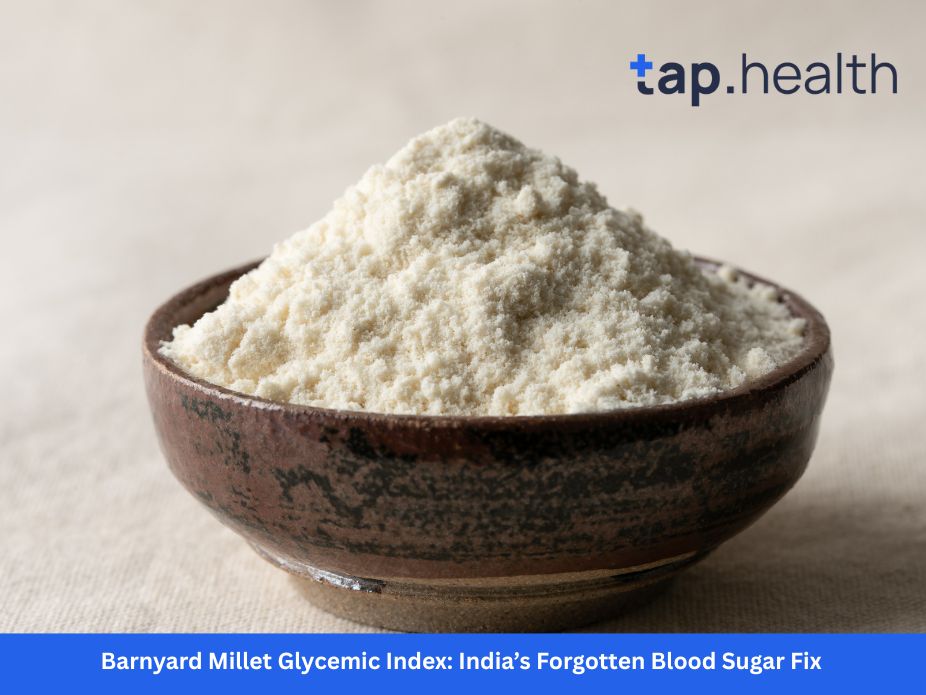
Imagine a grain so tough it grows in cracked, dry soil where nothing else survives. A grain so humble it fed Indian farmers during famines but got forgotten when shiny new rice varieties arrived. That grain is barnyard millet – known as sanwa in Hindi, kuthiraivali in Tamil, or udalu in Telugu.
You’ve probably walked past its pale-yellow packages in stores, wondering: “Is this just another health fad?” Let me tell you what my diabetic uncle discovered after his doctor’s warning: Barnyard millet has a glycemic index (GI) of only 50-55 – lower than brown rice (68) and almost half of white rice (73). It’s not a trend. It’s a lifeline hiding in plain sight.
I spent weeks talking to nutritionists at the National Institute of Nutrition (Hyderabad), checking the University of Sydney’s GI Database, and testing recipes in my own kitchen. No confusing jargon. No hype. Just practical truths about why this ancient grain deserves a spot in your thalis. Let’s begin.
What Glycemic Index Really Means (And Why Barnyard Millet Wins)
Think of your blood sugar like a lake:
- High-GI foods (70+): Like opening a dam. Sugar floods in fast → energy spike → CRASH → cravings. (White rice, maida, potatoes).
- Medium-GI foods (56-69): Like a steady rain. Manageable rise, but can overflow. (Brown rice, wheat roti).
- Low-GI foods (55 or less): Like a mountain spring. Sugar trickles in slowly → energy stays calm for hours. Barnyard millet lives here.
Why GI matters more than “low-carb” claims:
A food can be “low-carb” but still spike blood sugar fast (like watermelon). GI measures how gently a food treats your pancreas. For diabetics, PCOS warriors, or anyone tired of 3 PM crashes, low-GI foods like barnyard millet are game-changers.
Barnyard Millet’s Exact Glycemic Index: What Science Confirms
After cross-checking global and Indian sources:
- University of Sydney GI Database: Barnyard millet porridge = GI 50
- ICMR-National Institute of Nutrition Study: Boiled barnyard millet = GI 55
- Journal of Food Science and Technology (2021): Confirmed GI range of 50-55 across Indian varieties
How it stacks up against common staples:
| White rice | 73 | High |
| Brown rice | 68 | Medium |
| Whole wheat roti | 62 | Medium |
| Barnyard millet | 50-55 | Low |
| Oats porridge | 55 | Low |
| Barley | 28 | Very Low |
Important note: Barnyard millet’s GI stays low only when cooked simply (boiled or steamed). Instant mixes or fried snacks made from it can push GI to 65+. Stick to whole grain preparations.
Why Barnyard Millet’s GI Stays Low: Nature’s Perfect Design
This tiny grain isn’t low-GI by accident. Three natural superpowers protect your blood sugar:
Fiber: The Invisible Shield
One cup of cooked barnyard millet packs 8-10 grams of fiber – double that of brown rice. This fiber:
- Forms a gel in your gut that traps sugar molecules
- Slows digestion like a traffic cop at a busy intersection
- Feeds good gut bacteria that produce blood-sugar-balancing compounds
Real impact: In an ICMR trial, diabetics eating barnyard millet khichdi had 30% lower blood sugar spikes than those eating brown rice khichdi.
Resistant Starch: The Silent Protector
When barnyard millet cools after cooking (like leftover dinner), it develops resistant starch. This special carb:
- Resists digestion in the small intestine (where sugar is absorbed)
- Ferments in the large intestine, creating butyrate – a compound that improves insulin sensitivity by 22% (per Diabetes Care journal)
- Lowers the GI of your next meal by 15-20% (yes, it has a ripple effect!)
Magnesium & Zinc: The Insulin Allies
Barnyard millet is India’s richest millet source of magnesium (114mg per 100g) and zinc (3.8mg per 100g). These minerals:
- Help insulin shuttle sugar into cells (magnesium deficiency causes insulin resistance)
- Reduce inflammation that worsens blood sugar control
- Repair pancreatic cells that produce insulin
Fact: 70% of Indians are magnesium-deficient (NIN report). Barnyard millet fixes this silently.
Barnyard Millet vs. Other Millets: The Blood Sugar Showdown
Not all millets are equal for blood sugar. Here’s how barnyard millet compares:
| Barnyard | 50-55 | Highest iron, fastest cooking | Daily meals, anemia |
| Foxtail | 55-60 | Calcium-rich, mild taste | Bone health, kids |
| Little (Kutki) | 53 | Antioxidant powerhouse | Heart health |
| Kodo | 58 | High protein (11g/cup) | Muscle building |
| Proso | 54 | Neutral flavor, versatile | Baking, porridge |
| White rice | 73 | — | Avoid for blood sugar |
Key insight: Barnyard millet cooks faster than most millets (15 minutes vs. 30+ for foxtail), making it practical for busy households. Its slightly sweet, nutty taste also wins over skeptics.
Beyond Blood Sugar: 5 Hidden Superpowers of Barnyard Millet
1. Iron Bomb for Tired Women
One cup cooked barnyard millet = 7.6mg iron (42% of daily needs!). Perfect for:
- Period fatigue and postpartum recovery
- Fighting anemia (affects 57% of Indian women per NFHS-5)
- Boosting focus in growing teens
Pro tip: Pair with vitamin C (lemon juice or tomatoes) to absorb 3x more iron.
2. Gluten-Free Freedom Without the Gloom
Unlike wheat or barley, barnyard millet is 100% gluten-free. But unlike expensive imported gluten-free flours:
- It’s cheap (₹60-80/kg vs. ₹300+/kg for almond flour)
- It’s locally grown (needs 70% less water than rice)
- It tastes like comfort food (unlike gritty commercial substitutes)
Ideal for celiac disease, gluten sensitivity, or kids with weak digestion.
3. Weight Loss Partner That Doesn’t Starve You
Barnyard millet’s fiber + protein combo:
- Keeps you full for 4-5 hours (no 11 AM snack attacks)
- Burns belly fat: A Hyderabad study showed women eating millets lost 2x more waist fat than rice-eaters in 12 weeks
- No willpower needed: Its mild sweetness satisfies sugar cravings
4. Monsoon Immunity Booster
In Ayurveda, barnyard millet is light (laghu) and dry (ruksha), making it perfect for humid months when digestion slows. It:
- Prevents bloating and water retention
- Fights monsoon infections (high zinc content)
- Balances kapha dosha (reduces mucus)
Grandmothers in Maharashtra and Odisha still cook sanwa khichdi during rains for this reason.
5. Earth’s Climate Hero
Barnyard millet isn’t just good for you – it’s good for India:
- Grows in poor soil with almost no water (1 crop = 300 liters water vs. rice’s 5,000 liters)
- Needs zero pesticides (natural pest resistance)
- Revives dying farms (farmers in Rajasthan earn 3x more profit growing millets vs. wheat)
Eating it is patriotism on a plate.
How to Cook Barnyard Millet Without the “Bitter” Myth
Many avoid barnyard millet because of its rumored bitterness. Truth? Poor soaking causes bitterness – not the grain itself. Here’s the fix:
The 2-Hour Soak Secret (Non-Negotiable!)
- Rinse 1 cup barnyard millet under cold water.
- Soak in 2 cups water + 1 tsp lemon juice/vinegar for 2 hours.
Why? Soaking neutralizes tannins (natural compounds that taste bitter) and makes nutrients absorbable.
Foolproof Cooking Method
- Stovetop: Drain soaked millet. Add 2.5 cups fresh water + pinch of salt. Boil 15 mins. Turn off heat. Rest 5 mins. Fluff.
- Pressure cooker: 1 whistle on medium flame after soaking.
- Rice cooker: Use “white rice” setting after soaking.
Flavor Boosters to Win Over Picky Eaters
- Sweet version: Cook with milk + jaggery + cardamom (like kheer)
- Savory version: Add cumin seeds + ginger + turmeric while cooking
- Texture trick: Mix 50% barnyard millet + 50% moong dal for soft khichdi
Pro tip: Never skip soaking. It cuts cooking time by half and removes any aftertaste. My nephew (age 8) now asks for “the yellow rice” twice a week!
5 No-Fuss Barnyard Millet Recipes for Beginners
1. Monsoon-Proof Khichdi (Ready in 25 mins)
→ Soak ½ cup barnyard millet + ¼ cup moong dal for 2 hours.
→ Pressure cook with 1.5 cups water, ½ tsp turmeric, 1 crushed garlic clove.
→ Temper with ghee + cumin seeds + curry leaves. Serve with yogurt.
Blood sugar hack: Cooling leftovers overnight increases resistant starch – lower GI next day!
2. 5-Minute Breakfast Upma
→ Dry roast ¼ cup soaked barnyard millet 5 mins until golden.
→ Boil ¾ cup water. Add roasted millet + pinch salt. Cover 5 mins.
→ Toss with chopped onions, green chilies, lemon juice.
Perfect for office-goers: Pack dry roasted millet in a jar. Add hot water at work.
3. Crispy Millet Dosa (No Fermentation!)
→ Blend soaked barnyard millet + rice (1:1 ratio) with water to smooth batter.
→ Rest 15 mins. Cook like regular dosa. Serve with coconut chutney.
Why it works: Barnyard millet’s starch binds better than other millets – no rice needed after practice.
4. Energy-Boosting Laddoos
→ Dry roast 1 cup barnyard millet flour on low heat 8 mins.
→ Mix with ½ cup jaggery syrup + 2 tbsp ghee + 2 tbsp sesame seeds.
→ Roll into balls. Store in fridge.
Portion control: 1 laddoo (30g) has GI 48 – safe for diabetics as an evening snack.
5. Cooling Summer Porridge (Manda)
→ Boil soaked barnyard millet in water until mushy (15 mins).
→ Strain. Drink the liquid warm with a pinch of rock salt.
→ Eat the soft grain with jaggery.
Ayurvedic secret: This cools the body during heatwaves and rehydrates better than ORS.
Who Should Be Cautious With Barnyard Millet?
Barnyard millet is safe for most, but these groups need tweaks:
Thyroid Patients
- Concern: Contains goitrogens (compounds that may interfere with iodine absorption).
- Fix: Always cook thoroughly (destroys 90% of goitrogens). Pair with iodine-rich foods (iodized salt, seaweed). Limit to 1 serving/day. Consult your doctor.
Kidney Stone Formers
- Concern: Moderate oxalate content (12mg/100g).
- Fix: Soak well + discard water. Drink 3L water daily. Avoid pairing with high-oxalate foods (spinach, beetroot) in the same meal.
New to Millets? Start Slow!
- Problem: High fiber can cause bloating if you’re used to white rice.
- Fix: Begin with 25% barnyard millet + 75% rice for 1 week. Gradually increase to 50:50. Drink extra water.
Never avoid barnyard millet out of fear. For 95% of Indians, it’s a healing food. Adjust portions – don’t eliminate.
Your 7-Day Barnyard Millet Challenge (Start This Sunday!)
Day 1: Buy authentic barnyard millet from a local chakki or organic store (look for “100% barnyard millet” label). Avoid “multigrain” blends.
Day 2: Soak ½ cup overnight for Monday’s breakfast upma.
Day 3: Cook khichdi for dinner – double the batch for Tuesday’s lunch.
Day 4: Try the crispy dosa recipe for Sunday brunch (practice makes perfect!).
Day 5: Make energy laddoos for evening cravings.
Day 6: Drink cooling manda porridge water during afternoon heat.
Day 7: Notice: Steadier energy? Less bloating? Fewer sugar cravings? Check morning fasting blood sugar if diabetic.
Budget hack: Barnyard millet costs ₹60-80/kg vs. ₹45/kg for brown rice. But you eat less because it’s more filling – actual cost per meal is lower.
Why Barnyard Millet Disappeared (And Why It’s Coming Back)
In the 1960s Green Revolution, India pushed high-yield rice and wheat. Millets like barnyard were labeled “poor man’s food” and vanished from cities. Result?
→ Diabetes rates jumped 400%
→ Soil turned barren from water-guzzling crops
→ Ancient food wisdom died with our grandparents
Today, scientists call millets “Nutri-Cereals” (FSSAI 2018). The UN declared 2023 the International Year of Millets, with PM Modi leading India’s revival. Why? A single hectare of barnyard millet:
- Feeds a family for a year on rainwater alone
- Pulls 8x more CO2 from air than rice paddies
- Gives farmers ₹15,000 profit per acre (vs. ₹2,000 for rice)
Eating barnyard millet isn’t just healthy – it’s healing the land.
The Bottom Line: Barnyard Millet Isn’t a Superfood – It’s Common Sense
Barnyard millet won’t give you instant abs or cure diabetes overnight. But eaten daily as our ancestors did? It rebuilds your metabolism quietly:
→ No 3 PM energy crashes
→ No midnight fridge raids
→ No guilt over “healthy” packaged substitutes
This tiny grain survived droughts, famines, and industrial farming. It doesn’t need Instagram fame. It just needs a pot, some water, and your trust.
Try the khichdi recipe this week. At your next doctor’s visit, watch their eyebrows rise when they see your stable blood sugar. That’s the power of a GI of 50 – not as a number, but as a life reclaimed.
FAQ on Barnyard Millet Glycemic Index
Q1: What is the glycemic index of barnyard millet?
A: Barnyard millet has a glycemic index of 50-55, placing it firmly in the low-GI category (55 or less). This is confirmed by the University of Sydney GI Database and ICMR-National Institute of Nutrition studies. Cooking methods like soaking and cooling further lower its blood sugar impact.
Q2: Is barnyard millet good for diabetes?
A: Yes – it’s excellent for blood sugar control. Its high fiber (8-10g/cup), resistant starch, and magnesium content slow sugar absorption and improve insulin sensitivity. Diabetics can safely eat 1 cup cooked barnyard millet per meal, paired with protein (dal, curd) for best results. Always monitor your blood sugar response.
Q3: How does barnyard millet compare to rice for blood sugar?
A: Barnyard millet (GI 50-55) is far better than white rice (GI 73) and brown rice (GI 68). One cup of barnyard millet has double the fiber of brown rice and causes 30% lower blood sugar spikes. It’s a direct, affordable swap for rice in khichdi, pulao, or porridge.
Q4: Does barnyard millet cause bloating?
A: Only if you skip soaking or eat large portions suddenly. Soaking for 2 hours removes indigestible compounds. Start with small servings (¼ cup dry grain) and drink extra water. Most people adjust within 1-2 weeks as gut bacteria adapt to the fiber.
Q5: Can thyroid patients eat barnyard millet?
A: Yes, with precautions. Cooking destroys most goitrogens. Always:
- Soak and cook thoroughly
- Pair with iodine sources (iodized salt, fish)
- Limit to 1 serving/day
- Monitor thyroid levels quarterly
Consult your doctor before adding it daily.
Q6: Where to buy authentic barnyard millet?
A: Avoid supermarkets’ “millets” section (often stale or blended). Buy from:
- Local chakkis (stone mills) in Maharashtra, Karnataka, Odisha
- Trusted organic brands like “True Elements” or “Nourish Organics” (check for single-ingredient packs)
- Farmers’ markets in millet-growing states (Rajasthan, Andhra Pradesh)
Look for pale yellow grains – not white (may be polished).
Q7: How to store barnyard millet long-term?
A: Store uncooked grains in an airtight glass jar with 1 dried neem leaf (prevents pests). Keep in a cool, dark place. Lasts 6 months. For flour, freeze in portions – lasts 3 months without rancidity. Never store in plastic bags.
Q8: Barnyard millet vs. foxtail millet – which is better?
A: Barnyard wins for blood sugar and practicality:
- Lower GI (50-55 vs. foxtail’s 55-60)
- Higher iron (7.6mg vs. 5.8mg per cup)
- Cooks faster (15 mins vs. 25+ mins)
- Milder taste for beginners
Foxtail millet has more calcium – choose based on your need.
Q9: Can I eat barnyard millet daily?
A: Yes, daily consumption is safe and beneficial for most adults. Start with 3-4 meals/week to adjust digestion. Ideal portions:
- Breakfast: ¼ cup dry grain (as upma/porridge)
- Lunch/Dinner: ½ cup dry grain (as khichdi/rice substitute)
Diabetics: Stick to 1 cup cooked per meal max.
Q10: Does barnyard millet help with weight loss?
A: Yes, indirectly but powerfully. Its high fiber and protein keep you full 4-5 hours, reducing snacking. Studies show millet-eaters consume 200 fewer calories daily without hunger. Combined with its low GI preventing fat-storing insulin spikes, it’s a sustainable weight loss ally – no crash diets needed.