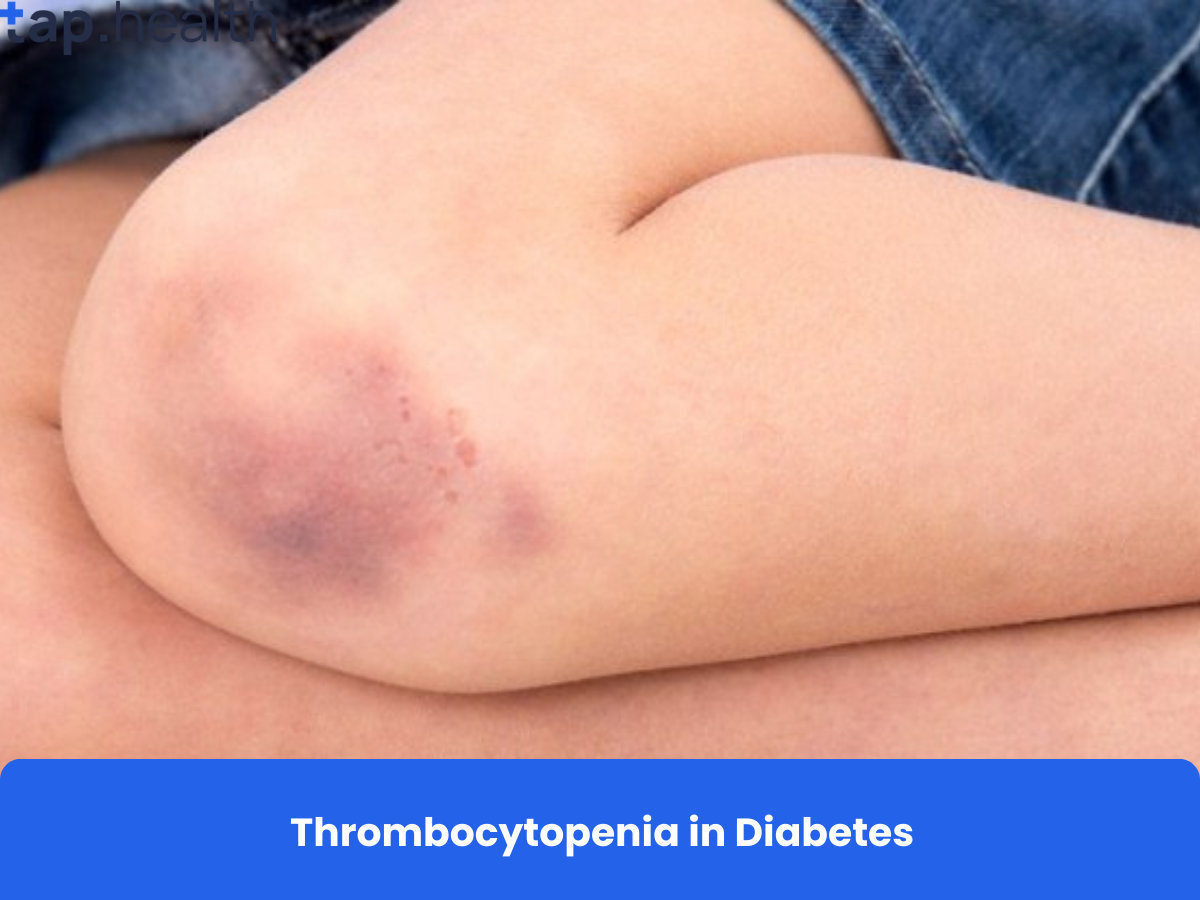
Living with diabetes involves juggling a lot of numbers. You are constantly watching your blood sugar, your HbA1c, your blood pressure, and your cholesterol. But there is another number hiding in your blood test reports that deserves your attention: your platelet count.
If you have noticed that you bruise easily or that a small cut takes a long time to stop bleeding, you might be dealing with a condition called Thrombocytopenia.
While it sounds like a scary medical tongue-twister, it simply means having a low platelet count. Is there a connection between this condition and diabetes? Absolutely.
In this guide, we will break down the link between Thrombocytopenia in Diabetes, why it happens, and actionable steps you can take to manage your health. We will keep things simple, factual, and easy to understand, so you don’t need a medical degree to know what is happening inside your body.
What Is Thrombocytopenia?
Before we dive into the diabetes connection, let’s understand what platelets are.
Think of platelets as the “first responders” or natural bandages in your blood. When you get a cut, platelets rush to the scene, stick together, and form a clot to stop the bleeding.
Thrombocytopenia occurs when your bone marrow doesn’t make enough platelets, or your body destroys them too quickly.
-
Normal Range: 150,000 to 450,000 platelets per microliter of blood.
-
Low Count: Anything below 150,000.
If your count drops too low, your blood cannot clot effectively, leading to bleeding risks.
The Link Between Diabetes and Low Platelet Count
You might be wondering, “My sugar is high, so why is my platelet count low?” The relationship between diabetes and blood cells is complex, but here is the simple explanation.
1. The Autoimmune Connection (Type 1 Diabetes)
Type 1 Diabetes is an autoimmune condition. This means your body’s immune system mistakenly attacks healthy cells (like insulin-producing cells in the pancreas). Unfortunately, the immune system doesn’t always stop there.
Sometimes, it also attacks the platelets, mistakenly identifying them as foreign invaders. This leads to a condition called Immune Thrombocytopenia (ITP). It is essentially “friendly fire” inside your bloodstream.
2. Insulin Resistance and Inflammation (Type 2 Diabetes)
In Type 2 Diabetes, your body struggles to use insulin correctly. This leads to chronic inflammation.
Think of inflammation as a low-grade fire burning inside the body. This inflammation can damage the bone marrow—the factory where platelets are made. When the factory is damaged, production slows down, leading to lower platelet counts.
3. Glycation of Proteins
When blood sugar remains high for a long time, the excess sugar coats your proteins. This process is called glycation. It creates “sticky” structures that can shorten the lifespan of your platelets, causing them to die off faster than your body can replace them.
Common Causes of Low Platelets in Diabetics
Aside from the direct mechanism of diabetes, other factors common in diabetic patients can trigger Thrombocytopenia.
Medication Side Effects
Many people with diabetes take multiple medications. Some of these can affect bone marrow.
-
Diuretics (Water pills): Used for blood pressure, sometimes affecting platelets.
-
Antibiotics: Diabetics are prone to infections, and strong antibiotics can temporarily lower platelet counts.
-
Metformin: While rare, there have been some studies suggesting a link between long-term Metformin use and Vitamin B12 deficiency, which can indirectly affect blood cell production.
Vitamin B12 and Folate Deficiency
This is very common in India, especially among vegetarians. Vitamin B12 is the fuel your bone marrow needs to make blood cells. If you are low on B12—whether due to diet or medication—your platelet production will drop.
Fatty Liver Disease (NAFLD)
There is a strong link between Type 2 Diabetes and Non-Alcoholic Fatty Liver Disease (NAFLD). The liver produces a hormone called Thrombopoietin, which tells the bone marrow to make platelets. If the liver is damaged by fat, it cannot produce enough of this hormone, resulting in Thrombocytopenia.
Symptoms to Watch Out For
Thrombocytopenia in diabetes is often a “silent” condition until it drops to very low levels. However, your body usually gives you subtle warning signs.
If you have diabetes, keep an eye out for these symptoms:
-
Easy Bruising: You find purple or blue bruises (purpura) on your legs or arms without remembering bumping into anything.
-
Petechiae: These look like tiny red or purple pinprick dots on your skin, usually on the lower legs. They look like a rash but are actually tiny bleeds under the skin.
-
Bleeding Gums: Seeing blood in the sink when you brush or floss.
-
Nosebleeds: Frequent nosebleeds that are hard to stop.
-
Fatigue: Feeling unusually tired (often linked to anaemia, which can happen alongside low platelets).
Warning: If you experience blood in your urine or very dark, tarry stools, please consult a doctor immediately. This could indicate internal bleeding.
Diagnostic Tests and Screening
How do you know for sure? It is quite simple.
When you visit your doctor for your regular diabetes check-up, ask for a CBC (Complete Blood Count).
-
CBC Test: This measures your Red Blood Cells, White Blood Cells, and Platelets.
-
Blood Smear: A doctor looks at a drop of your blood under a microscope to see the shape and size of the platelets.
-
Liver Function Test (LFT): Since liver health affects platelets, checking your liver enzymes is crucial.
-
Vitamin B12 Levels: To rule out nutritional deficiency.
Treatment and Management Options
The good news is that mild Thrombocytopenia often doesn’t need aggressive treatment. It usually improves when you manage the underlying cause—your diabetes.
1. Tight Blood Sugar Control
This is the most effective treatment. By keeping your blood glucose levels within the target range, you reduce inflammation and stop the “glycation” process that kills platelets.
2. Dietary Adjustments
-
Boost Vitamin B12 & Folate: Include eggs, dairy, fish, or fortified cereals. If you are vegetarian, ask your doctor for supplements.
-
Anti-inflammatory Foods: Add turmeric (haldi), berries, leafy greens, and nuts to your diet to reduce systemic inflammation.
-
Avoid Alcohol: Alcohol is toxic to bone marrow and damages the liver. If you have low platelets, it is best to stop drinking completely.
3. Medication Review
If your doctor suspects a specific medicine is causing the drop, they might switch you to a different prescription. Never stop your diabetes medicine on your own.
4. Platelet Transfusion (In Severe Cases)
This is rare and only used if the platelet count is dangerously low (usually below 10,000 or 20,000) and there is active bleeding.
Real-Life Scenario
Let’s look at a scenario to make this relatable.
Meet Suresh. Suresh is a 52-year-old bank manager from Pune who has had Type 2 Diabetes for 10 years. He is generally careful but often skips his B12 supplements.
Recently, Suresh noticed small red dots on his ankles. He ignored them, thinking it was a heat rash. A week later, he bumped his knee against a desk, and a massive, dark bruise appeared that didn’t go away for two weeks.
Worried, he visited his diabetologist. His blood test revealed a platelet count of 85,000 (normal is above 150,000) and very low Vitamin B12 levels.
The Solution: His doctor didn’t panic. He adjusted Suresh’s diet, started him on a B12 injection course, and tightened his sugar control. Within two months, Suresh’s platelet count climbed back up to 140,000. The red dots disappeared.
The Lesson: Your skin often signals what is happening in your blood. Don’t ignore the signs.
Expert Contribution
We reached out to medical literature to understand what experts say about this condition.
Dr. A. Mehta, a Senior Haematologist notes:
“In diabetic patients, we often see ‘mild’ thrombocytopenia. Patients panic, thinking it is cancer or a major failure. However, in 80% of cases, it is metabolic. It is the body telling you that the liver is stressed or the sugars are too high for too long. Treat the diabetes, and the blood usually heals itself.”
Recommendations Grounded in Proven Research and Facts
Based on guidelines from the National Institutes of Health (NIH) and Mayo Clinic, here are the top recommendations for diabetics with low platelets:
-
Routine Screening: Do not wait for symptoms. Include a CBC test in your quarterly diabetes check-up.
-
Protect Yourself: If your count is low, avoid contact sports or activities where you might get injured. Switch from a razor blade to an electric shaver to avoid cuts.
-
Soft Toothbrush: Switch to a soft-bristled toothbrush to prevent gum bleeding.
-
Hydration: Drinking adequate water helps blood flow and kidney function, supporting overall cell health.
Key Takeaways
-
The Connection is Real: High blood sugar, inflammation, and insulin resistance can damage bone marrow and lower platelet counts.
-
Look for Signs: unexplained bruises, tiny red dots on the legs, or bleeding gums are major red flags.
-
Check the Liver: Fatty liver is a common culprit for low platelets in Type 2 Diabetes.
-
Nutrients Matter: Vitamin B12 deficiency is a frequent, easily fixable cause of Thrombocytopenia.
-
Control is Cure: In most cases, stabilizing your blood sugar levels will help restore your platelet count to a safe range.
Frequently Asked Questions on Thrombocytopenia & Diabetes: Symptoms, Risks, Management
Q1. What is thrombocytopenia and how does it relate to diabetes?
Thrombocytopenia is a condition characterized by low platelet counts in the blood, increasing the risk of bleeding. People with diabetes, especially those with diabetic nephropathy (kidney disease), are at a significantly higher risk of developing thrombocytopenia.
Q2. What are the symptoms of thrombocytopenia?
Symptoms can include easy bruising, prolonged bleeding from cuts, and in severe cases, internal bleeding. If you experience unexplained bruising or bleeding, seek immediate medical attention.
Q3. How is thrombocytopenia managed in people with diabetes?
Management involves regular monitoring of platelet counts, strict control of blood sugar levels, and adopting a healthy lifestyle. Addressing other health issues like hypertension is also crucial.
Q4. Why is early diagnosis of thrombocytopenia important for diabetics?
Early diagnosis is vital to prevent serious complications from bleeding. Regular blood tests are recommended, particularly for those with poorly controlled blood sugar.
Q5. Are there specific risk factors for thrombocytopenia in diabetics?
Risk factors are heightened in tropical and Indian regions due to higher diabetes prevalence, infections, and malnutrition. Poorly managed diabetes significantly increases the risk.
References
-
Thrombocytopenia (low platelet count) – Mayo Clinic
-
Diabetes and Blood Disorders – WebMD
-
Platelet Dysfunction in Diabetes Mellitus – National Institutes of Health (NIH)
-
Immune Thrombocytopenia – National Health Service (NHS)