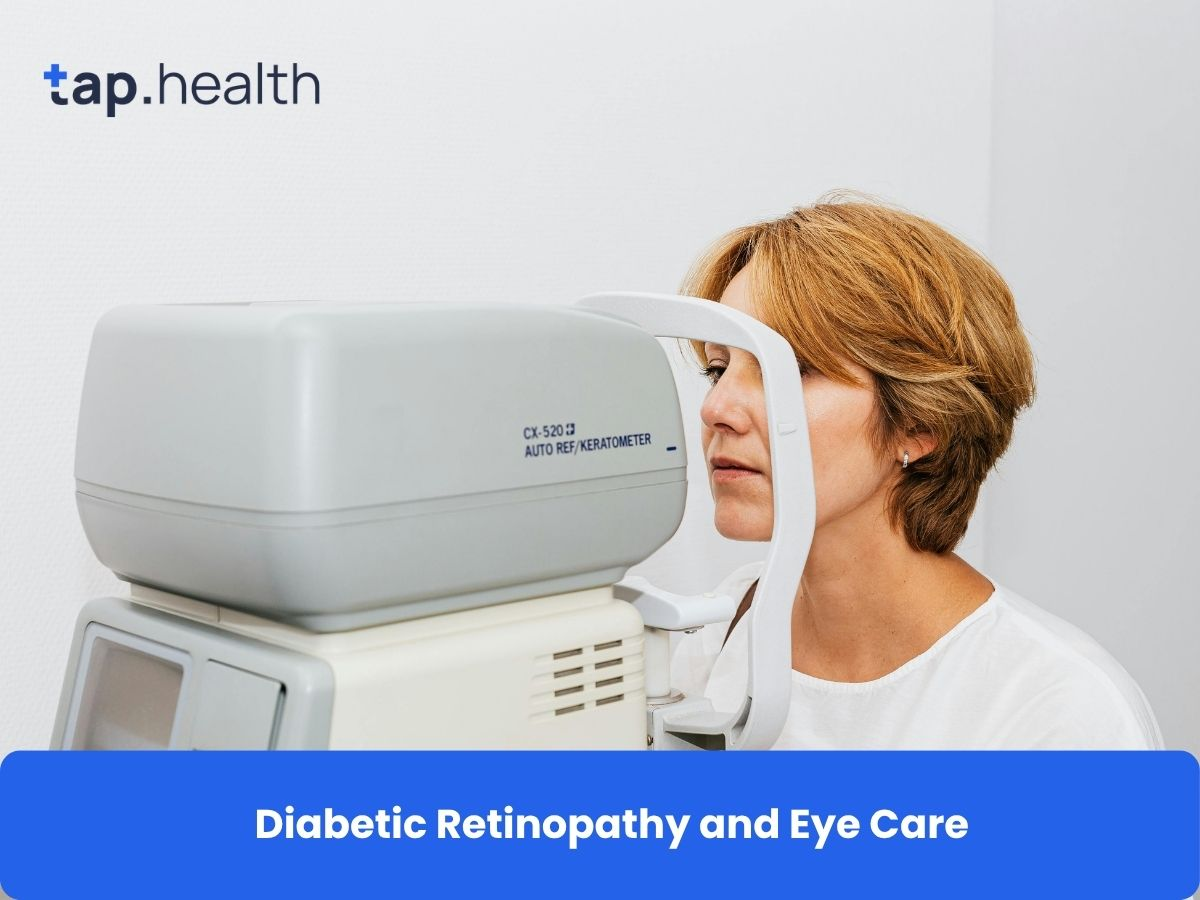
Quick answer: Diabetic Retinopathy and Eye Care: Symptoms, Eye Tests, Prevention, and Follow-Up Schedule is a question many Indian readers ask when they are trying to understand a report, symptom, meal pattern, or doctor recommendation. This guide explains the topic in plain language, uses current diabetes references, and turns the information into practical next steps. It is educational content and should not replace personal medical advice.
Diabetes care is not only about avoiding sugar. It is about understanding glucose patterns, preventing heart, kidney, eye, nerve, and foot complications, and building routines that fit real Indian homes. The core promise of this article is to explain why eye screening matters before symptoms appear.
What this guide helps you understand
This guide focuses on silent complication prevention. It avoids broad, repeated diabetes advice and stays close to the specific problem behind the topic: what the numbers, symptoms, tests, food choices, or follow-up steps mean in real life.
Quick reference table
| Area | What to look at | Why it matters |
|---|---|---|
| Main concern | silent complication prevention | Use the article to understand the exact problem before changing food, medicines, or testing habits. |
| Best first step | Write down readings, symptoms, meals, sleep, activity, and medicines | Patterns over several days are more useful than one isolated result. |
| Home action | Improve meal balance, add safe movement, sleep better, and monitor consistently | Small repeatable changes are easier to sustain than extreme plans. |
| Doctor discussion | Ask whether your target range or follow-up test should be personalised | Age, pregnancy, kidney disease, heart risk, medicines, and low-sugar risk can change advice. |
| Red flag | Severe symptoms, repeated very high readings, repeated lows, chest pain, vision loss, foot wound, or pregnancy concerns | These need timely medical care instead of self-management alone. |
Key points before you start
- Do not change or stop prescribed diabetes medicines without medical advice.
- Use home readings as clues, not as a diagnosis by themselves.
- Bring your readings, meal timing, symptoms, and medicine list to appointments.
- Ask for personalised targets if you are pregnant, older, using insulin, or have kidney, heart, eye, nerve, or foot concerns.
How diabetes affects the eyes
In India, this topic needs extra care because diet patterns, family history, work schedules, sleep debt, and access to testing vary widely. A person eating rice at lunch, roti at dinner, fruit in the evening, and tea with snacks does not need shame; they need a way to see patterns and adjust safely.
Many basic guides answer the definition but leave gaps around what to do next. This guide closes that gap by connecting how diabetes affects the eyes with home monitoring, lab follow-up, food choices, physical activity, medication conversations, and warning signs. The goal is practical clarity, not a promise of instant control.
The evidence base used here is deliberately conservative. ADA guidance, CDC diagnostic ranges, WHO prevention principles, India burden estimates, and topic-specific guidance are used as anchors. When a number is presented, it is framed as a general reference because targets can change with age, pregnancy, kidney disease, heart disease, medicines, and hypoglycaemia risk.
A reader should come away knowing what is normal, what is concerning, and what is uncertain. Uncertainty is important in diabetes care. It is possible for two people with the same diabetic retinopathy symptoms concern to need different plans because one has pregnancy, one uses insulin, one has anemia, one has kidney disease, and one has early prediabetes.
The language here stays practical because readers need to understand what they can do today, what they should track for a few days, and what they should take to a doctor. Comparison tables, checklists, and FAQs make that easier than long blocks of advice.
The practical takeaway is to use how diabetes affects the eyes as a decision point. If the reading, symptom, or habit is mild and improving, tracking may be enough. If it is persistent, severe, or linked with red flags, medical review should not be delayed. Diabetes content must make that distinction very clearly.
For people with diabetes who have not had an eye exam or think vision is fine so testing can wait., the useful question is not only what diabetic retinopathy symptoms means, but what action should follow. how diabetes affects the eyes matters because diabetes decisions are rarely made from one number or one symptom. A stronger guide explains the medical context and then translates it into steps a reader can discuss with a clinician.
In India, this topic needs extra care because diet patterns, family history, work schedules, sleep debt, and access to testing vary widely. A person eating rice at lunch, roti at dinner, fruit in the evening, and tea with snacks does not need shame; they need a way to see patterns and adjust safely.
- Check: write down the exact number, symptom, meal, medicine, or timing connected with how diabetes affects the eyes.
- Compare: look for a pattern across several days instead of reacting to one isolated reading.
- Discuss: ask your doctor whether your target should be different because of age, pregnancy, medicines, kidney disease, heart disease, or low-sugar risk.
Why retinopathy can be silent
Many basic guides answer the definition but leave gaps around what to do next. This guide closes that gap by connecting why retinopathy can be silent with home monitoring, lab follow-up, food choices, physical activity, medication conversations, and warning signs. The goal is practical clarity, not a promise of instant control.
The evidence base used here is deliberately conservative. ADA guidance, CDC diagnostic ranges, WHO prevention principles, India burden estimates, and topic-specific guidance are used as anchors. When a number is presented, it is framed as a general reference because targets can change with age, pregnancy, kidney disease, heart disease, medicines, and hypoglycaemia risk.
A reader should come away knowing what is normal, what is concerning, and what is uncertain. Uncertainty is important in diabetes care. It is possible for two people with the same diabetic retinopathy symptoms concern to need different plans because one has pregnancy, one uses insulin, one has anemia, one has kidney disease, and one has early prediabetes.
The language here stays practical because readers need to understand what they can do today, what they should track for a few days, and what they should take to a doctor. Comparison tables, checklists, and FAQs make that easier than long blocks of advice.
The practical takeaway is to use why retinopathy can be silent as a decision point. If the reading, symptom, or habit is mild and improving, tracking may be enough. If it is persistent, severe, or linked with red flags, medical review should not be delayed. Diabetes content must make that distinction very clearly.
For people with diabetes who have not had an eye exam or think vision is fine so testing can wait., the useful question is not only what diabetic retinopathy symptoms means, but what action should follow. why retinopathy can be silent matters because diabetes decisions are rarely made from one number or one symptom. A stronger guide explains the medical context and then translates it into steps a reader can discuss with a clinician.
In India, this topic needs extra care because diet patterns, family history, work schedules, sleep debt, and access to testing vary widely. A person eating rice at lunch, roti at dinner, fruit in the evening, and tea with snacks does not need shame; they need a way to see patterns and adjust safely.
Many basic guides answer the definition but leave gaps around what to do next. This guide closes that gap by connecting why retinopathy can be silent with home monitoring, lab follow-up, food choices, physical activity, medication conversations, and warning signs. The goal is practical clarity, not a promise of instant control.
- Check: write down the exact number, symptom, meal, medicine, or timing connected with why retinopathy can be silent.
- Compare: look for a pattern across several days instead of reacting to one isolated reading.
- Discuss: ask your doctor whether your target should be different because of age, pregnancy, medicines, kidney disease, heart disease, or low-sugar risk.
Symptoms that should not be ignored
The evidence base used here is deliberately conservative. ADA guidance, CDC diagnostic ranges, WHO prevention principles, India burden estimates, and topic-specific guidance are used as anchors. When a number is presented, it is framed as a general reference because targets can change with age, pregnancy, kidney disease, heart disease, medicines, and hypoglycaemia risk.
A reader should come away knowing what is normal, what is concerning, and what is uncertain. Uncertainty is important in diabetes care. It is possible for two people with the same diabetic retinopathy symptoms concern to need different plans because one has pregnancy, one uses insulin, one has anemia, one has kidney disease, and one has early prediabetes.
The language here stays practical because readers need to understand what they can do today, what they should track for a few days, and what they should take to a doctor. Comparison tables, checklists, and FAQs make that easier than long blocks of advice.
The practical takeaway is to use symptoms that should not be ignored as a decision point. If the reading, symptom, or habit is mild and improving, tracking may be enough. If it is persistent, severe, or linked with red flags, medical review should not be delayed. Diabetes content must make that distinction very clearly.
For people with diabetes who have not had an eye exam or think vision is fine so testing can wait., the useful question is not only what diabetic retinopathy symptoms means, but what action should follow. symptoms that should not be ignored matters because diabetes decisions are rarely made from one number or one symptom. A stronger guide explains the medical context and then translates it into steps a reader can discuss with a clinician.
In India, this topic needs extra care because diet patterns, family history, work schedules, sleep debt, and access to testing vary widely. A person eating rice at lunch, roti at dinner, fruit in the evening, and tea with snacks does not need shame; they need a way to see patterns and adjust safely.
Many basic guides answer the definition but leave gaps around what to do next. This guide closes that gap by connecting symptoms that should not be ignored with home monitoring, lab follow-up, food choices, physical activity, medication conversations, and warning signs. The goal is practical clarity, not a promise of instant control.
The evidence base used here is deliberately conservative. ADA guidance, CDC diagnostic ranges, WHO prevention principles, India burden estimates, and topic-specific guidance are used as anchors. When a number is presented, it is framed as a general reference because targets can change with age, pregnancy, kidney disease, heart disease, medicines, and hypoglycaemia risk.
- Check: write down the exact number, symptom, meal, medicine, or timing connected with symptoms that should not be ignored.
- Compare: look for a pattern across several days instead of reacting to one isolated reading.
- Discuss: ask your doctor whether your target should be different because of age, pregnancy, medicines, kidney disease, heart disease, or low-sugar risk.
Which eye tests are used
A reader should come away knowing what is normal, what is concerning, and what is uncertain. Uncertainty is important in diabetes care. It is possible for two people with the same diabetic retinopathy symptoms concern to need different plans because one has pregnancy, one uses insulin, one has anemia, one has kidney disease, and one has early prediabetes.
The language here stays practical because readers need to understand what they can do today, what they should track for a few days, and what they should take to a doctor. Comparison tables, checklists, and FAQs make that easier than long blocks of advice.
The practical takeaway is to use which eye tests are used as a decision point. If the reading, symptom, or habit is mild and improving, tracking may be enough. If it is persistent, severe, or linked with red flags, medical review should not be delayed. Diabetes content must make that distinction very clearly.
For people with diabetes who have not had an eye exam or think vision is fine so testing can wait., the useful question is not only what diabetic retinopathy symptoms means, but what action should follow. which eye tests are used matters because diabetes decisions are rarely made from one number or one symptom. A stronger guide explains the medical context and then translates it into steps a reader can discuss with a clinician.
In India, this topic needs extra care because diet patterns, family history, work schedules, sleep debt, and access to testing vary widely. A person eating rice at lunch, roti at dinner, fruit in the evening, and tea with snacks does not need shame; they need a way to see patterns and adjust safely.
Many basic guides answer the definition but leave gaps around what to do next. This guide closes that gap by connecting which eye tests are used with home monitoring, lab follow-up, food choices, physical activity, medication conversations, and warning signs. The goal is practical clarity, not a promise of instant control.
The evidence base used here is deliberately conservative. ADA guidance, CDC diagnostic ranges, WHO prevention principles, India burden estimates, and topic-specific guidance are used as anchors. When a number is presented, it is framed as a general reference because targets can change with age, pregnancy, kidney disease, heart disease, medicines, and hypoglycaemia risk.
A reader should come away knowing what is normal, what is concerning, and what is uncertain. Uncertainty is important in diabetes care. It is possible for two people with the same diabetic retinopathy symptoms concern to need different plans because one has pregnancy, one uses insulin, one has anemia, one has kidney disease, and one has early prediabetes.
- Check: write down the exact number, symptom, meal, medicine, or timing connected with which eye tests are used.
- Compare: look for a pattern across several days instead of reacting to one isolated reading.
- Discuss: ask your doctor whether your target should be different because of age, pregnancy, medicines, kidney disease, heart disease, or low-sugar risk.
How often screening may be needed
The language here stays practical because readers need to understand what they can do today, what they should track for a few days, and what they should take to a doctor. Comparison tables, checklists, and FAQs make that easier than long blocks of advice.
The practical takeaway is to use how often screening may be needed as a decision point. If the reading, symptom, or habit is mild and improving, tracking may be enough. If it is persistent, severe, or linked with red flags, medical review should not be delayed. Diabetes content must make that distinction very clearly.
For people with diabetes who have not had an eye exam or think vision is fine so testing can wait., the useful question is not only what diabetic retinopathy symptoms means, but what action should follow. how often screening may be needed matters because diabetes decisions are rarely made from one number or one symptom. A stronger guide explains the medical context and then translates it into steps a reader can discuss with a clinician.
In India, this topic needs extra care because diet patterns, family history, work schedules, sleep debt, and access to testing vary widely. A person eating rice at lunch, roti at dinner, fruit in the evening, and tea with snacks does not need shame; they need a way to see patterns and adjust safely.
Many basic guides answer the definition but leave gaps around what to do next. This guide closes that gap by connecting how often screening may be needed with home monitoring, lab follow-up, food choices, physical activity, medication conversations, and warning signs. The goal is practical clarity, not a promise of instant control.
The evidence base used here is deliberately conservative. ADA guidance, CDC diagnostic ranges, WHO prevention principles, India burden estimates, and topic-specific guidance are used as anchors. When a number is presented, it is framed as a general reference because targets can change with age, pregnancy, kidney disease, heart disease, medicines, and hypoglycaemia risk.
A reader should come away knowing what is normal, what is concerning, and what is uncertain. Uncertainty is important in diabetes care. It is possible for two people with the same diabetic retinopathy symptoms concern to need different plans because one has pregnancy, one uses insulin, one has anemia, one has kidney disease, and one has early prediabetes.
The language here stays practical because readers need to understand what they can do today, what they should track for a few days, and what they should take to a doctor. Comparison tables, checklists, and FAQs make that easier than long blocks of advice.
- Check: write down the exact number, symptom, meal, medicine, or timing connected with how often screening may be needed.
- Compare: look for a pattern across several days instead of reacting to one isolated reading.
- Discuss: ask your doctor whether your target should be different because of age, pregnancy, medicines, kidney disease, heart disease, or low-sugar risk.
Blood sugar, blood pressure, and cholesterol effects
The practical takeaway is to use blood sugar, blood pressure, and cholesterol effects as a decision point. If the reading, symptom, or habit is mild and improving, tracking may be enough. If it is persistent, severe, or linked with red flags, medical review should not be delayed. Diabetes content must make that distinction very clearly.
For people with diabetes who have not had an eye exam or think vision is fine so testing can wait., the useful question is not only what diabetic retinopathy symptoms means, but what action should follow. blood sugar, blood pressure, and cholesterol effects matters because diabetes decisions are rarely made from one number or one symptom. A stronger guide explains the medical context and then translates it into steps a reader can discuss with a clinician.
In India, this topic needs extra care because diet patterns, family history, work schedules, sleep debt, and access to testing vary widely. A person eating rice at lunch, roti at dinner, fruit in the evening, and tea with snacks does not need shame; they need a way to see patterns and adjust safely.
Many basic guides answer the definition but leave gaps around what to do next. This guide closes that gap by connecting blood sugar, blood pressure, and cholesterol effects with home monitoring, lab follow-up, food choices, physical activity, medication conversations, and warning signs. The goal is practical clarity, not a promise of instant control.
The evidence base used here is deliberately conservative. ADA guidance, CDC diagnostic ranges, WHO prevention principles, India burden estimates, and topic-specific guidance are used as anchors. When a number is presented, it is framed as a general reference because targets can change with age, pregnancy, kidney disease, heart disease, medicines, and hypoglycaemia risk.
A reader should come away knowing what is normal, what is concerning, and what is uncertain. Uncertainty is important in diabetes care. It is possible for two people with the same diabetic retinopathy symptoms concern to need different plans because one has pregnancy, one uses insulin, one has anemia, one has kidney disease, and one has early prediabetes.
The language here stays practical because readers need to understand what they can do today, what they should track for a few days, and what they should take to a doctor. Comparison tables, checklists, and FAQs make that easier than long blocks of advice.
The practical takeaway is to use blood sugar, blood pressure, and cholesterol effects as a decision point. If the reading, symptom, or habit is mild and improving, tracking may be enough. If it is persistent, severe, or linked with red flags, medical review should not be delayed. Diabetes content must make that distinction very clearly.
- Check: write down the exact number, symptom, meal, medicine, or timing connected with blood sugar, blood pressure, and cholesterol effects.
- Compare: look for a pattern across several days instead of reacting to one isolated reading.
- Discuss: ask your doctor whether your target should be different because of age, pregnancy, medicines, kidney disease, heart disease, or low-sugar risk.
Treatment options doctors may discuss
For people with diabetes who have not had an eye exam or think vision is fine so testing can wait., the useful question is not only what diabetic retinopathy symptoms means, but what action should follow. treatment options doctors may discuss matters because diabetes decisions are rarely made from one number or one symptom. A stronger guide explains the medical context and then translates it into steps a reader can discuss with a clinician.
In India, this topic needs extra care because diet patterns, family history, work schedules, sleep debt, and access to testing vary widely. A person eating rice at lunch, roti at dinner, fruit in the evening, and tea with snacks does not need shame; they need a way to see patterns and adjust safely.
Many basic guides answer the definition but leave gaps around what to do next. This guide closes that gap by connecting treatment options doctors may discuss with home monitoring, lab follow-up, food choices, physical activity, medication conversations, and warning signs. The goal is practical clarity, not a promise of instant control.
The evidence base used here is deliberately conservative. ADA guidance, CDC diagnostic ranges, WHO prevention principles, India burden estimates, and topic-specific guidance are used as anchors. When a number is presented, it is framed as a general reference because targets can change with age, pregnancy, kidney disease, heart disease, medicines, and hypoglycaemia risk.
A reader should come away knowing what is normal, what is concerning, and what is uncertain. Uncertainty is important in diabetes care. It is possible for two people with the same diabetic retinopathy symptoms concern to need different plans because one has pregnancy, one uses insulin, one has anemia, one has kidney disease, and one has early prediabetes.
The language here stays practical because readers need to understand what they can do today, what they should track for a few days, and what they should take to a doctor. Comparison tables, checklists, and FAQs make that easier than long blocks of advice.
The practical takeaway is to use treatment options doctors may discuss as a decision point. If the reading, symptom, or habit is mild and improving, tracking may be enough. If it is persistent, severe, or linked with red flags, medical review should not be delayed. Diabetes content must make that distinction very clearly.
For people with diabetes who have not had an eye exam or think vision is fine so testing can wait., the useful question is not only what diabetic retinopathy symptoms means, but what action should follow. treatment options doctors may discuss matters because diabetes decisions are rarely made from one number or one symptom. A stronger guide explains the medical context and then translates it into steps a reader can discuss with a clinician.
- Check: write down the exact number, symptom, meal, medicine, or timing connected with treatment options doctors may discuss.
- Compare: look for a pattern across several days instead of reacting to one isolated reading.
- Discuss: ask your doctor whether your target should be different because of age, pregnancy, medicines, kidney disease, heart disease, or low-sugar risk.
How to prepare for an eye appointment
In India, this topic needs extra care because diet patterns, family history, work schedules, sleep debt, and access to testing vary widely. A person eating rice at lunch, roti at dinner, fruit in the evening, and tea with snacks does not need shame; they need a way to see patterns and adjust safely.
Many basic guides answer the definition but leave gaps around what to do next. This guide closes that gap by connecting how to prepare for an eye appointment with home monitoring, lab follow-up, food choices, physical activity, medication conversations, and warning signs. The goal is practical clarity, not a promise of instant control.
The evidence base used here is deliberately conservative. ADA guidance, CDC diagnostic ranges, WHO prevention principles, India burden estimates, and topic-specific guidance are used as anchors. When a number is presented, it is framed as a general reference because targets can change with age, pregnancy, kidney disease, heart disease, medicines, and hypoglycaemia risk.
A reader should come away knowing what is normal, what is concerning, and what is uncertain. Uncertainty is important in diabetes care. It is possible for two people with the same diabetic retinopathy symptoms concern to need different plans because one has pregnancy, one uses insulin, one has anemia, one has kidney disease, and one has early prediabetes.
The language here stays practical because readers need to understand what they can do today, what they should track for a few days, and what they should take to a doctor. Comparison tables, checklists, and FAQs make that easier than long blocks of advice.
The practical takeaway is to use how to prepare for an eye appointment as a decision point. If the reading, symptom, or habit is mild and improving, tracking may be enough. If it is persistent, severe, or linked with red flags, medical review should not be delayed. Diabetes content must make that distinction very clearly.
For people with diabetes who have not had an eye exam or think vision is fine so testing can wait., the useful question is not only what diabetic retinopathy symptoms means, but what action should follow. how to prepare for an eye appointment matters because diabetes decisions are rarely made from one number or one symptom. A stronger guide explains the medical context and then translates it into steps a reader can discuss with a clinician.
In India, this topic needs extra care because diet patterns, family history, work schedules, sleep debt, and access to testing vary widely. A person eating rice at lunch, roti at dinner, fruit in the evening, and tea with snacks does not need shame; they need a way to see patterns and adjust safely.
- Check: write down the exact number, symptom, meal, medicine, or timing connected with how to prepare for an eye appointment.
- Compare: look for a pattern across several days instead of reacting to one isolated reading.
- Discuss: ask your doctor whether your target should be different because of age, pregnancy, medicines, kidney disease, heart disease, or low-sugar risk.
India-specific notes readers should know
India has a large diabetes and prediabetes burden, so early screening is important even for people who feel well.
Family history, South Asian body-fat pattern, sedentary work, high-refined-carbohydrate meals, sleep debt, and stress can combine in ways that make risk appear earlier.
HbA1c is useful, but Indian readers should know that anemia, hemoglobin variants, and some lab issues can affect interpretation; fasting glucose, OGTT, SMBG, or CGM may sometimes add clarity.
A practical plan should be affordable. Walking, meal sequencing, protein at breakfast, portion control, tobacco avoidance, and regular follow-up can matter even before expensive technology is considered.
Medical advice must be individual. Pregnancy, type 1 diabetes, insulin use, kidney disease, heart disease, foot ulcers, eye symptoms, and recurrent hypoglycaemia need clinician-led care.
When to seek medical help urgently
- Repeated very high readings, especially with vomiting, deep breathing, dehydration, confusion, or severe weakness.
- Low blood sugar symptoms such as sweating, shaking, confusion, fainting, or seizure, especially in someone using insulin or sulfonylurea medicines.
- Chest pain, breathlessness, one-sided weakness, sudden vision loss, or symptoms of stroke or heart attack.
- Foot wound, spreading redness, black discoloration, pus, fever, or loss of sensation.
- Pregnancy with high glucose readings, reduced fetal movement, or any urgent obstetric symptom.
FAQs
Can diabetic retinopathy happen without symptoms?
The safest answer depends on the person, but the general approach is to confirm the number or symptom, look for patterns, and discuss next steps with a qualified clinician. For diabetic retinopathy symptoms, a single reading may start the conversation, while repeated readings, symptoms, pregnancy, medicines, or complications can change the urgency.
Use this article as a preparation tool for the appointment: write down your readings, meal timing, medicines, activity, sleep, and any symptoms. That context helps your doctor decide whether lifestyle changes, repeat labs, medicine adjustment, or specialist referral is needed.
Is blurred vision always retinopathy?
The safest answer depends on the person, but the general approach is to confirm the number or symptom, look for patterns, and discuss next steps with a qualified clinician. For diabetic retinopathy symptoms, a single reading may start the conversation, while repeated readings, symptoms, pregnancy, medicines, or complications can change the urgency.
Use this article as a preparation tool for the appointment: write down your readings, meal timing, medicines, activity, sleep, and any symptoms. That context helps your doctor decide whether lifestyle changes, repeat labs, medicine adjustment, or specialist referral is needed.
How often do diabetics need eye tests?
The safest answer depends on the person, but the general approach is to confirm the number or symptom, look for patterns, and discuss next steps with a qualified clinician. For diabetic retinopathy symptoms, a single reading may start the conversation, while repeated readings, symptoms, pregnancy, medicines, or complications can change the urgency.
Use this article as a preparation tool for the appointment: write down your readings, meal timing, medicines, activity, sleep, and any symptoms. That context helps your doctor decide whether lifestyle changes, repeat labs, medicine adjustment, or specialist referral is needed.
Can better sugar control protect vision?
The safest answer depends on the person, but the general approach is to confirm the number or symptom, look for patterns, and discuss next steps with a qualified clinician. For diabetic retinopathy symptoms, a single reading may start the conversation, while repeated readings, symptoms, pregnancy, medicines, or complications can change the urgency.
Use this article as a preparation tool for the appointment: write down your readings, meal timing, medicines, activity, sleep, and any symptoms. That context helps your doctor decide whether lifestyle changes, repeat labs, medicine adjustment, or specialist referral is needed.
What is a dilated eye exam?
The safest answer depends on the person, but the general approach is to confirm the number or symptom, look for patterns, and discuss next steps with a qualified clinician. For diabetic retinopathy symptoms, a single reading may start the conversation, while repeated readings, symptoms, pregnancy, medicines, or complications can change the urgency.
Use this article as a preparation tool for the appointment: write down your readings, meal timing, medicines, activity, sleep, and any symptoms. That context helps your doctor decide whether lifestyle changes, repeat labs, medicine adjustment, or specialist referral is needed.
Research sources and further reading
- American Diabetes Association Standards of Care in Diabetes 2026 – Annual evidence-based diabetes care recommendations, including diagnosis, glucose management, complications, cardiovascular risk, kidney risk, nutrition, and technology.
- CDC Diabetes Testing – Diagnostic ranges for A1C, fasting blood sugar, and glucose tolerance testing.
- CDC Manage Blood Sugar – Typical monitoring times and common glucose target ranges used in diabetes care.
- WHO Diabetes Fact Sheet – Global diabetes overview, symptoms, complications, prevention, physical activity, and treatment principles.
- International Diabetes Federation India profile – India diabetes prevalence profile and regional context.
- Government of India PIB summary of ICMR-INDIAB estimates – Indian diabetes and prediabetes burden estimates from ICMR-INDIAB reporting.
- NICE diabetic foot problems guideline – Patient-facing foot care expectations and warning signs.
- NIDDK A1C test overview – How A1C is used for diagnosis and monitoring, and when other tests matter.
- Diabetes Therapy 2026 review on CGM adoption in India – India-specific discussion of continuous glucose monitoring, access barriers, and evidence.
- Lancet Regional Health Southeast Asia viewpoint on HbA1c in India – Explains limitations of relying only on HbA1c in Indian populations, including anemia and hemoglobin variants.
Medical disclaimer: This article is for education only. It does not diagnose, treat, cure, or prevent disease. Always follow the advice of your doctor or diabetes care team.