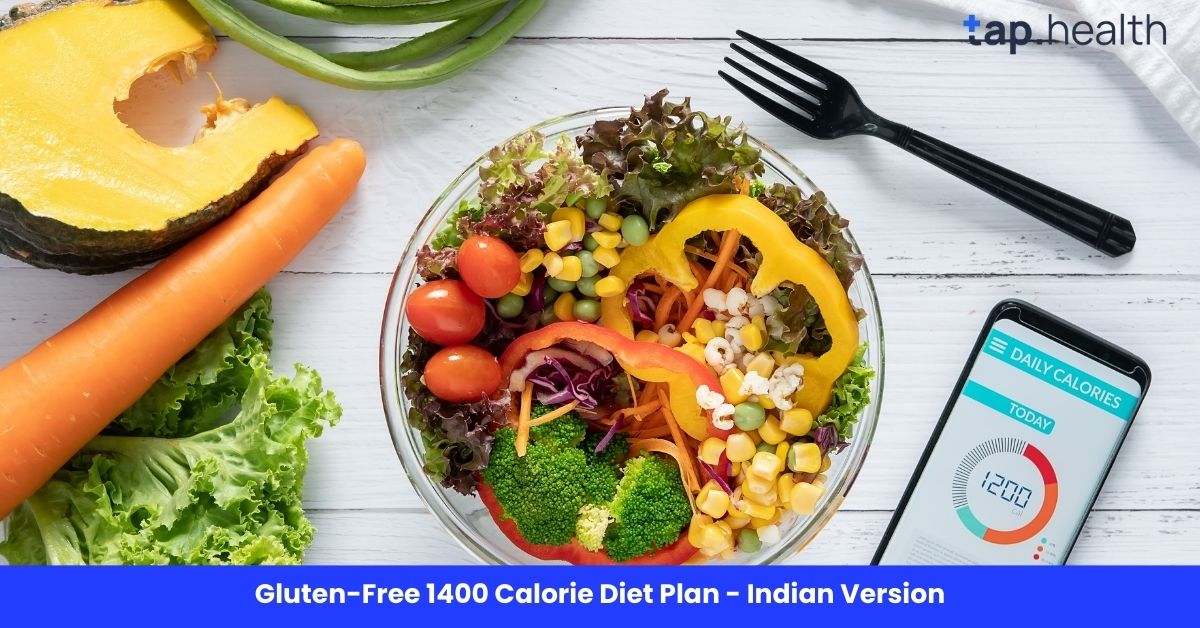
Following a gluten-free diet is essential for individuals with celiac disease, gluten sensitivity, or those who prefer to eliminate gluten for health reasons. A 1400-calorie diet can be a balanced and sustainable way to manage your weight while also adhering to gluten-free dietary restrictions.
This blog post provides a gluten-free 1400-calorie diet plan, tailored to suit the Indian palate. With a variety of gluten-free foods, this meal plan is designed to help you stay healthy, energized, and maintain your weight, all while enjoying traditional Indian dishes.
Why a Gluten-Free Diet?
For some people, gluten—a protein found in wheat, barley, and rye—can cause a range of health issues. Celiac disease is an autoimmune disorder where consuming gluten damages the small intestine, while non-celiac gluten sensitivity can lead to digestive discomfort, fatigue, and joint pain.
A gluten-free diet eliminates gluten and focuses on naturally gluten-free foods, like fruits, vegetables, meat, dairy, and grains such as rice, quinoa, millet, and corn.
The 1400-calorie version of this diet focuses on whole, nutrient-dense foods that meet your daily calorie requirements, promote good digestion, and support weight management.
Key Nutrients in a Gluten-Free 1400-Calorie Diet
When following a gluten-free diet, it’s important to ensure that you’re getting a well-rounded balance of nutrients, particularly carbohydrates, proteins, healthy fats, and micronutrients. Here’s how each nutrient plays a vital role in your 1400-calorie meal plan:
1. Carbohydrates: The Body’s Energy Source
Carbohydrates are a primary source of energy for the body, especially if you’re active. With a gluten-free diet, it’s essential to choose complex carbs that are rich in fiber and release energy slowly. This helps in maintaining blood sugar levels and provides sustained energy throughout the day.
Sources:
- Brown rice
- Quinoa
- Millets (e.g., bajra, ragi)
- Sweet potatoes
- Fruits (apples, bananas, berries)
2. Proteins: The Building Blocks of Muscle and Repair
Protein is essential for the repair and growth of tissues and muscles. A gluten-free diet can include plenty of plant-based proteins like lentils, chickpeas, tofu, and dairy, as well as animal-based proteins like chicken, fish, and eggs.
Sources:
- Lentils (dal), chickpeas, tofu, paneer
- Chicken or fish (if non-vegetarian)
- Eggs
- Greek yogurt (unsweetened)
3. Healthy Fats: Support for Hormonal Health and Energy
Healthy fats are important for hormonal function, brain health, and energy production. They also help in absorbing fat-soluble vitamins (A, D, E, and K).
Sources:
- Olive oil
- Avocados
- Nuts (almonds, walnuts)
- Seeds (chia seeds, flaxseeds)
4. Micronutrients: Vital for Overall Health
Micronutrients like vitamins and minerals are important for immune function, bone health, and energy metabolism. A gluten-free diet should include a variety of colorful vegetables and fruits to ensure adequate intake of these nutrients.
Sources:
- Leafy greens (spinach, kale)
- Berries and citrus fruits
- Nuts and seeds
- Dairy (for calcium and vitamin D)
Gluten-Free 1400-Calorie Indian Diet Plan
Here’s a 7-day gluten-free meal plan that ensures you are getting the right amount of protein, carbohydrates, and healthy fats while sticking to 1400 calories. Each meal is designed to be gluten-free and suitable for Indian tastes, using gluten-free grains like millets, rice, and quinoa.
Day 1 – Gluten-Free 1400 Calorie Indian Meal Plan
Breakfast (350 Calories):
- 1 small bowl of poha made with flattened rice (100 calories)
- 1 boiled egg (70 calories)
- 1/2 apple (50 calories)
- 1 cup green tea (5 calories)
Mid-Morning Snack (100 Calories):
- 10-12 almonds (100 calories)
Lunch (400 Calories):
- 1 small bowl of dal (lentils) (150 calories)
- 1 small serving of brown rice (120 calories)
- 1 small mixed vegetable curry (carrots, peas, spinach) (100 calories)
- 1 small cucumber and tomato salad (50 calories)
Afternoon Snack (100 Calories):
- 1 small cup of Greek yogurt (unsweetened) (100 calories)
Dinner (450 Calories):
- 1 small serving of grilled chicken (200 calories)
- 1 small serving of quinoa (150 calories)
- 1 small sautéed spinach with garlic (50 calories)
- 1 teaspoon olive oil for cooking (50 calories)
Day 2 – Gluten-Free 1400 Calorie Indian Meal Plan
Breakfast (350 Calories):
- 1 small bowl of ragi porridge with almond milk (150 calories)
- 1 boiled egg (70 calories)
- 1 small banana (90 calories)
- 1 cup green tea (5 calories)
Mid-Morning Snack (100 Calories):
- 10-12 walnuts (100 calories)
Lunch (400 Calories):
- 1 small serving of chickpea curry (150 calories)
- 1 small serving of quinoa (150 calories)
- 1 small cucumber and mint salad (50 calories)
- 1 teaspoon olive oil for dressing (50 calories)
Afternoon Snack (100 Calories):
- 1 small apple (80 calories)
- 1 tablespoon peanut butter (20 calories)
Dinner (450 Calories):
- 1 small serving of grilled paneer (200 calories)
- 1 small serving of millet roti (150 calories)
- 1 small portion of sautéed mixed vegetables (50 calories)
- 1 teaspoon olive oil (50 calories)
Day 3 – Gluten-Free 1400 Calorie Indian Meal Plan
Breakfast (350 Calories):
- 1 small bowl of oats with almond milk and flaxseeds (150 calories)
- 1 boiled egg (70 calories)
- 1 small banana (90 calories)
- 1 cup herbal tea (5 calories)
Mid-Morning Snack (100 Calories):
- 1 small handful of cashews (100 calories)
Lunch (400 Calories):
- 1 small bowl of moong dal (150 calories)
- 1 small serving of brown rice (120 calories)
- 1 small side of sautéed spinach (50 calories)
- 1 small cucumber and tomato salad (50 calories)
Afternoon Snack (100 Calories):
- 1 small cup of Greek yogurt (unsweetened) (100 calories)
Dinner (450 Calories):
- 1 small serving of grilled tofu (150 calories)
- 1 small serving of quinoa (150 calories)
- 1 small mixed vegetable curry (100 calories)
- 1 teaspoon olive oil for cooking (50 calories)
Day 4-7:
Follow the same basic structure of meals, using a variety of vegetarian proteins like tofu, paneer, lentils, and chickpeas. Rotate between millets, quinoa, and brown rice for carbs. Include leafy greens, fruits, and healthy fats like almonds and avocados to ensure a nutrient-dense, gluten-free diet.
Also read this: Prenatal Vitamins and Diabetes: Essential Nutrients for a Healthy Pregnancy
FAQs: Common Questions about the Gluten-Free 1400 Calorie Diet
1. Can I lose weight with a 1400-calorie gluten-free diet?
Yes, a 1400-calorie gluten-free diet can help with weight management, especially if you are choosing whole, nutrient-dense foods. It’s important to combine this diet with regular physical activity to achieve sustainable weight loss.
2. What are the best gluten-free grains for an Indian diet?
The best gluten-free grains for an Indian diet include millets (such as bajra and ragi), quinoa, brown rice, and amaranth. These grains are rich in fiber, protein, and complex carbohydrates, making them perfect for a balanced gluten-free diet.
3. Can I eat fruits on a gluten-free diet?
Yes, fruits like apples, bananas, berries, and oranges are naturally gluten-free. Just be mindful of portion sizes and consume them in moderation to maintain a healthy blood sugar balance.
4. Can I drink dairy while on a gluten-free diet?
Yes, dairy products like milk, paneer, and Greek yogurt are gluten-free. Just make sure to choose unsweetened versions to avoid unnecessary sugars, which can spike blood sugar levels.
5. Is it necessary to take supplements while on a gluten-free diet?
If you are eating a well-balanced diet that includes a variety of vegetables, fruits, whole grains, and proteins, you likely don’t need supplements. However, it’s always best to consult with a healthcare professional to ensure you’re meeting your nutritional needs.
Conclusion
A 1400-calorie gluten-free diet is an effective way to maintain healthy weight and manage blood sugar levels. This plan is full of nutrient-rich foods that are naturally gluten-free and can be tailored to support a variety of health goals, including PCOS management, weight loss, or simply living a healthier lifestyle. By incorporating whole grains like millets, quinoa, and brown rice, along with plenty of vegetables, fruits, and plant-based proteins, you can enjoy a balanced and delicious diet without the worry of gluten.