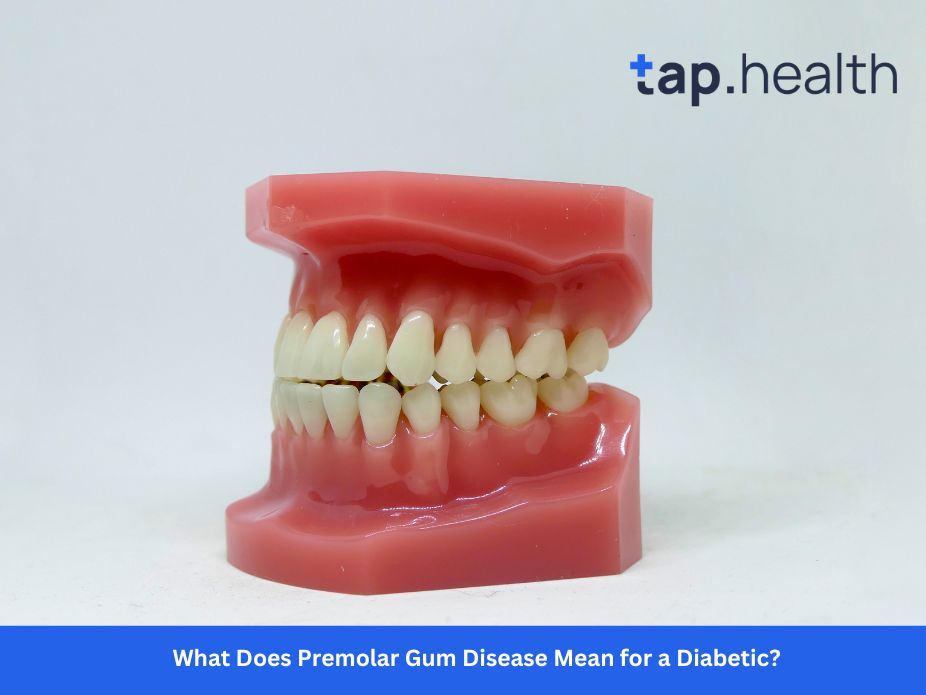
Imagine noticing a small amount of blood when you brush your premolars, those crucial teeth just behind your canines. For most people, this might seem like a minor annoyance. But for a diabetic patient, this simple sign is an alarm bell, indicating that two complex diseases are silently interacting in the body, each making the other far more dangerous.
The question, “what does premolar gum disease mean for diabetic,” is not just about dental health; it is about understanding a well-established, dangerous feedback loop. The relationship between diabetes and periodontal (gum) disease is so strong that periodontitis is now recognized as the “sixth major complication of diabetes,” standing right alongside damage to the eyes, kidneys, and nerves.
This in-depth guide will walk you through exactly why gum disease is so devastating for diabetics, using clear and simple language. We will explore the dangerous two-way street between these conditions, how they damage each other, the specific threat to premolars, and, most importantly, the actionable steps you can take to protect both your smile and your blood sugar control.
The Two-Way Street: The Vicious Cycle Between Gum Disease and Diabetes
The most critical concept to grasp is that diabetes and gum disease are not separate issues. They are locked in a bidirectional relationship, meaning they constantly fuel each other in a vicious cycle of chronic inflammation, immune system imbalance, and poor healing.
The Danger of a One-Way Street: This is not a simple cause-and-effect scenario where one condition merely leads to the creation of the other. Instead, it is a dynamic and destructive feedback loop that constantly makes both conditions worse.
How Diabetes Ignites Gum Disease
High blood sugar, the hallmark of diabetes, creates a perfect storm inside the mouth. People with diabetes have significantly more glucose in their saliva—studies show it can be 4 to 5 times higher than in non-diabetics. This sugary environment acts as an all-you-can-eat buffet for harmful oral bacteria, allowing them to flourish and create a thick, infectious biofilm (plaque) on your teeth.
Crucially, persistently high blood sugar also weakens your body’s ability to fight back. Diabetes impairs the immune system’s function, making it harder to combat infections. The body’s response is an exaggerated, harmful inflammation in the gums, which not only fails to clear the bacteria but also destroys the very tissues that hold the teeth in place, such as the gums, the periodontal ligament, and the jawbone itself.
How Gum Disease Worsens Diabetes
The destruction travels in the other direction, too. The gums are a massive surface area of highly vascularized tissue. When severely inflamed by gum disease, this soft tissue becomes a persistent source of systemic inflammation.
Pro-inflammatory chemicals, called cytokines, are released from the diseased gums into the bloodstream, where they travel throughout the body. These substances, such as TNF-alpha and IL-6, directly interfere with the body’s ability to use insulin, increasing insulin resistance. This makes it significantly harder for a diabetic patient to control their blood sugar, turning a manageable condition into an uncontrollable one. This is the vicious cycle: high blood sugar leads to more severe gum disease, which leads to higher blood sugar.
The Specific Threat of Premolar Gum Disease in a Diabetic Patient
When gum disease settles around the premolars, the concerns for a diabetic are amplified beyond what a non-diabetic person would experience.
The Critical Role of Premolars
Premolars, located between the sharp canines and larger molars, are the mouth’s essential grinding and transitional teeth. They are pivotal for chewing, and their location and anatomy make them susceptible to unique stresses. The gums around the lower canines and premolars can be naturally thinner, making these areas more vulnerable to recession and the destructive forces of periodontal disease.
A Deeper, More Destructive Disease
In a diabetic patient, a gum infection that starts around a premolar is not a milder form of the disease; it is more aggressive. This translates into deeper periodontal pockets—the gaps between the tooth and gum that become infected—and greater attachment loss, which is the destruction of the tissues anchoring the tooth. The body’s impaired ability to heal and remodel bone means that bone loss around a diabetic’s premolar is likely to be more rapid and severe.
Why This is a Crisis for Diabetics
The stakes are much higher for a diabetic. The chronic infection in the gums doesn’t stay put; it has systemic consequences. The active infection serves as a source for bacteria and inflammatory mediators to enter the bloodstream.
- Fueling the Diabetes Fire: As discussed, the systemic inflammation from the premolar gum disease will directly worsen insulin resistance, causing HbA1c levels to spike and making diabetes harder to manage. Research indicates that effective treatment for gum disease can lower HbA1c by an average of 0.4 to 0.7 percentage points—a clinically meaningful improvement equivalent to adding a second-line diabetes medication.
- Increasing the Risk of Other Complications: The consequences of this ongoing inflammation extend to the entire body. People with diabetes who have periodontitis are at a significantly higher risk of developing other devastating complications, including retinopathy, neuropathy, cardiovascular disease, and kidney disease. Untreated gum disease in a diabetic more than doubles the risk of having a fatal heart attack compared to diabetics with healthy gums.
- The Real Threat of Tooth Loss: Ultimately, the progressive destruction of the bone around a premolar will lead to the tooth loosening and eventually being lost. People with diabetes have a 50% to 100% greater risk of tooth loss compared to those with healthy blood sugar levels. The loss of these important chewing teeth then creates a new crisis: a diabetic patient who cannot comfortably eat a healthy, fibrous diet because they are missing teeth is at a massive disadvantage.
Recognizing the Silent Alarm: Key Warning Signs
Gum disease can be painless in its early stages, so knowing what to look for is essential for a diabetic. Do not ignore these warning signs, particularly around the premolars:
- Bleeding Gums: Gums that bleed easily when you brush or floss are one of the earliest and most common signs of active infection and inflammation.
- Swollen, Red, or Tender Gums: Healthy gums are pink and firm. Diseased gums are often red, swollen, and can be painful to the touch.
- Receding Gums: If your teeth suddenly look longer than they used to, it is because the gums are pulling away from the tooth, exposing the vulnerable root surface.
- Persistent Bad Breath: A constant bad taste in your mouth or chronic bad breath (halitosis) that does not go away with brushing can be a sign of a deep-seated infection.
- Loose Teeth or New Gaps: As the supporting bone is destroyed, teeth can begin to shift, creating new spaces, or start to feel loose.
- Pus Between Teeth and Gums: This is a definitive sign of a severe, active infection and requires immediate dental attention.
Action Plan: Protecting Your Gums and Your Glucose Levels
The good news is that this vicious cycle can be broken. A proactive, two-pronged approach targeting both diseases simultaneously is the key.
Optimize Your Daily Oral Hygiene
The foundation of gum disease prevention and control lies in your daily routine. For a diabetic, this is non-negotiable medical self-care.
- Brush Systematically: Brush your teeth at least twice a day with a soft-bristled toothbrush and fluoride toothpaste. Pay special attention to the gumline of every single tooth, including the hard-to-reach premolars at the back.
- Clean Between Your Teeth Every Day: A toothbrush cannot reach the spaces between your teeth where gum disease often begins. You must use dental floss or interdental brushes at least once daily to disrupt the bacterial plaque in these areas.
- Be a Daily Detective: Take a moment each day to look at your gums in the mirror. Check for any changes: new redness, swelling, recession, or areas that bleed easily. Early detection is powerful.
The Critical Role of Professional Dental Care
Home care is essential, but it is not enough. You need a professional partner.
- Communicate Your Status: Before any treatment, always tell your dentist that you have diabetes and what your recent HbA1c level is. This information is vital for planning safe and effective care.
- Prioritize Regular Periodontal Check-ups: For diabetic patients with a history of gum disease, the standard six-month checkup may not be frequent enough. A periodontist may strongly recommend a professional maintenance visit every three to four months to adequately monitor and halt disease progression.
- Non-Surgical Periodontal Therapy (NSPT): This is the cornerstone treatment for gum disease. Often referred to as “scaling and root planing” or a “deep cleaning,” it involves meticulously removing the bacterial plaque and hardened tartar from above and below the gum line. Multiple clinical studies and meta-analyses confirm that this treatment not only improves gum health but also provides a clinically significant improvement in glycemic control, mirroring the effects of adding a second diabetes drug.
The Ultimate Weapon: Blood Sugar Control
While fixing the teeth mechanically is important, the most powerful weapon against gum disease is excellent metabolic control. As one 2015 study concluded, the strong link between diabetes and periodontitis essentially disappears in patients with well-controlled blood sugar. Prioritizing time-in-range and a healthy HbA1c is the best way to reduce the glucose in your saliva that harmful bacteria feed on.
Key Takeaways
- Gum disease and diabetes have a bidirectional, destructive relationship. Each condition directly fuels and worsens the other, creating a dangerous cycle of systemic inflammation and poor glycemic control.
- For a diabetic, gum disease—including around the premolars—is a far more serious condition. Diabetes creates a pro-inflammatory state that leads to more aggressive gum disease, resulting in faster bone destruction and deeper infections.
- Uncontrolled gum disease makes diabetes harder to manage. The systemic inflammation from infected gums directly increases insulin resistance, causing blood sugar levels to spike and making glycaemic control a constant, uphill battle.
- Periodontitis is a direct threat multiplier for diabetic complications. Patients with diabetes and periodontitis are at a significantly higher risk of developing severe complications like cardiovascular disease (including heart attacks), nephropathy, and retinopathy than diabetics with healthy gums.
- Professional gum treatment is a highly effective part of diabetes care. Non-surgical periodontal therapy, like scaling and root planing, can lower HbA1c levels, an effect that is clinically comparable to adding another diabetes medication.
- Excellent blood sugar control is the most powerful tool for prevention. The link between diabetes and periodontitis is drastically reduced in people who maintain well-controlled blood glucose, underlining the importance of diligent daily management.
Frequently Asked Questions
Can gum disease cause diabetes?
While gum disease doesn’t directly cause diabetes in a simple A-to-B manner, it is a powerful driver of insulin resistance. The chronic inflammation from infected gums releases chemicals into the bloodstream that make the body’s cells less responsive to insulin, which can be the “tipping point” that pushes a person with prediabetes into full-blown type 2 diabetes.
Is gum disease a sign of undiagnosed diabetes?
Yes, it can be. The presence of severe gum disease, especially in a patient who is otherwise not known to be diabetic, can be a strong clinical marker for undiagnosed diabetes or prediabetes. If a dentist sees persistent gum inflammation or rapid bone loss, they may be the first health professional to suggest a blood sugar test.
How much can treating gum disease lower my HbA1c?
The improvement can be clinically equal to adding a second-line diabetes medication. A rigorous Cochrane review found that treatment for periodontitis reduces blood sugar levels by an average of 0.43 percentage points three to four months after treatment, and some studies have shown even greater reductions at 12 months. This is a life-changing improvement.
What are the symptoms of premolar gum disease that a diabetic should look for?
The key symptoms are the same for any tooth but require more vigilance from a diabetic. Look for gums that bleed easily during brushing or flossing, persistent redness and swelling, gums that appear to be pulling away from the teeth (recession), a constant bad taste in the mouth, and any feeling that the premolars are loose or shifting. None of these signs should be ignored.
Is it safe for a diabetic to have gum surgery or dental implants?
Yes, it is generally very safe if the diabetes is well-managed. The key factor is glycemic control. Studies show that diabetic patients with an HbA1c below 8.0% have excellent success rates with dental implants, comparable to non-diabetics. However, uncontrolled diabetes can impair wound healing, so your dentist and physician will work together to ensure your blood sugar is stable before any surgical procedure