Have you ever wondered why you feel sluggish or energetic after meals? The speed at which blood sugar drops after eating plays a key role in your daily energy, mood, and long-term health. Understanding post-meal blood sugar dynamics is especially vital for managing diabetes, prediabetes, or preventing metabolic issues. This guide breaks down the process, normal ranges, influencing factors, and practical strategies for optimal glucose control.
Understanding Post-Meal Blood Sugar Dynamics
What Happens to Blood Sugar After Eating?
When you consume food, carbohydrates break down into glucose, entering the bloodstream and raising blood sugar levels. The pancreas responds by releasing insulin, which helps cells absorb glucose for energy or storage. In healthy individuals, this regulation keeps levels balanced. Blood sugar typically begins rising within minutes, peaks around 30-60 minutes, and starts dropping as insulin takes effect.
How Quickly Should Blood Sugar Drop After a Meal?
Blood sugar should start decreasing within 30 minutes post-meal due to insulin action. For most people, it returns to baseline within 2 hours. A gradual drop prevents energy crashes and health risks.
Normal Blood Sugar Levels After Eating
What Are Normal Postprandial Glucose Levels?
Postprandial (after eating) blood sugar refers to levels measured 1-2 hours after a meal:
- Non-diabetic adults: Below 140 mg/dL (7.8 mmol/L)
- People with diabetes: Below 180 mg/dL (10 mmol/L)
- Prediabetes: Aim below 140 mg/dL to prevent progression
Immediately after eating, levels may reach 140-180 mg/dL temporarily, but quick return to normal is ideal.
Blood Sugar Levels by Age and Condition
| Age/Condition | Normal Post-Meal Range (mg/dL) | Notes |
|---|---|---|
| Children | 120-140 | Lower to support growth |
| Adults (non-diabetic) | <140 | Standard guideline |
| Diabetes | <180 | ADA recommendation |
| Pregnant women | <140 (or <120 in some cases) | Tighter control for safety |
| Elderly | 140-180 | Adjusted for comorbidities |
Always personalize with a doctor, as individual factors vary.
Factors Affecting How Fast Blood Sugar Drops After Eating
Meal Composition and Glycemic Index
- High-GI foods (sugary drinks, white bread) cause rapid spikes and quicker drops.
- Low-GI foods (whole grains, legumes, vegetables) lead to slower, steadier changes.
- Fiber, protein, and healthy fats slow absorption, promoting gradual normalization.
Other Influences on Post-Meal Glucose Drop
- Portion size: Larger meals delay return to normal.
- Physical activity: A post-meal walk accelerates drop by enhancing insulin sensitivity.
- Insulin sensitivity: Better sensitivity means faster, effective drops.
- Stress, sleep, illness: These can slow the process or cause fluctuations.
Ideal Timeframe for Blood Sugar Normalization After Eating
How Long Should It Take for Blood Sugar to Return to Normal?
Ideally, 1-2 hours. If levels stay elevated beyond 2 hours, it may signal insulin resistance. Consistent delays warrant medical evaluation.
Best Time to Check Blood Sugar After Eating Test 1-2 hours post-meal for the most accurate view of how your body handles glucose.
Dangers of Abnormal Blood Sugar Drops or Spikes
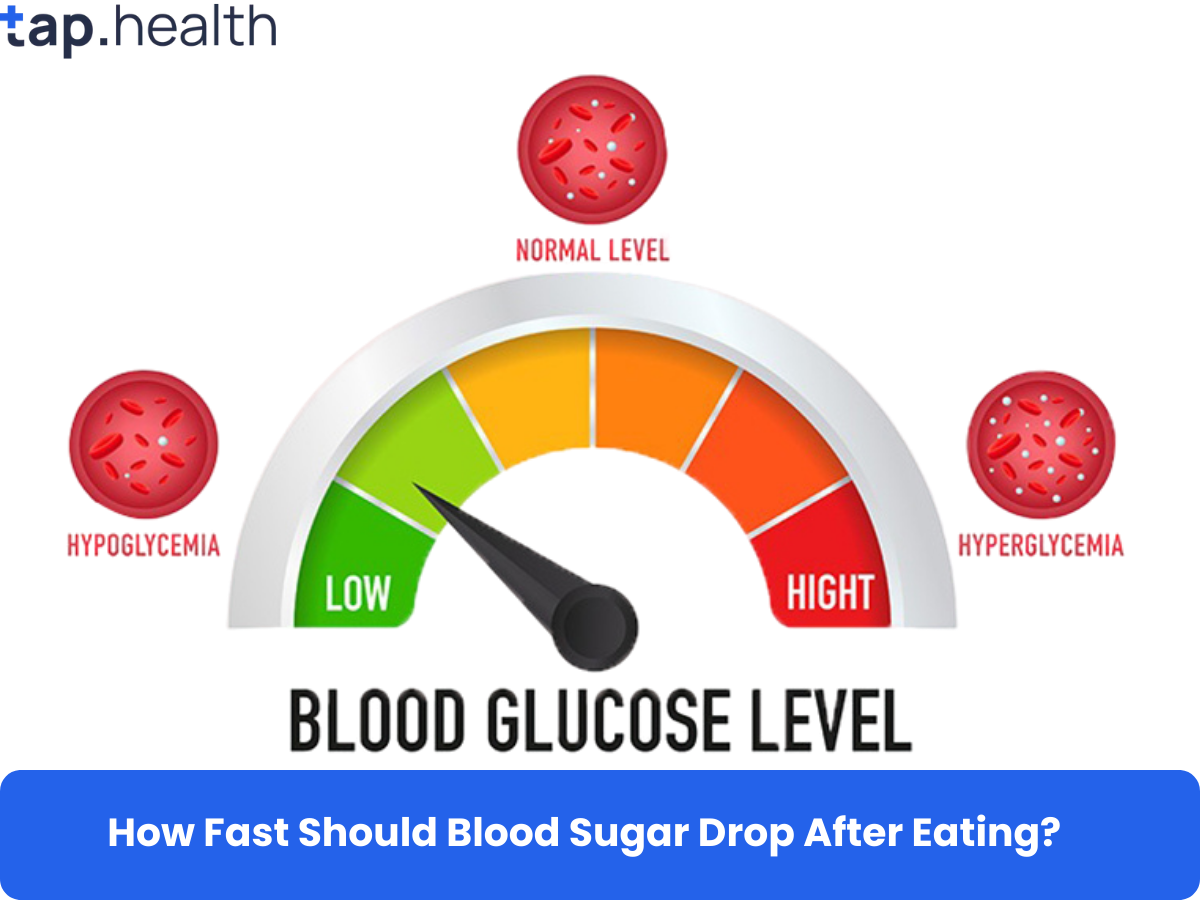
Hyperglycemia Risks (Slow or No Drop) Levels >180 mg/dL can damage vessels, nerves, kidneys, and eyes over time.
Hypoglycemia Risks (Too Fast Drop) Below 70 mg/dL causes shakiness, confusion, sweating, or seizures. Rapid drops often follow high-GI meals or over-medication.
Role of Insulin and Other Hormones in Blood Sugar Regulation
Insulin lowers blood sugar by facilitating glucose uptake. Glucagon raises it when needed. In diabetes, impaired insulin function slows post-meal drops.
How Different Foods Impact Blood Sugar Drop Speed
Rapid Spike Foods Candy, soda, refined carbs – quick rise, potential crash.
Stabilizing Foods Nuts, avocados, leafy greens, lean proteins – promote steady, healthy drops.
Monitoring and Managing Post-Meal Blood Sugar
Tools for Tracking
- Finger-prick glucometers: Affordable, instant readings.
- Continuous Glucose Monitors (CGMs): Real-time trends, alerts.
Lifestyle Tips for Faster, Healthier Blood Sugar Drops
- Eat balanced meals with protein + fiber + fats.
- Walk 10-15 minutes after eating.
- Choose low-GI options daily.
- Stay hydrated – water helps excrete excess glucose.
- Prioritize sleep and stress management.
Strategies to Lower Blood Sugar Quickly After Eating
- Light exercise (walking, yoga).
- Drink water or herbal tea.
- Add cinnamon or vinegar to meals (may improve sensitivity).
- Control portions to avoid overload.
When to See a Doctor About Blood Sugar Drop Issues
Seek help if:
- Post-meal levels consistently >180 mg/dL.
- Frequent lows (<70 mg/dL) with symptoms.
- Unexplained fatigue, thirst, or vision changes.
Frequently Asked Questions (People Also Ask)
How long does it take for blood sugar to drop after eating?
Typically 1-2 hours to return to normal.
What is normal blood sugar 2 hours after eating?
<140 mg/dL (non-diabetic); <180 mg/dL (diabetes).
Can blood sugar drop too fast after eating?
Yes, rapid drops risk hypoglycemia symptoms.
Does exercise make blood sugar drop faster after meals?
Yes, by increasing muscle glucose uptake.
What foods help blood sugar drop steadily after eating?
High-fiber, low-GI choices like oats, berries, broccoli.
Is 170 mg/dL normal after eating?
Acceptable short-term, but monitor trends.
How does glycemic index affect blood sugar drop speed?
Low-GI slows rise and supports smoother drop.
What is postprandial hypoglycemia?
Low blood sugar 2-4 hours after eating, often from reactive insulin over-response.
Maintaining proper blood sugar drop after eating supports energy, mood, weight, and prevents complications like heart disease or neuropathy. Small changes – balanced plates, movement, monitoring – yield big results. Consult healthcare providers for tailored advice, especially with diabetes or prediabetes. Stable glucose means better daily living and long-term wellness.life.
References
- Mayo Clinic: Type 2 Diabetes Diagnosis & Treatment
- CDC: Diabetes Treatment
- Harvard Health: The Role of Fiber in Blood Sugar Control
- National Institute of Diabetes and Digestive and Kidney Diseases: Insulin Resistance & Prediabetes