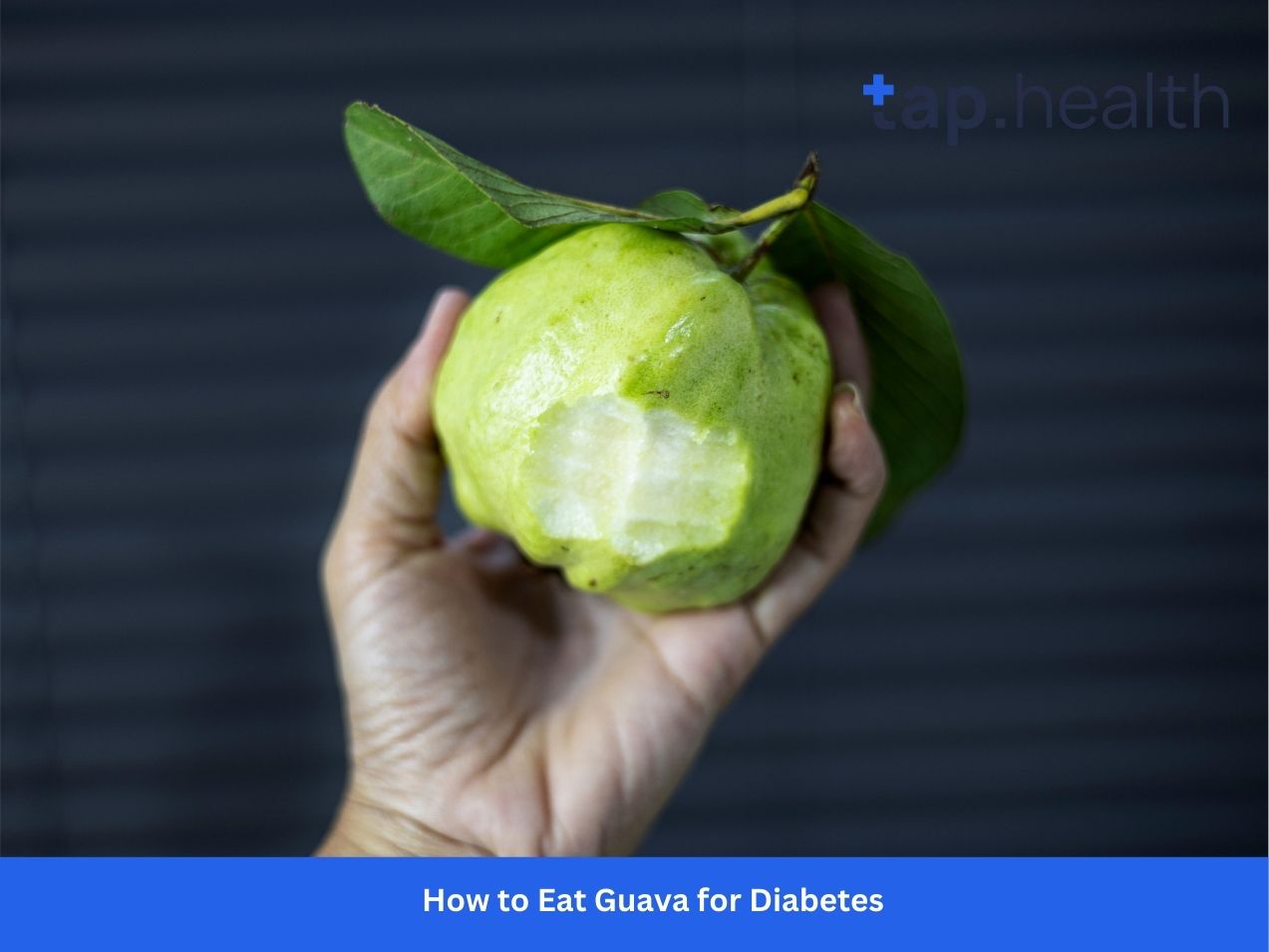
In India, the humble Amrood (Guava) is a winter staple. You see carts piled high with them on every street corner, often sprinkled with a little chaat masala and salt. It smells sweet, tastes crunchy, and brings back memories of sunny afternoons.
But if you have diabetes, looking at a fruit cart can be stressful. You are constantly doing mental math: “Is this too sweet?” “Will this spike my sugar?” “Can I eat the whole thing, or just a slice?”
You might have heard that guava is a “superfood” for diabetics. But you might also worry because it is, after all, a fruit with natural sugar.
The truth is, guava is one of the best fruits you can eat if you have diabetes, but how you eat it matters. Eating it whole provides medicine-like benefits; drinking it as juice can be a sugar bomb.
In this comprehensive guide, we will peel back the layers of this tropical fruit. We will explain exactly how to eat guava for diabetes, whether you should eat the skin, the magic of guava leaf tea, and the one mistake you must avoid to keep your blood sugar steady.
Nutritional Profile of Guava
To understand why guava is a superstar, we first need to look at what is inside it. It is not just water and sugar; it is a nutrient powerhouse.
One medium-sized guava (approx. 55 grams) contains roughly:
- Calories: 38 (Very low!)
- Carbohydrates: 8 grams
- Fibre: 3 grams (This is the hero nutrient)
- Protein: 1.5 grams
- Vitamin C: Double the amount found in an orange!
- Potassium: Essential for heart health and blood pressure.
For a diabetic, the ratio of Fibre to Carb is excellent. This means the sugar in guava is “packaged” in a way that makes it hard for your body to absorb it quickly.
Glycaemic Index and Glycaemic Load of Guava
When managing diabetes, two numbers matter more than calories: Glycaemic Index (GI) and Glycaemic Load (GL).
- Glycaemic Index (GI): This measures how fast a food raises blood sugar.
- Guava GI: 12–24. This is considered Very Low.
- Comparison: Watermelon is 72 (High). White Rice is 70+ (High).
- Glycaemic Load (GL): This measures how much sugar enters your blood from a typical serving.
- Guava GL: 1.3–5 (for a standard portion). This is extremely low.
Verdict: Guava is one of the safest fruits on the planet regarding blood sugar impact.
Is Guava Good for Diabetes?
Yes, absolutely.
In fact, it is often recommended by nutritionists in India over expensive imported fruits like kiwi or berries.
- It’s Filling: The high fibre content keeps you full for longer, preventing the urge to snack on unhealthy biscuits or namkeen.
- Immunity Booster: Diabetics are prone to infections. The massive dose of Vitamin C in guava strengthens the immune system.
- Heart Health: Guava helps lower bad cholesterol (LDL) and raise good cholesterol (HDL), protecting the heart—a crucial benefit since diabetics are at higher risk for heart issues.
How Guava Helps Manage Blood Sugar Levels
How does a sweet fruit lower blood sugar? It sounds contradictory, but the science is solid.
High Fibre Content
Guava is rich in pectin, a type of soluble fibre.
- When you eat pectin, it forms a gel-like substance in your stomach.
- This gel traps the sugar from the fruit and releases it slowly into the bloodstream.
- Instead of a “spike,” you get a gentle “curve.”
Low to Moderate Natural Sugar
Unlike mangoes or grapes, which are packed with fructose, guava has a moderate sugar level. Because it is so dense and crunchy, it takes time to chew and digest, further slowing down sugar absorption.
Antioxidants and Insulin Sensitivity
Guava is loaded with antioxidants like lycopene and vitamin C. These compounds reduce oxidative stress in the body. Since oxidative stress worsens insulin resistance, eating antioxidant-rich foods helps your insulin work better.
Best Ways to Eat Guava for Diabetes
Now, let’s answer the main question: “How to eat guava for diabetes?” Simply biting into it is fine, but there are smarter ways to maximize benefits.
Eating Whole Raw Guava
This is the gold standard.
- Wash the fruit thoroughly.
- Cut it into slices.
- Tip: Sprinkle a pinch of black salt (kala namak) or roasted cumin powder (jeera). This not only enhances the taste but aids digestion.
Guava with Peel vs Without Peel
Always eat the peel. Many people peel guava because the skin can be hard. Don’t do this!
- The peel contains the highest concentration of Vitamin C and Antioxidants.
- The peel provides the roughage (insoluble fibre) that prevents constipation, a common issue for diabetics on medication like Metformin.
Guava Leaves Tea for Blood Sugar Control
This is an ancient Ayurvedic remedy backed by modern science.
- The Benefit: Compounds in guava leaves inhibit enzymes that convert carbohydrates into glucose. Essentially, it blocks some sugar absorption.
- How to make it: Boil 5-6 tender fresh guava leaves in water for 10 minutes. Strain and drink warm. It acts like a natural “sugar blocker” after a meal.
Pairing Guava with Protein or Healthy Fats
To make the blood sugar response even flatter, never eat fruit “naked.” Pair it!
- With Nuts: Eat guava slices with a handful of almonds or walnuts. The fat slows down absorption.
- With Yogurt: Add chopped guava to unsweetened curd (dahi) for a fibre-protein snack.
How Much Guava Can a Diabetic Eat Per Day?
Even good things can be bad in excess.
- Portion Size: Limit yourself to one medium-sized guava (approx. 100g) per day.
- Why Limit? Eating 3-4 guavas might push your total carbohydrate intake too high, leading to a spike despite the fibre.
Best Time to Eat Guava for Stable Blood Sugar
Timing is everything in diabetes management.
- Mid-Morning Snack (11 AM): The best time. It keeps your sugar stable between breakfast and lunch.
- Evening Snack (4 PM): Prevents the evening crash that leads to chai-biscuit cravings.
- Avoid at Night: Avoid eating fruit right before bed. Your body metabolism slows down at night, and the natural sugar might stay in your blood longer while you sleep.
- Avoid on Empty Stomach: For some, the high Vitamin C (acid) can cause acidity if eaten first thing in the morning.
Guava Juice vs Whole Guava – What’s Better for Diabetics?
This is a strict rule: Eat the fruit, don’t drink the juice.
- Whole Guava: Contains fibre. Chewing signals your brain that you are full. GI is low.
- Guava Juice: Fibre is removed (or destroyed). You consume the sugar of 3-4 guavas in one glass. GI is High. It causes an instant sugar spike.
Exception: You can make a vegetable smoothie (like spinach or cucumber) and add half a guava for flavour. But pure fruit juice is a “No” for diabetics.
Who Should Be Careful While Eating Guava?
While safe for most, there are exceptions.
Portion Size Concerns
If you have uncontrolled diabetes (HbA1c > 9%), consult your dietician. They might ask you to stick to half a fruit until your numbers stabilize.
Digestive Sensitivity or IBS
Guava seeds are hard.
- If you have IBS (Irritable Bowel Syndrome) or diverticulitis, the seeds can irritate your stomach lining.
- Solution: Scoop out the seeds and eat the flesh, or chew the seeds very thoroughly.
Real-Life Scenario
Meet Mr. Verma (55, Retired Teacher from Delhi): Mr. Verma loved fruit but stopped eating everything after his diagnosis because he was scared of sugar spikes. He became constipated and lacked energy.
The Change: His nutritionist introduced one raw guava into his mid-morning routine.
- The Habit: He ate it with the skin, sprinkled with a little black pepper.
- The Result: His constipation resolved within a week (thanks to the fibre). His 2-hour post-meal sugar readings remained stable because the snack prevented him from overeating at lunch. He learned that banning fruit wasn’t the answer—choosing the right fruit was.
Expert Contribution
We consulted Dt. S. Reddy, Senior Clinical Nutritionist:
“I call Guava the ‘Indian Apple.’ It is cheaper and often nutritious than imported apples. For my diabetic patients, I have a simple rule: ‘Chew, don’t gulp.’
If you juice a guava, you turn a superfood into sugar water. But if you sit and chew a whole guava, the fibre acts like a net, catching the sugar and releasing it slowly. Also, don’t throw away the leaves! Guava leaf tea is an excellent post-meal drink to dampen sugar spikes.”
Recommendations Grounded in Proven Research and Facts
According to the National Institutes of Health (NIH) and studies published in Nutrition & Metabolism:
- Guava Leaf Extract: A study showed that drinking guava leaf tea reduced blood sugar levels after a meal by more than 10%. It prevented complex carbs from turning into glucose quickly.
- Skin Benefits: Research confirms that the peel of the guava contains 3x more antioxidants than the inner flesh. Peeling it reduces its anti-diabetic power significantly.
- Cholesterol Link: A study involving Type 2 diabetics showed that regular consumption of guava without the peel reduced serum total cholesterol and triglycerides, while increasing “good” HDL cholesterol.
Conclusion: Key Takeaways
So, how to eat guava for diabetes?
- The Verdict: Guava is a Green Light food. It is low GI, high fibre, and nutrient-dense.
- The Method: Eat it raw, whole, and with the peel. Slice it and add nuts for protein balance.
- The Portion: Stick to one medium fruit per day.
- The Secret Weapon: Try guava leaf tea after heavy meals.
- The Trap: Never drink strained guava juice or buy “guava nectar” from a carton.
Next time you see that fruit cart, don’t hesitate. Buy that fresh Amrood, enjoy the crunch, and know that you are feeding your body exactly what it needs to fight diabetes.
Read this : Is Guava Good For Diabetes?
Frequently Asked Questions on How to Eat Guava for Diabetes
Is guava good for diabetes type 2?
Yes, excellent. Its low Glycaemic Index (around 12-24) and high fibre content make it one of the best fruits for Type 2 diabetes. The fibre improves insulin sensitivity and prevents blood sugar spikes.
Is white guava good for diabetes?
Yes. Both white and pink guavas are good. Pink guava has more Lycopene (good for heart/eyes), while white guava often has slightly more Vitamin C. For blood sugar control, both are equally effective.
Can diabetic eat guava daily?
Yes. Eating one medium-sized guava daily provides necessary fibre and Vitamin C. However, do not exceed this amount, as excessive fruit intake can still add up in total carbohydrates.
Can diabetics eat guava at night?
It is not recommended. Metabolism slows down at night, and eating fruit (even healthy ones) before bed can lead to higher fasting sugar the next morning. It is best eaten as a mid-morning or evening snack.
Is guava good for diabetes pregnancy (Gestational Diabetes)?
Yes. Guava is safe and beneficial for Gestational Diabetes. The high Vitamin C helps the baby’s immunity, and the fibre prevents pregnancy-related constipation. However, always check with your OB-GYN regarding portion sizes.
Can guava increase blood sugar?
Only if eaten in excess or as juice. A whole guava releases sugar very slowly. However, guava juice (which removes fibre) or sweetened canned guava will definitely spike blood sugar rapidly.
Do I need to remove guava seeds for diabetes?
No, unless you have stomach issues. The seeds are harmless and pass through the digestive system. However, if you have sensitive teeth or Irritable Bowel Syndrome (IBS), you might want to remove them to avoid irritation.
References
- Healthline: 8 Health Benefits of Guava Fruit and Leaves
- Medical News Today: Can people with diabetes eat guava?
- National Institutes of Health (NIH): Anti-hyperglycemic effect of guava leaf extract
- WebMD: Guava: Health Benefits, Nutrients per Serving
Disclaimer: This article is for informational purposes only. While guava is generally safe, individual blood sugar responses vary. Always test your sugar levels 2 hours after eating a new food to see how your body reacts.