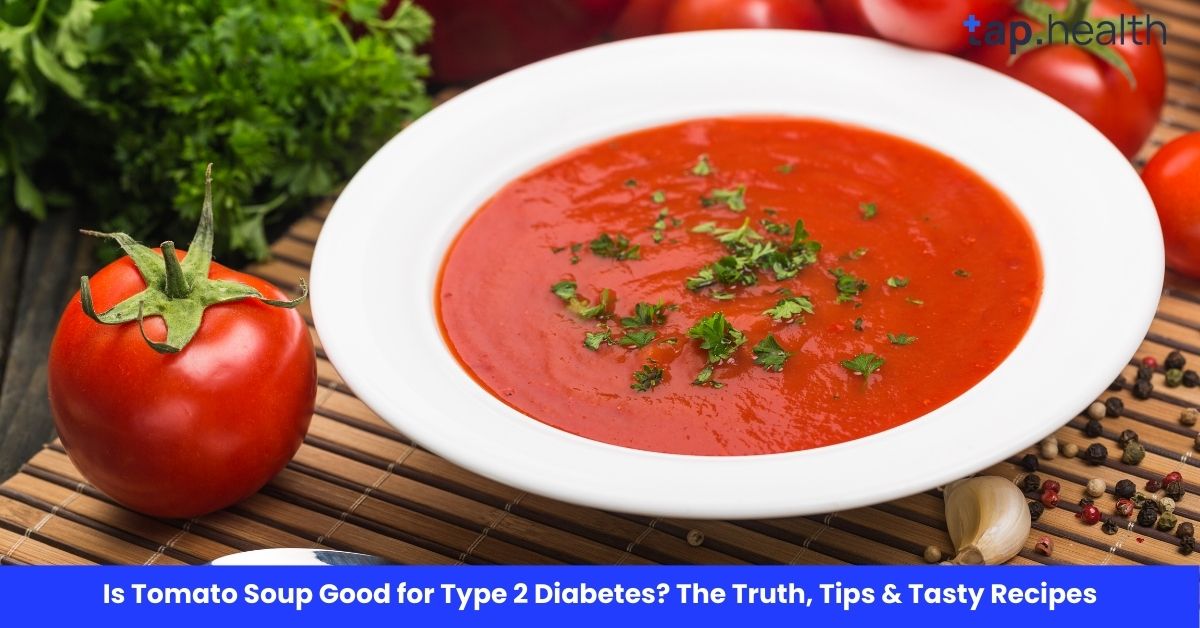
Let’s be honest — tomato soup is cozy, comforting, and feels like a warm hug in a bowl. But if you’re living with type 2 diabetes, you might be wondering… Is this tasty bowl of red goodness actually good for me?
The short answer: Yes — but only if you make it the right way.
Tomato soup can be a fantastic part of your diabetes-friendly diet. It’s low in calories, packed with nutrients, and doesn’t spike your blood sugar — if you avoid the sneaky sugars and salts hiding in store-bought cans.
In this guide, we’ll break down everything you need to know about tomato soup and type 2 diabetes. We’ll cover the science, the risks, the recipes, and even real stories from people just like you. Plus, we’ll give you simple, practical tips so you can enjoy tomato soup without guilt or glucose spikes.
Let’s dive in.
Why Type 2 Diabetes Changes What You Eat
Before we talk soup, let’s talk sugar.
Type 2 diabetes means your body has trouble managing blood sugar (also called glucose). When you eat carbs — especially refined carbs and sugars — your blood sugar shoots up. Over time, high blood sugar can damage your heart, kidneys, eyes, and nerves.
That’s why your diet matters so much.
The goal? Eat foods that:
- Don’t spike your blood sugar (low glycemic index)
- Are rich in fiber (slows sugar absorption)
- Are low in added sugar and salt
- Help your heart stay healthy (diabetes raises heart disease risk)
Tomatoes? They check almost all these boxes.
The Good News: Tomato Soup Can Be a Diabetes Superfood
Low Glycemic Index = Happy Blood Sugar
Tomatoes have a glycemic index (GI) of just 15. That’s super low. Foods under 55 are considered “low GI” — meaning they release sugar slowly into your bloodstream.
So a bowl of tomato soup made with fresh tomatoes? It won’t send your glucose levels on a rollercoaster.
Pro Tip: GI can change depending on what’s in the soup. Add cream, sugar, or white bread? Suddenly, it’s not so friendly anymore.
Loaded with Lycopene — The Diabetes-Fighting Antioxidant
Tomatoes are famous for lycopene — that bright red pigment that’s also a powerful antioxidant.
Why should you care?
- Lycopene fights inflammation (common in diabetes)
- It protects your heart (diabetics are 2x more likely to get heart disease)
- Some studies even link lycopene to better insulin sensitivity
Cooked tomatoes (like in soup!) actually have more lycopene than raw ones. So soup = smart move.
Heart-Healthy Potassium
Tomatoes are rich in potassium — a mineral that helps control blood pressure. High blood pressure + diabetes = dangerous combo. Potassium helps balance that out.
Just one cup of tomato soup can give you 10–15% of your daily potassium needs. Not bad for a comfort food!
Low-Calorie, High-Satisfaction
Trying to lose or maintain weight? Tomato soup is your friend.
It’s low in calories but high in water and fiber, which helps you feel full. One study even found that people who ate soup before a meal ate fewer calories overall. For type 2 diabetes, weight management = better blood sugar control. Win-win.
Immune Boost from Vitamin C
Tomatoes are packed with vitamin C — great for your immune system.
Why does that matter for diabetics? High blood sugar can weaken your body’s ability to fight off infections. A strong immune system = fewer sick days.
The Not-So-Good News: Store-Bought Tomato Soup Can Be Sneaky
Here’s the problem: most canned or packaged tomato soups are not made for diabetics. They’re loaded with stuff that can wreck your blood sugar and blood pressure.
Hidden Sugars — The Silent Blood Sugar Killer
Check the label on that can of tomato soup. You might see:
- Sugar
- High fructose corn syrup
- Corn syrup solids
- Cane juice
- “Natural flavors” (sometimes code for sugar)
Some brands pack in 10–15 grams of sugar per serving — that’s like 3–4 teaspoons! All that sugar = fast blood sugar spike = bad news for type 2 diabetes.
Real Talk: If the label says “0g sugar,” check the ingredients. Sometimes they use artificial sweeteners — which aren’t great either.
Sodium Overload — Bad for Your Heart and Blood Pressure
Canned soups are notorious for being high in sodium.
Why? Salt = cheap flavor booster. But for diabetics, too much salt = higher blood pressure = higher risk of heart attack or stroke.
Some cans have 800–1,000mg of sodium per serving. That’s nearly half your daily limit in one bowl!
The American Heart Association recommends no more than 2,300mg of sodium per day — and ideally closer to 1,500mg for people with high blood pressure or diabetes.
Low in Protein and Fiber — Leaves You Hungry (and Craving Carbs)
Most tomato soups are mostly… well, tomatoes and water. That means:
- Low protein → doesn’t keep you full
- Low fiber → doesn’t slow sugar absorption
- Easy to overeat → leads to blood sugar spikes
That’s why eating tomato soup alone isn’t ideal. You need to pair it with something that balances it out.
How to Make Tomato Soup That’s Perfect for Type 2 Diabetes
Good news: making your own tomato soup is EASY. And you control every single ingredient.
Here’s a simple, foolproof recipe:
Diabetes-Friendly Homemade Tomato Soup Recipe
Ingredients:
- 6 ripe tomatoes (or 1 large can of no-salt-added crushed tomatoes)
- 1 small onion, chopped
- 2 cloves garlic, minced
- 1 carrot, chopped (adds natural sweetness!)
- 2 cups low-sodium vegetable or chicken broth
- 1 tbsp olive oil
- Salt and pepper to taste
- Fresh basil or oregano (optional)
- Pinch of turmeric or cumin (optional, for extra anti-inflammatory power)
Instructions:
- Heat olive oil in a pot over medium heat.
- Add onion, garlic, and carrot. Sauté for 5 minutes until soft.
- Add tomatoes and broth. Bring to a simmer.
- Cook for 20–25 minutes, stirring occasionally.
- Use an immersion blender to blend until smooth. (Or let cool slightly and blend in a regular blender.)
- Season with salt, pepper, and herbs.
- Serve hot. Top with a sprinkle of black pepper or fresh basil.
Makes 2–3 servings.
Nutrition Per Serving (approx):
Calories: 90 | Carbs: 12g | Fiber: 3g | Sugar: 6g (natural) | Protein: 2g | Sodium: 150mg (if using low-sodium broth)
How to Supercharge Your Tomato Soup for Diabetes
Want to make your soup even better for blood sugar control? Add these power ingredients:
Add Protein
Protein slows digestion and keeps you full. Try adding:
- Grilled chicken strips
- Cooked lentils or chickpeas
- Tofu cubes
- A boiled egg on the side
Add Fiber
Fiber = blood sugar’s best friend. Stir in:
- Chopped spinach or kale (wilts right in!)
- Cooked quinoa or barley
- Diced zucchini or bell peppers
- A spoon of chia seeds (they thicken the soup too!)
Add Healthy Fats
Healthy fats help slow sugar absorption and keep you satisfied. Try:
- A drizzle of olive oil on top
- Half an avocado on the side
- A sprinkle of pumpkin seeds or slivered almonds
Boost Flavor Without Salt or Sugar
Skip the salt shaker. Use:
- Fresh garlic and onion
- Basil, oregano, thyme, rosemary
- A pinch of smoked paprika or cumin
- A splash of balsamic vinegar (adds tang, not sugar)
- Freshly ground black pepper
What to Avoid in Tomato Soup (If You Have Type 2 Diabetes)
Not all tomato soups are created equal. Here’s your “avoid at all costs” list:
Creamy Tomato Soups
“Cream of tomato” sounds fancy — but it’s usually loaded with heavy cream, butter, and flour. That means:
- High in saturated fat (bad for your heart)
- Higher in calories
- Often contains hidden sugars
Better Option: Use unsweetened almond milk or coconut milk for creaminess — just 2–3 tbsp per bowl.
Tomato Soups with Added Sugar or Corn Syrup
Read labels like a detective. If sugar is in the top 3 ingredients? Put it back.
Soups with White Pasta or Croutons
Those cute little pasta stars or crunchy croutons? They’re just refined carbs in disguise. They’ll spike your blood sugar fast.
Better Option: Add cooked whole-grain pasta (like brown rice pasta) in small amounts — or skip it.
Eating Tomato Soup Alone
Soup by itself = low protein, low fiber = hungry again in 30 minutes = snack attack = blood sugar rollercoaster.
Always Pair With: A slice of whole-grain toast + avocado, or a small side salad with grilled chicken.
Best Time to Eat Tomato Soup If You Have Type 2 Diabetes
Timing matters — especially with diabetes.
Lunchtime = Perfect
Tomato soup makes a great lunch. It’s light but filling. Pair it with a protein source, and you’ll stay full and energized all afternoon without a sugar crash.
Dinner = Also Great (But Watch Portions)
A small bowl of tomato soup before dinner can help you eat less during your main meal. Just don’t make it your only dinner — add protein and veggies.
Late-Night Snack? Maybe Not
Eating carbs close to bedtime can cause morning blood sugar spikes. If you’re craving soup at night, make it extra light and pair it with protein (like a hard-boiled egg).
Before or After Exercise? Yes!
Tomato soup can be a great pre- or post-workout meal — especially if you add protein.
- Before: Gives you light energy without weighing you down.
- After: Helps refuel with carbs + added protein for muscle recovery.
Side Effects: Can Tomato Soup Hurt You?
For most people, tomato soup is safe. But there are a few things to watch out for:
1. Acid Reflux or Heartburn
Tomatoes are acidic. If you have GERD (acid reflux), tomato soup might trigger heartburn or indigestion.
Fix It: Add a pinch of baking soda to neutralize acidity. Or try roasting the tomatoes first — it reduces acidity.
2. Kidney Stones (If You’re Prone to Them)
Tomatoes contain oxalates — which can contribute to kidney stones in sensitive people.
Fix It: Drink plenty of water. Don’t overdo tomato products if you have a history of stones.
3. Too Much Sodium = Swelling or High BP
If you accidentally grab a high-sodium can, you might feel bloated or see your blood pressure creep up.
Fix It: Stick to homemade or “low sodium” labeled soups. Rinse canned tomatoes before using.
How Often Can You Eat Tomato Soup with Type 2 Diabetes?
You don’t have to limit yourself — as long as you’re making it the healthy way.
✅ Safe Frequency: 3–4 times per week
Just make sure you’re:
- Using fresh or no-salt-added ingredients
- Adding protein or fiber
- Watching your portion size (1.5–2 cups max per serving)
- Not pairing it with other high-carb foods in the same meal
Example of a Balanced Meal:
Bowl of homemade tomato soup + ½ cup chickpeas + side salad with olive oil dressing + slice of whole-grain toast.
Real-Life Scenario
Ramesh from Mumbai: From Canned to Homemade
Ramesh, 45, loved tomato soup. But after his type 2 diabetes diagnosis, his HbA1c kept creeping up — even though he “wasn’t eating sugar.”
His dietitian asked him what he ate for lunch. “Canned tomato soup,” he said proudly. “It’s healthy, right?”
Wrong.
The canned soup had 12g of sugar and 890mg of sodium per serving. No wonder his numbers were off.
Ramesh switched to homemade. He used fresh tomatoes, garlic, a little olive oil, and added spinach. He paired it with grilled chicken. Result? His fasting glucose dropped from 160 to 110 in 3 weeks. And he lost 4 pounds.
“I didn’t think soup could make such a difference,” he says. “Now my wife and kids eat it too. We all feel better.”
Expert Contribution
Dr. Anil Desai, Nutritionist (Mumbai)
“Tomato soup is one of the most misunderstood foods in a diabetic diet. People assume ‘vegetable soup’ means it’s automatically healthy. But processed versions are often sugar bombs. The key is preparation. Fresh tomatoes, no added sugar, low sodium, and paired with protein — that’s the golden formula. I recommend it to all my type 2 diabetes patients as a satisfying, low-GI meal option.”
Dr. Desai also suggests adding turmeric or ginger to tomato soup — both have anti-inflammatory properties that benefit diabetics.
Recommendations Grounded in Proven Research and Facts
Here’s what science says — no fluff, just facts:
✅ Study: Low-GI Foods Improve Blood Sugar Control
A 2020 review in The American Journal of Clinical Nutrition found that low-GI diets (like those including tomatoes) significantly improve HbA1c levels in type 2 diabetics.
Tomatoes = low GI = better long-term glucose control.
✅ Study: Lycopene Reduces Heart Disease Risk
Research from The British Journal of Nutrition shows that lycopene intake is linked to lower LDL (“bad”) cholesterol and reduced arterial stiffness — both critical for diabetics.
Cooked tomatoes (soup!) = more lycopene = healthier heart.
✅ Study: High-Sodium Diets Worsen Insulin Resistance
A 2021 study in Hypertension journal found that high salt intake increases insulin resistance — making diabetes harder to manage.
Low-sodium soup = better insulin sensitivity.
✅ ADA Guidelines: Choose Whole, Unprocessed Foods
The American Diabetes Association consistently recommends avoiding processed foods with added sugars and sodium — which includes most canned soups.
Homemade = ADA-approved.
Tomato Soup and Blood Sugar: What the Numbers Say
Let’s get nerdy for a second.
Here’s how different tomato soups affect your blood sugar:
| Homemade (fresh tomatoes) | 10–12g | 0g | 100–200mg | 15 | Very Low |
| Store-Bought (Low Sodium, No Sugar) | 15g | 3–5g | 400–500mg | 25 | Low |
| Creamy Canned Tomato Soup | 20g+ | 10–15g | 800–1000mg | 40+ | High |
| Tomato Soup with Pasta | 30g+ | 5–8g | 600–800mg | 50+ | Very High |
Key Takeaway: Homemade wins every time. Control your ingredients = control your blood sugar.
7 Easy Swaps to Make Any Tomato Soup Diabetes-Friendly
Don’t have time to cook from scratch? No problem. Here’s how to fix store-bought soup:
- Swap Regular for “No Sugar Added” — Check labels carefully.
- Dilute with Water or Low-Sodium Broth — Cuts sodium and calories.
- Add a Can of Low-Sodium Beans — Boosts protein and fiber instantly.
- Stir in Frozen Spinach — Adds nutrients and bulk without carbs.
- Top with Grilled Chicken or Tofu — Makes it a complete meal.
- Skip the Grilled Cheese — Try avocado toast or nuts instead.
- Add Spices, Not Salt — Garlic powder, onion powder, paprika, cumin.
Kids, Family, and Tomato Soup: Make It a Group Win
Living with diabetes doesn’t mean eating alone or weird food. Tomato soup is a family favorite — and with a few tweaks, everyone can enjoy it.
✅ Kids love the color and mild taste.
✅ Spouses appreciate the comfort factor.
✅ You get to control the ingredients — no sneaky sugars.
Make a big batch on Sunday. Freeze in individual portions. Reheat for quick lunches or dinners all week.
Pro Tip: Let kids help add toppings — shredded cheese (small amount), croutons (whole grain), or chopped herbs. They’ll eat more veggies without complaining.
Final Checklist: Is Your Tomato Soup Diabetes-Safe?
Before you take that first spoonful, ask yourself:
☑️ Is it homemade or labeled “no sugar added”?
☑️ Is sodium under 400mg per serving?
☑️ Did I add protein or fiber?
☑️ Is my portion size reasonable (1.5–2 cups max)?
☑️ Am I pairing it with a balanced meal?
☑️ Did I avoid cream, butter, or white pasta?
If you answered YES to all — dig in! You’ve earned it.
Frequently Asked Questions (FAQs) on Is Tomato Soup Good for Type 2 Diabetes?
Q: Is tomato soup good for type 2 diabetes?
A: Yes — if it’s homemade or low-sugar, low-sodium store-bought. Avoid creamy versions and added sugars.
Q: Can I eat canned tomato soup if I have diabetes?
A: Only if it’s labeled “no sugar added” and “low sodium.” Always read the nutrition label. Better yet — make your own.
Q: Does tomato soup raise blood sugar?
A: Homemade tomato soup with no added sugar has minimal impact. Canned versions with added sugar can cause spikes.
Q: How often can I eat tomato soup with type 2 diabetes?
A: 3–4 times per week is safe — as long as it’s prepared healthily and paired with protein or fiber.
Q: What’s the best way to eat tomato soup for diabetes?
A: Pair it with a protein source (chicken, beans, tofu) and a fiber source (spinach, whole-grain toast, quinoa). Avoid eating it alone.
Q: Can I add cream to my tomato soup?
A: Heavy cream adds saturated fat and calories. Use unsweetened almond milk or coconut milk sparingly instead.
Q: Is tomato soup good for weight loss with diabetes?
A: Yes! It’s low-calorie, filling, and nutrient-dense — perfect for weight management, which helps control blood sugar.
Q: What time of day is best to eat tomato soup?
A: Lunch or dinner is ideal. Avoid late-night servings unless paired with protein and kept small.
Q: Can tomato soup cause acid reflux?
A: Yes, due to tomato acidity. Add a pinch of baking soda or roast tomatoes first to reduce acidity.
Q: Where can I find more diabetic-friendly soup recipes?
A: Check out this in-depth guide: Is Tomato Soup Good for Diabetics?
Wrapping It Up: Tomato Soup = Friend, Not Foe
Tomato soup isn’t the enemy. In fact, it can be one of your strongest allies in managing type 2 diabetes — if you make it smart. Ditch the cans with hidden sugar. Grab fresh tomatoes. Add garlic, herbs, and a protein buddy. Keep salt low. Watch your portion. Do that, and you’ve got a warm, delicious, blood-sugar-friendly meal that’s good for your heart, your waistline, and your taste buds.
So go ahead. Heat up that pot. Your body — and your soul — will thank you.