If you’ve ever stood in the vitamin aisle at the pharmacy, stared at a bottle labeled “Vitamin D” or “Vitamin D3,” and wondered, Wait… are these the same thing? — you’re not alone.
You’re not the only one scratching your head. Many people see “vitamin D” and “vitamin D3” on labels and assume they’re interchangeable. But are they really? Or is there a difference that matters?
Let’s cut through the confusion. In this article, we’ll break down everything you need to know about vitamin D and D3 — what they are, how they’re different, where they come from, why your body needs them, and whether one is better than the other.
We’ll keep it simple, clear, and backed by science from trusted health sources like the National Institutes of Health (NIH), Mayo Clinic, Harvard Health, and the National Library of Medicine.
So, let’s dive in.
What Is Vitamin D?
Vitamin D is a fat-soluble vitamin. That means it dissolves in fats and oils and can be stored in your body for a long time. It’s not just a vitamin — it also acts like a hormone. That’s right: your body makes it naturally when your skin is exposed to sunlight.
Vitamin D plays a big role in keeping your body healthy. It helps your body absorb calcium from the food you eat. Calcium is what keeps your bones strong and healthy. Without enough vitamin D, your bones can become weak, brittle, or even misshapen.
But that’s not all. Vitamin D also supports:
- A strong immune system
- Muscle function
- Cell growth
- Reducing inflammation
Because of all these jobs, vitamin D is essential. And if you don’t get enough, you could end up with health problems — like weak bones, frequent illnesses, or even long-term issues like osteoporosis.
Now, here’s where it gets a little tricky.
There Are Two Main Types of Vitamin D
Yes — vitamin D isn’t just one thing. It actually comes in two main forms:
- Vitamin D2 (ergocalciferol)
- Vitamin D3 (cholecalciferol)
So when people ask, Is vitamin D and D3 the same thing? — the short answer is: No, not exactly.
Vitamin D is the general name. Vitamin D3 is one specific type of vitamin D.
Think of it like this:
- “Vitamin D” is like saying “fruit.”
- “D3” is like saying “apple.”
- “D2” would be like saying “orange.”
They’re both fruit, but they’re not the same.
Let’s explore both types in detail.
What Is Vitamin D2?
Vitamin D2, also called ergocalciferol, comes from plant sources. It’s found in:
- Mushrooms (especially those exposed to UV light)
- Fortified foods (like some plant-based milks, cereals, and orange juice)
D2 is often used in prescription vitamin D supplements and in foods that are fortified with vitamin D. It’s also the form used to treat certain medical conditions involving severe vitamin D deficiency.
But here’s the catch: D2 is not as effective as D3 when it comes to raising and maintaining vitamin D levels in your blood.
Studies show that D3 is better at increasing the total amount of vitamin D in your body and keeping it there longer.
So while D2 is a form of vitamin D, it’s not the most powerful or long-lasting one.
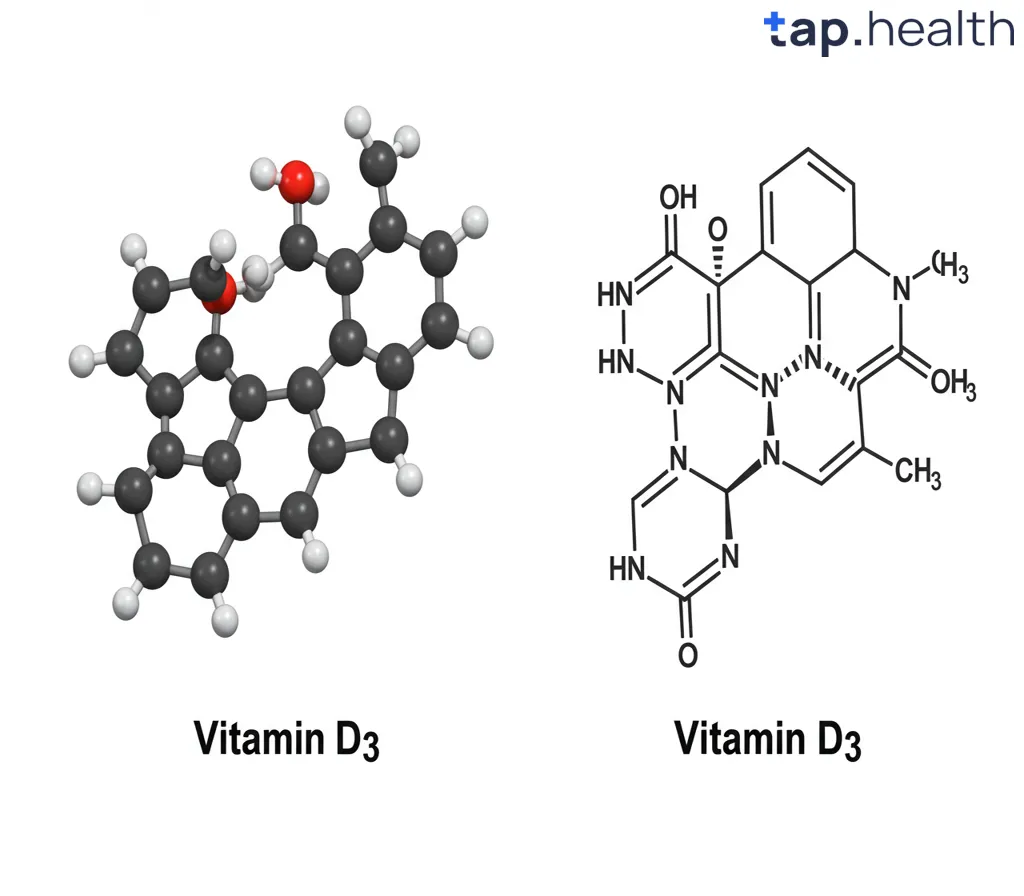
What Is Vitamin D3?
Vitamin D3, also known as cholecalciferol, is the form your body makes naturally when your skin is exposed to sunlight.
It’s also found in animal-based foods, such as:
- Fatty fish (like salmon, mackerel, and tuna)
- Egg yolks
- Cod liver oil
- Beef liver
D3 is considered the “active” or “preferred” form of vitamin D because it’s more effective at raising your blood levels of vitamin D.
In fact, many health experts say that if you’re going to take a supplement, D3 is the better choice over D2.
Why? Because your body recognizes D3 more easily and uses it more efficiently.
How Your Body Uses Vitamin D
Here’s a simple breakdown of how vitamin D works in your body — no science degree required.
- Sunlight hits your skin → Your body makes vitamin D3.
- Or you eat food or take a supplement → You get D2 or D3.
- The vitamin D goes to your liver → It gets converted into a form called 25-hydroxyvitamin D.
- Then it goes to your kidneys → It’s turned into the active hormone form, called calcitriol.
- Calcitriol does the work → It helps your gut absorb calcium, supports your immune system, and keeps your bones strong.
Now, here’s the key point: D3 is converted more efficiently than D2 in this process.
That means D3 gives your body more usable vitamin D than D2 does.
Is Vitamin D the Same as D3? The Real Answer
Let’s go back to the main question: Is vitamin D and D3 the same thing?
The answer is: No, they are not exactly the same.
- Vitamin D is the umbrella term. It includes both D2 and D3.
- Vitamin D3 is a specific type — the kind your body makes from sunlight and gets from animal foods.
So when you see a supplement that says “Vitamin D,” check the label. It might contain D2, D3, or a mix.
But most high-quality supplements today use D3, because it’s more effective.
Why the Confusion?
The confusion happens because:
- Many supplement bottles just say “Vitamin D” without specifying D2 or D3.
- Doctors and labels often use “vitamin D” when they really mean D3.
- Some people use the terms interchangeably — even though they shouldn’t.
So if you’re buying a supplement, always check the ingredient list. Look for “cholecalciferol” — that’s D3. If it says “ergocalciferol,” that’s D2.
And if you’re serious about your health, go for D3.
Where Do You Get Vitamin D?
You can get vitamin D in three main ways:
- Sunlight
- Food
- Supplements
Let’s look at each one.
1. Sunlight: Your Body’s Natural Factory
When your skin is exposed to ultraviolet B (UVB) rays from the sun, it makes vitamin D3.
Just 10–30 minutes of midday sun a few times a week can be enough for most people.
But several things can affect how much vitamin D you make:
- Skin color: Darker skin has more melanin, which reduces vitamin D production.
- Geographic location: People farther from the equator get less strong sunlight, especially in winter.
- Time of year: In colder months, the sun’s rays are weaker.
- Sunscreen use: While sunscreen is important for skin cancer prevention, it can block UVB rays and reduce vitamin D production.
- Age: Older adults make less vitamin D from sunlight.
So while sunlight is a great source, it’s not always reliable.
2. Food Sources of Vitamin D
Very few foods naturally contain vitamin D. But some are good sources:
Foods rich in D3:
- Fatty fish (salmon, mackerel, sardines)
- Cod liver oil
- Egg yolks
- Beef liver
Foods with D2 (plant-based):
- Mushrooms exposed to UV light
- Some fortified plant milks (like almond or soy milk)
Fortified foods (often with D2 or D3):
- Cow’s milk
- Orange juice
- Cereals
- Yogurt
Note: Many fortified foods use D2, but some now use D3. Always check the label.
3. Supplements
If you don’t get enough sun or eat enough vitamin D-rich foods, a supplement can help.
And here’s the big question: Should you take D2 or D3?
Most research says D3 is better.
A major study published in the British Journal of Nutrition found that D3 was 87% more effective than D2 at raising and maintaining vitamin D levels in the blood.
Another review in the Journal of the American College of Nutrition concluded that D3 is superior for improving vitamin D status.
So if your doctor recommends a supplement, ask for D3 — or look for a supplement that clearly says “vitamin D3” or “cholecalciferol.”
How Much Vitamin D Do You Need?
The amount of vitamin D you need depends on your age, health, and lifestyle.
Here are the general daily recommendations from the National Institutes of Health (NIH):
| Babies (0–12 months) | 400 IU |
| Children (1–13 years) | 600 IU |
| Teens (14–18 years) | 600 IU |
| Adults (19–70 years) | 600 IU |
| Adults (71+ years) | 800 IU |
| Pregnant or breastfeeding women | 600 IU |
Note: IU stands for International Units — it’s how vitamin D is measured.
Some people may need more — especially if they have low levels, live in northern areas, have darker skin, or don’t go outside much.
But don’t go overboard. Too much vitamin D can be harmful. The safe upper limit for most adults is 4,000 IU per day unless a doctor says otherwise.
What Happens If You Don’t Get Enough Vitamin D?
Not getting enough vitamin D can lead to serious health problems.
In Children: Rickets
Rickets is a condition where bones become soft and bend. It’s rare today, but it still happens in kids who don’t get enough vitamin D.
Symptoms include:
- Bone pain
- Weak muscles
- Delayed growth
- Bow-shaped legs
Rickets is preventable with enough vitamin D — from sunlight, food, or supplements.
In Adults: Osteomalacia and Osteoporosis
In adults, low vitamin D can cause:
- Osteomalacia: Softening of the bones, leading to pain and weakness.
- Osteoporosis: Bones become thin and fragile, increasing the risk of fractures.
Both conditions are linked to poor calcium absorption — which happens when you don’t have enough vitamin D.
Other Health Risks of Low Vitamin D
Research is still ongoing, but low vitamin D has been linked to:
- Weaker immune system (more colds and infections)
- Fatigue and tiredness
- Mood changes, including depression
- Muscle pain and weakness
- Higher risk of heart disease, diabetes, and some cancers (though more research is needed)
That’s why it’s so important to keep your levels in a healthy range.
Can You Get Too Much Vitamin D?
Yes — but it’s rare.
Since vitamin D is fat-soluble, your body stores it. If you take very high doses for a long time, it can build up to dangerous levels.
This is called vitamin D toxicity.
Symptoms include:
- Nausea and vomiting
- Poor appetite
- Constipation
- Weakness
- Confusion
- High calcium levels in the blood (which can damage kidneys)
Most cases happen from taking extremely high-dose supplements — not from sun or food.
You can’t get too much vitamin D from sunlight. Your body naturally limits how much it makes.
So while supplements can help, don’t self-prescribe high doses. Always talk to your doctor first.
Who Is at Risk for Vitamin D Deficiency?
Some people are more likely to have low vitamin D levels. Risk factors include:
1. People with Limited Sun Exposure
- Those who live in northern latitudes
- People who stay indoors most of the time
- Those who wear clothing that covers most of their skin
2. Older Adults
As you age, your skin becomes less efficient at making vitamin D.
3. People with Darker Skin
Melanin reduces the skin’s ability to produce vitamin D from sunlight.
4. People with Certain Medical Conditions
- Crohn’s disease, celiac disease, or cystic fibrosis (these affect fat absorption, and vitamin D needs fat to be absorbed)
- Obesity (vitamin D can get trapped in fat tissue and not circulate well)
5. Breastfed Babies
Human milk is low in vitamin D. The AAP recommends 400 IU per day for breastfed infants.
If you fall into any of these groups, you may need a supplement.
How Do You Know If You’re Low in Vitamin D?
The only way to know for sure is with a blood test.
Your doctor can order a test called the 25-hydroxyvitamin D test.
Here’s what the results usually mean:
| Below 12 | Deficient |
| 12–20 | Insufficient |
| 20–50 | Adequate |
| Above 50 | Possibly too high |
If your level is low, your doctor may recommend a supplement — often D3.
Vitamin D2 vs. D3: Which Is Better?
Let’s settle this once and for all.
Effectiveness
Multiple studies show that D3 raises and maintains vitamin D levels better than D2.
A 2012 study in the American Journal of Clinical Nutrition found that D3 was twice as effective as D2 at increasing vitamin D stores.
Duration
D3 stays in your blood longer. D2 breaks down faster.
Source
- D2: Plant-based (good for vegans)
- D3: Usually from animals (sheep’s wool lanolin), but vegan D3 options exist (from lichen)
Cost
D2 is often cheaper and used in prescriptions. But D3 is now widely available and affordable.
Bottom Line
For most people, D3 is the better choice — unless you’re vegan and can’t find a vegan D3 supplement.
Are There Vegan Sources of Vitamin D3?
Yes — and this is important for plant-based eaters.
Traditionally, D3 comes from lanolin (wool grease from sheep). That’s not vegan.
But now, vegan D3 is available. It’s made from lichen — a plant-like organism that produces D3 when exposed to sunlight.
So if you’re vegan, look for supplements labeled:
- “Vegan D3”
- “Lichen-derived vitamin D3”
- “Plant-based D3”
These are just as effective as animal-based D3.
Can You Get Enough Vitamin D from Diet Alone?
For most people, no.
Very few foods naturally contain vitamin D. Even fortified foods may not give you enough.
For example:
- One cup of fortified milk has about 120 IU
- A 3-ounce piece of salmon has about 450 IU
To reach 600–800 IU per day, you’d need to eat a lot of these foods — every day.
That’s why sunlight and supplements are often necessary.
Should You Take a Vitamin D Supplement?
Maybe — it depends on your lifestyle and health.
Ask yourself:
- Do you spend most of your time indoors?
- Do you live in a place with long winters?
- Is your skin dark?
- Are you over 50?
- Do you have a condition that affects nutrient absorption?
If you answered yes to any of these, you might benefit from a supplement.
And if you do, choose D3.
Talk to your doctor before starting any new supplement — especially if you have health conditions or take other medications.
What’s the Best Time to Take Vitamin D?
Since vitamin D is fat-soluble, it’s best to take it with a meal that contains fat.
This helps your body absorb it better.
For example, take your supplement with:
- Breakfast that includes eggs and avocado
- Lunch with olive oil dressing
- Dinner with fatty fish or cheese
There’s no strong evidence that morning or night is better — just take it with food.
Does Vitamin D Help with Immunity?
Yes — and this became a hot topic during the pandemic.
Vitamin D plays a key role in immune function. It helps your body fight off viruses and bacteria.
Low vitamin D has been linked to:
- More respiratory infections
- Worse outcomes from illnesses like flu and COVID-19
But that doesn’t mean taking extra vitamin D will prevent illness.
The best approach is to maintain healthy levels — not mega-dose.
If you’re deficient, correcting it can boost immunity. But if you already have enough, more won’t help.
Does Vitamin D Help with Mood and Depression?
Some research suggests a link between low vitamin D and mood disorders like depression.
Sunlight exposure boosts vitamin D and also increases serotonin — a brain chemical that improves mood.
People with seasonal affective disorder (SAD) often have low vitamin D in winter.
While vitamin D isn’t a cure for depression, keeping your levels healthy may support better mental health.
If you’re struggling with mood, talk to a healthcare provider. Don’t rely on supplements alone.
Can Vitamin D Help with Weight Loss?
There’s no strong proof that vitamin D directly causes weight loss.
But some studies show that people with obesity often have low vitamin D — possibly because the vitamin gets stored in fat tissue and isn’t available for use.
Taking vitamin D won’t magically make you lose weight. But if you’re deficient, correcting it may help with energy, mood, and overall health — which can support weight management.
Final Answer: Is Vitamin D and D3 the Same Thing?
No — they are not the same.
- Vitamin D is the general name for a group of compounds.
- Vitamin D3 is one specific, more effective form of vitamin D.
Think of it this way:
- All D3 is vitamin D.
- But not all vitamin D is D3.
When choosing a supplement, look for D3 (cholecalciferol) — it’s better at raising and maintaining healthy vitamin D levels.
And if you’re vegan, choose lichen-based D3 for a plant-friendly option.
FAQ: Your Top Questions About Vitamin D and D3
Q1: Is vitamin D3 better than vitamin D?
Yes. Vitamin D3 (cholecalciferol) is more effective than D2 at raising and maintaining vitamin D levels in the blood. When people say “vitamin D,” they often mean D3 — but always check the label to be sure.
Q2: Can I take vitamin D every day?
Yes, you can take vitamin D daily, as long as you stay within the recommended limits. Most adults can safely take 600–800 IU per day. Up to 4,000 IU per day is generally safe for most people, but consult your doctor for higher doses.
Q3: What are the signs of low vitamin D?
Common signs include:
- Frequent illnesses
- Fatigue
- Bone or back pain
- Depression
- Slow wound healing
- Hair loss
- Muscle weakness
The only way to know for sure is with a blood test.
Q4: Does vitamin D help with sleep?
Some studies suggest a link between low vitamin D and poor sleep, but the evidence isn’t strong. Vitamin D may support overall brain and nervous system health, which could indirectly affect sleep.
Q5: Can I take vitamin D3 every day?
Yes. Daily D3 is safe and effective for most people. Just don’t exceed the upper limit (4,000 IU/day for adults) without medical supervision.
Q6: Is 2000 IU of vitamin D3 safe?
Yes, 2000 IU per day is generally safe for most adults and is often recommended to maintain healthy levels — especially in winter or for those at risk of deficiency.
Q7: Do bananas have vitamin D?
No. Bananas do not contain vitamin D. But they are rich in magnesium, which helps your body activate vitamin D.
Q8: Which fruit has vitamin D?
No fruits naturally contain vitamin D. Some orange juice is fortified with vitamin D, but whole fruits like oranges or apples do not have it.
Q9: How long does it take for vitamin D3 to work?
It can take a few weeks to a few months to correct a deficiency. Most people start to see improvements in energy and well-being within 3–4 weeks of consistent supplementation.
Q10: Should I take vitamin D or D3?
Take D3 (cholecalciferol). It’s more effective than D2. If you’re vegan, look for vegan D3 made from lichen.
Summary: What You Need to Remember
- Vitamin D and D3 are not the same. D3 is a type of vitamin D.
- D3 is better at raising and maintaining vitamin D levels.
- You get vitamin D from sunlight, food, and supplements.
- Fatty fish, egg yolks, and sunlight give you D3.
- Mushrooms and fortified foods may give you D2.
- Check supplement labels — look for “D3” or “cholecalciferol.”
- Get tested if you think you’re low.
- Talk to your doctor before starting high-dose supplements.
Vitamin D is essential. But not all forms are equal.
Now that you know the difference between vitamin D and D3, you can make smarter choices for your health.
Stay safe, stay informed, and let the sunshine in — literally and figuratively.