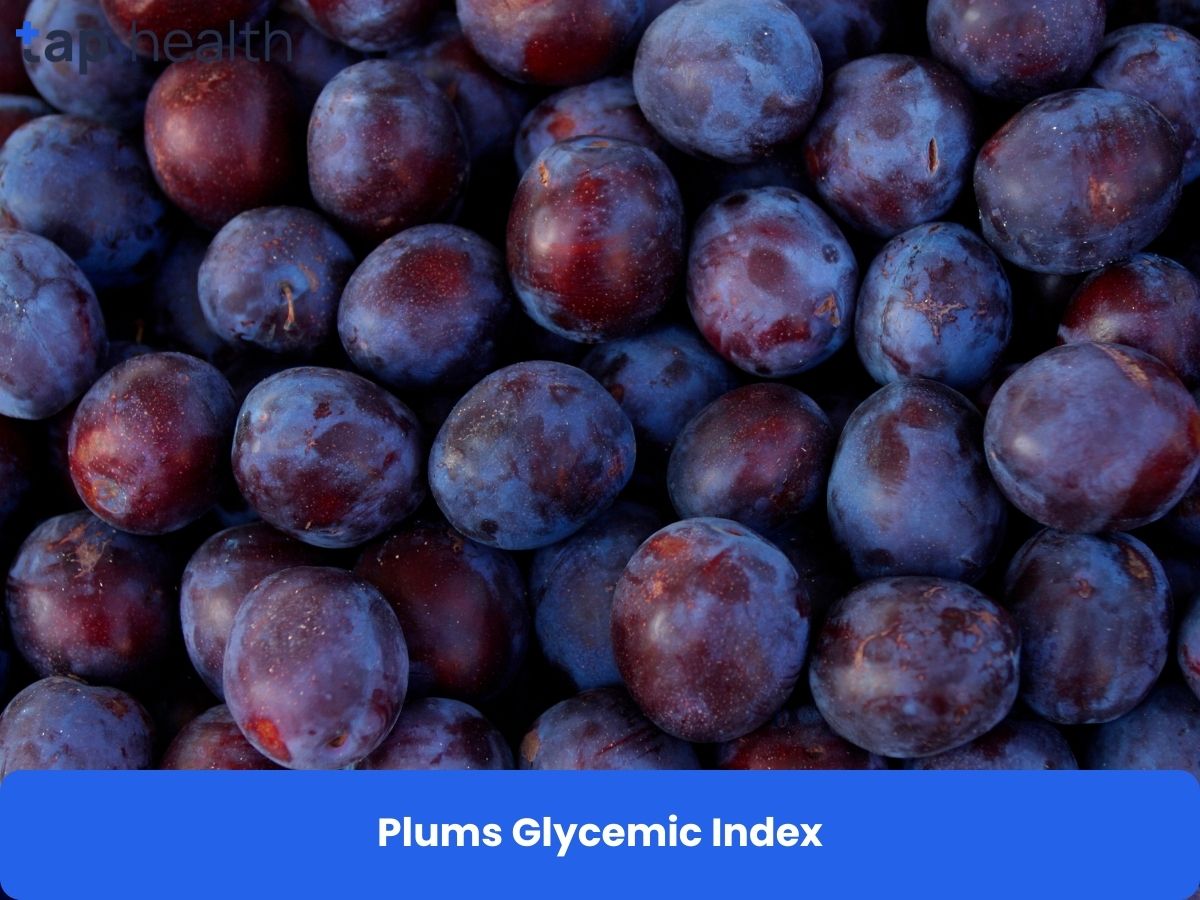
Imagine a hot summer afternoon. You spot a bowl of deep purple, shiny fruits on the table. You pick one up, bite into the taut skin, and are greeted by a burst of tart, juicy sweetness. That is the magic of a plum.
But if you are one of the millions of people managing diabetes, pre-diabetes, or just watching your waistline, that moment of joy is often followed by a moment of worry. “Is this too sweet?” “Will this spike my sugar?” “What exactly is the plums glycemic index?”
It is a valid concern. We have been conditioned to believe that sweet fruits are the enemy. We see patients avoiding mangoes and bananas like the plague. But where does the humble plum fit in? Is it a friend or a foe?
If you have been searching for “do plums have a low glycemic index” or wondering about the difference between fresh plums and dried prunes, you have landed on the right page. This is not just a list of numbers. This is a complete, human guide to understanding how plums interact with your body. We will strip away the medical jargon, look at the science, and give you clear, actionable advice in plain Indian English.
Understanding the Glycemic Index (GI) Basics
Before we dive into the specific numbers for plums, we need to understand the yardstick we are using. The Glycemic Index (GI) is essentially a ranking system for carbohydrates.
Think of it as a race. The finish line is your bloodstream.
- High GI (70–100): These foods are the sprinters. They digest rapidly and dump sugar into your blood all at once. This causes a “spike.” (Example: White bread, glucose, watermelon).
- Medium GI (56–69): These are the joggers. They raise blood sugar at a moderate pace.
- Low GI (0–55): These are the walkers. They digest slowly, releasing energy drop by drop. This keeps your insulin levels stable. (Example: Lentils, most vegetables).
Our goal for better health is usually to stick to the “walkers.”
What Is the Plums Glycemic Index?
Here is the good news: Plums are excellent “walkers.”
The fresh plums glycemic index is very low, typically sitting around 40.
Depending on the variety and ripeness, it generally falls between 35 and 53. This puts fresh plums comfortably in the Low GI category (Green Zone). Even though they taste sweet and tangy, they do not cause a sudden surge in blood glucose levels.
Why is the GI so low?
- Fibre: Plums are rich in skin fibre. This fibre acts like a net, trapping sugars and slowing down their absorption in the gut.
- Sorbitol: Plums contain a natural sugar alcohol called sorbitol. Sorbitol is absorbed very slowly by the body, which helps keep the overall blood sugar response low.
- Adiponectin: Some research suggests plums help raise levels of adiponectin, a hormone that plays a role in blood sugar regulation.
Different Varieties: Red, Black, and Yellow Plums
You might be standing in the market wondering if the colour matters. Let’s break down the plums glycemic index by variety.
1. Black Plums Glycemic Index
These are the deep purple, almost black plums often found in Indian markets.
- Verdict: Low GI (~40).
- Note: The skin is rich in anthocyanins (antioxidants) which are great for heart health. Eat the skin!
2. Red Plums Glycemic Index
These have a reddish skin and often a tart flavour.
- Verdict: Low GI (~40).
- Note: The tartness indicates beneficial organic acids which further slow down digestion.
3. Yellow Plums Glycemic Index
Often sweeter and softer.
- Verdict: Low to Low-Medium GI (~45).
- Note: Because they can be slightly sweeter, stick to firmer ones. If they are over-ripe and mushy, the sugar is more accessible, raising the GI slightly.
4. Green Plums Glycemic Index
These are usually unripe or specific tart varieties (like Greengage).
- Verdict: Very Low GI (~35).
- Note: These are sour and crunchy. Their sugar content is much lower than ripe plums.
5. Italian Plums Glycemic Index
These are the oval-shaped plums often used for cooking.
- Verdict: Low GI (~40).
The Takeaway: Whether you choose cherry plums, blue plums, or red plums, the GI remains low. The colour affects the type of antioxidants, not the blood sugar impact significantly.
The “Dried” Trap: Dried Plums (Prunes) Glycemic Index
Here is where you need to be careful. In India, we often consume dried plums as “Aloo Bukhara.”
The dried plums glycemic index (or prune plums glycemic index) is distinct from fresh fruit.
- GI Score: 29 to 35.
- Wait, is it lower? Yes! Interestingly, the GI of prunes is technically lower than fresh plums because the texture is so chewy and dense that it takes a long time to digest.
- The Catch: While the GI is low, the Glycemic Load (GL) is higher.
- Fresh Plum: High water content, low calories.
- Dried Plum: Water removed, sugar concentrated.
- Advice: You can eat 2-3 fresh plums easily. But if you eat 10 dried prunes, you are consuming a massive amount of sugar, even if it absorbs slowly. Eat dried plums in strict moderation (1 or 2 pieces).
Glycemic Load: The Number That Actually Matters
We cannot talk about the plums glycemic index without mentioning plums glycemic index and load.
While GI tells you how fast sugar enters the blood, Glycemic Load (GL) tells you how much sugar is in a standard serving.
- Formula:
(GI x Carbs per serving) / 100
For a standard medium fresh plum:
- GI: 40
- Carbs: approx 8 grams
- Calculation: (40 x 8) / 100 = 3.2
Result: The Glycemic Load is 3.2.
- Low GL: 0–10
- Medium GL: 11–19
- High GL: 20+
A score of 3.2 is extremely low. This confirms that eating a fresh plum has almost zero negative impact on your blood sugar load.
Comparison: Plums vs. Other Fruits
To make the best choices, it helps to compare the plums fruit glycemic index against other common fruits.
| Fruit | Glycemic Index (GI) | Glycemic Load (GL) | Verdict |
| Plums | 40 | 3 (Low) | Excellent |
| Cherries | 22 | 3 (Low) | Excellent |
| Grapefruit | 25 | 3 (Low) | Excellent |
| Apple | 36 | 6 (Low) | Excellent |
| Banana (Ripe) | 51–60 | 11 (Medium) | Watch portion |
| Watermelon | 72–80 | 5 (Low) | High GI, Low GL |
| Dates (Dried) | 42–60 | 18 (High) | High Load |
Key Comparisons Users Search For:
- Strawberry Glycemic Index: ~40 (Similar to plums).
- Blueberries Glycemic Index: ~53 (Slightly higher than plums).
- Blackberry Glycemic Index: ~25 (Lower than plums).
- Glycemic Index of Banana: ~51 (Higher than plums).
- Glycemic Index of Guava: ~12–24 (Lower than plums – Guava is the king of diabetic fruits!).
If you are choosing between fruits with high glycemic index (like watermelon or overripe bananas) and plums, the plum is always the safer bet for steady energy.
Health Benefits: Why Diabetics Should Eat Plums
It is not just about avoiding sugar spikes. Plums offer active benefits for managing diabetes.
- Constipation Relief: Plums (especially prunes) are famous for keeping digestion regular. High blood sugar can sometimes slow down digestion (gastroparesis), so fibre-rich plums help keep things moving.
- Heart Health: Diabetics are at higher risk for heart disease. The potassium in plums helps manage blood pressure, and the anthocyanins protect blood vessels.
- Satiety: The water and fibre content make you feel full. Eating a plum as a snack prevents you from reaching for high-carb biscuits or chips.
- Low Calories: A medium plum has only about 30–40 calories. This is great for weight management.
Real-Life Scenario: The Evening Snack Swap
Let’s look at a typical scenario in an Indian household.
The Situation:
Mr. Verma, a 50-year-old accountant with Type 2 Diabetes, comes home from work at 6 PM. He is hungry. Usually, he has tea with two digestive biscuits.
- The Problem: Digestive biscuits are made of wheat flour and sugar. They have a Medium-High GI. His sugar spikes before dinner.
The Change:
His daughter reads about the plums glycemic index and swaps his biscuits for two fresh black plums.
The Result:
- Taste: He enjoys the juicy sweetness.
- Blood Sugar: Because the plums have a GI of 40 (vs biscuits at ~60+), his blood sugar stays stable.
- Dinner: He feels less ravenous at dinner because the fibre in the plums kept him full, leading to a lighter dinner and better fasting sugar the next morning.
The Lesson:
Small swaps make a big difference. You don’t have to stop eating; just change what you eat.
Expert Contribution
We consulted with clinical nutritionists to understand the “Stone Fruit” benefit.
Dr. R. Kapoor, Certified Diabetes Educator:
“I often hear patients asking, ‘Do plums have a high glycemic index because they are sweet?’ It is a common myth. Sweetness is not the same as glucose. Plums contain fructose and sorbitol, which metabolize differently. I highly recommend stone fruits like plums, peaches, and cherries to my diabetic patients. The key is to eat them fresh and whole. Do not juice them. Juicing strips the fibre and turns a low GI superfood into a high GI sugary drink.”
Recommendations Grounded in Proven Research and Facts
Based on guidelines from the American Diabetes Association and nutritional research, here is how to include plums in your diet safely:
- Portion Control: Even though they are low GI, do not eat a kilogram of them. Serving size: 2 medium plums (approx 150g).
- Eat the Skin: Do not peel them! The skin contains the majority of the antioxidants and fibre. Peeling a plum raises its glycemic impact slightly.
- Pair It Up: For the best blood sugar control, pair your plum with a protein or healthy fat.
- Idea: Sliced plums with a few walnuts.
- Idea: Chopped plums in plain dahi (yoghurt).The fat/protein slows down digestion even further.
- Avoid “Canned” Plums: Canned plums are often preserved in heavy syrup. This syrup is pure sugar. If you must use canned, choose “packed in water” or “no added sugar” varieties.
- Check for Ripeness: Eat them when they are firm-ripe. If a plum is so ripe it is bursting and mushy, the starch has fully converted to sugar, and the GI will be slightly higher.
Myths vs. Facts
Myth: “Plums are too sweet for diabetics.”
Fact: False. The plums glycemic index is Low (40). The sweetness comes from fructose and sorbitol, which have a lower impact on blood sugar than the glucose found in breads and rice.
Myth: “Dried plums (prunes) are bad because they are sticky sugar.”
Fact: Misleading. While they are high in sugar density, their GI is actually low because of the soluble fibre. They are safe if you eat only 1 or 2 pieces.
Myth: “Green plums have no sugar.”
Fact: False. Green plums glycemic index is lower, but they still contain carbohydrates. They are just less sweet because of the higher acidity.
Conclusion
So, are plums safe?
Absolutely.
The plums glycemic index is low, the glycemic load is minimal, and the nutritional profile is packed with benefits for your heart and gut. Whether you prefer the tart red plums, the sweet yellow plums, or the deep black plums, you can enjoy them without fear.
They are the perfect “sweet treat” for anyone managing blood sugar. They satisfy the craving for candy while working hard to keep your body healthy.
Key Takeaways:
- The Number: Fresh plums have a GI of roughly 40.
- The Load: A single plum has a Glycemic Load of just 3.
- The Variety: Red, Black, and Yellow varieties are all safe.
- The Caution: Eat dried plums (prunes) in moderation due to calorie density.
- The Tip: Always eat the skin for maximum fibre benefits.
So next time you see that basket of plums, go ahead. Grab one, wash it, and enjoy the guilt-free sweetness of nature.
Frequently Asked Questions (FAQ) on Plums Glycemic Index
Do plums have a low glycemic index?
Yes, plums have a low glycemic index. Fresh plums typically have a GI score of around 40. This places them well within the Low GI category (0–55), making them a safe fruit choice for people who need to manage their blood sugar levels.
What is the glycemic index of dried plums (prunes)?
The dried plums glycemic index is surprisingly low, generally falling between 29 and 35. However, because the water is removed, they are very high in carbohydrates by weight. While they digest slowly, they have a higher Glycemic Load, so portion control (1–2 prunes) is essential.
Are plums good for diabetics?
Yes, plums are excellent for diabetics. They have a low GI, are low in calories, and are rich in fibre and antioxidants. They satisfy sweet cravings without causing sharp spikes in blood sugar.
Do red plums have a higher GI than black plums?
No, the difference is negligible. Both red plums glycemic index and black plums glycemic index hover around 40. You can choose whichever variety you prefer based on taste; the impact on your blood sugar will be virtually the same.
How many plums can a diabetic eat per day?
A safe serving size is typically two medium-sized fresh plums. This provides valuable nutrients and fibre without overloading on carbohydrates. It is best to spread fruit intake throughout the day rather than eating it all at once.
Is the strawberry glycemic index lower than plums?
They are very similar. The strawberry glycemic index is also around 40. Both berries and stone fruits like plums are considered some of the best fruit options for a low-glycemic diet.
Can I drink plum juice?
It is better to avoid juice. Juicing removes the skin and the fibre, which are the main reasons plums have a low GI. Plum juice will have a much higher glycemic index and can spike blood sugar faster than the whole fruit.
What is the difference between fresh plums and canned plums?
Fresh plums have a low GI (~40). Canned plums, if packed in heavy syrup, have a high glycemic index because they are soaking in sugar water. Always choose fresh plums or canned plums labelled “no added sugar” or “packed in own juice.”
References
- Harvard Health Publishing: Glycemic index for 60+ foods
- American Diabetes Association: Fruit and Diabetes
- The University of Sydney: GI Search Database
- Mayo Clinic: Diabetes diet: Should I avoid sweet fruits?
- USDA FoodData Central: Plums, raw Nutrition Facts