Introduction: The Renaissance of the “Poor Man’s Protein”
In the grand tapestry of Indian culinary history, few ingredients have undergone a transformation as radical as Sattu. Once dismissed as the “poor man’s protein,” a staple sustenance for farmers and laborers toiling under the scorching sun of Bihar, Jharkhand, and Uttar Pradesh, sattu has today reclaimed its throne as a metabolic powerhouse in the world of functional nutrition.1 This roasted gram flour, known for its cooling properties and instant energy, is no longer confined to the rural hinterlands. It has stormed the citadels of urban health, finding its way into the diet charts of celebrities, the protein shakers of gym-goers, and the kitchen cabinets of the health-conscious elite.
But why this sudden resurgence? The answer lies in the converging crises of modern health: the twin epidemics of Type 2 Diabetes and Obesity. As the world grapples with insulin resistance and metabolic disorders, the search for low-glycemic, high-protein, natural plant-based foods has intensified. Sattu fits this void perfectly. It is not merely a food; it is a nutritional phenomenon that bridges the gap between traditional wisdom and modern biochemical science.
This report serves as the definitive compendium on Sattu. We will not just skim the surface; we will dive deep into the molecular structure of roasted chickpeas, analyze the precise glycemic index (GI) and glycemic load (GL) values, compare it against global superfoods like oats and quinoa, and debunk persistent myths regarding kidney stones and uric acid. We will explore the “Desi Horlicks” phenomenon through the lens of seasoned experts like Rujuta Diwekar and Luke Coutinho, and validate these claims with hard scientific data.3
Whether you are a diabetic seeking to stabilize your blood sugar, a weight watcher looking for a sustainable fat-loss tool, or simply a lover of Indian superfoods, this comprehensive guide will provide you with every ounce of information you need to make sattu a cornerstone of your health journey.
The Science of Glycemic Index and Glycemic Load
To truly appreciate the value of sattu, we must first establish a rigorous understanding of the metrics used to evaluate carbohydrate quality: Glycemic Index (GI) and Glycemic Load (GL). These are not just buzzwords; they are the physiological coordinates that determine whether a food heals your metabolism or harms it.
Understanding the Glycemic Index (GI) Matrix
The Glycemic Index is a relative ranking of carbohydrates in foods according to how they affect blood glucose levels. Carbohydrates with a low GI value (55 or less) are more slowly digested, absorbed, and metabolized and cause a lower and slower rise in blood glucose and, therefore, usually, insulin levels.5
- The Physiology of High GI: When you consume high GI foods like white rice or refined wheat flour (maida), the rapid influx of glucose forces the pancreas to secrete a massive surge of insulin. This insulin spike drives glucose into cells quickly, often leading to a subsequent crash in blood sugar (hypoglycemia), which triggers hunger signals. This cycle of spike-crash-craving is the engine of obesity and insulin resistance.
- The Physiology of Low GI: Low GI foods, like sattu, trickle glucose into the bloodstream. This steady supply provides sustained energy, keeps insulin levels baseline, and prevents the inflammatory cascade associated with hyperglycemia.
The Glycemic Load (GL) Equation
While GI measures quality, Glycemic Load (GL) measures quantity. It answers the crucial question: How much glucose will this specific serving size actually deliver?
The formula is:
$$\text{Glycemic Load (GL)} = \frac{\text{GI} \times \text{Available Carbohydrate (g)}}{100}$$
This distinction is vital for sattu. While sattu has a low GI, it is nutrient-dense. Understanding its GL helps us determine the safe “dose” for a diabetic patient versus an athlete needing carb-loading.
Where Does Sattu Stand?
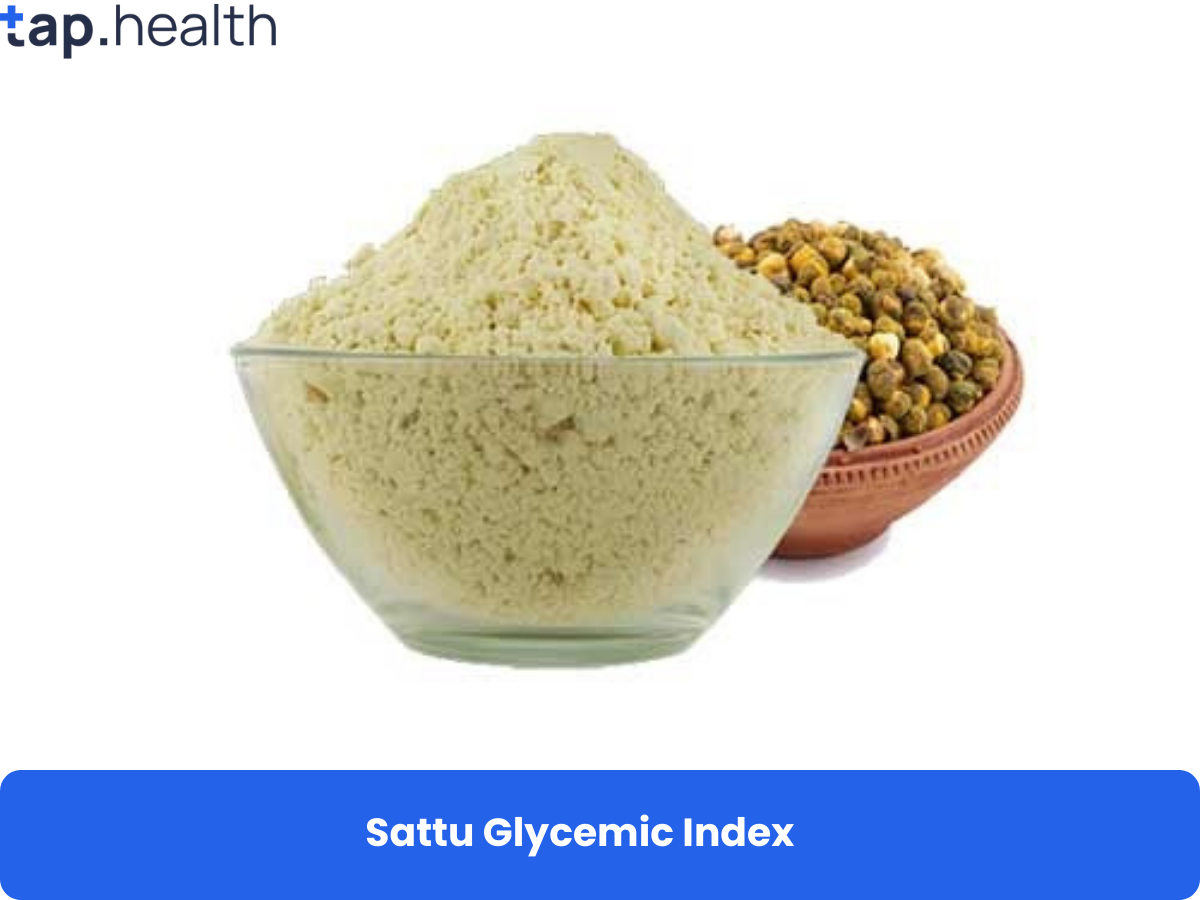
The data on sattu is compelling. Multiple nutritional analyses place sattu firmly in the Low GI category.
- Glycemic Index of Sattu: Ranging from 28 to 35.1 This is significantly lower than wheat (GI ~70) and rice (GI ~73).
- Glycemic Load of Sattu: A typical serving of 30g (approx 2 tablespoons) has a GL of roughly 5 to 6, which is exceptionally low.7
This establishes sattu not just as a safe food, but as a therapeutic food for blood sugar management.
Read this : 20 Best Foods for People with Diabetes
Nutritional Biochemistry of Sattu: Deconstructing the Superfood
Sattu is often simplistically described as “roasted gram flour,” but this description belies its complex nutritional matrix. It is a “whole food” supplement, offering a synergy of macronutrients and micronutrients that synthetic protein powders cannot replicate.
Macronutrient Profile (Per 100g)
| Nutrient | Quantity | Significance for Indian Health |
| Energy | ~380 – 413 kcal | High energy density suitable for sustained labor or workouts.8 |
| Protein | 20g – 26g | High biological value plant protein. Essential for muscle repair and enzymatic functions.1 |
| Carbohydrates | 58g – 65g | Complex carbohydrates, largely resistant starch.1 |
| Dietary Fiber | 9g – 18g | Crucial for gut microbiome diversity and cholesterol regulation.1 |
| Fat | 5g – 7g | Contains polyunsaturated fats beneficial for heart health.8 |
Micronutrient Density
- Iron (8.7 – 9 mg): Sattu is an iron reservoir. In a country where anemia is endemic, especially among women, sattu offers a highly bioavailable source of non-heme iron. When consumed with lemon (Vitamin C), this absorption is amplified, combating fatigue and hair loss.1
- Magnesium (270 mg): Perhaps the most underrated hero in sattu. Magnesium is vital for over 300 enzymatic reactions, including insulin signaling. The high magnesium content directly contributes to sattu’s anti-diabetic properties by improving receptor sensitivity.1
- Calcium (380 mg): Essential for bone density. For the lactose intolerant who cannot drink milk, sattu serves as a viable calcium alternative.8
The Alchemy of Roasting: A Food Science Perspective
What separates sattu from Besan (raw chickpea flour)? The answer lies in the thermodynamics of roasting.
- Microstructural Changes: Scientific studies using Scanning Electron Microscopy (SEM) reveal that roasting creates air spaces in the cotyledon of the chickpea grain. This porosity makes sattu lighter and easier to digest than raw gram.11
- Starch Retrogradation: The heat treatment gelatinizes the starch, which then retrogrades upon cooling. This process increases the Resistant Starch content. Resistant starch acts like soluble fiber: it bypasses digestion in the small intestine and ferments in the colon, producing short-chain fatty acids (SCFAs) like butyrate, which heal the gut lining and improve insulin sensitivity.12
- Protein Denaturation: Roasting denatures the tertiary structure of proteins, making the peptide bonds more accessible to digestive enzymes like pepsin. This means the protein in sattu is more “bioavailable” and less likely to cause the flatulence often associated with raw legumes.13
Sattu for Diabetes Management: The Biological Mechanism
For the millions of Indians battling diabetes, sattu is often prescribed as a dietary intervention. But how exactly does it work?
The “Physical Barrier” Effect
The high fiber content (insoluble and soluble) in sattu creates a viscous gel in the stomach. This gel physically traps carbohydrate molecules, slowing down the action of amylase enzymes. Consequently, glucose is released into the bloodstream at a trickle rather than a flood. This “blunting” of the post-prandial glycemic spike is the holy grail of diabetes management.1
Insulin Sensitization via Magnesium
As noted, sattu is rich in magnesium. Clinical studies have consistently shown an inverse relationship between magnesium intake and the risk of Type 2 Diabetes. Magnesium acts as a cofactor for the tyrosine kinase enzyme, which is essential for the proper functioning of the insulin receptor. By replenishing magnesium levels, sattu helps the body “hear” the insulin signal more clearly, reducing the need for the pancreas to overproduce insulin.1
Expert Contribution: The Diabetologist’s View
Medical experts confirm that sattu’s low GI (30-35) makes it an ideal meal replacement or snack for diabetics. However, the method of consumption matters.
- The Trap: Adding sugar or jaggery to sattu sharbat negates the benefits.
- The Fix: Diabetics must consume “Sattu Namkeen” (salted) with cumin and lemon, or eat it as a savory dish (chokha/paratha) combined with vegetables.1
Sattu for Weight Loss: The “Desi” Metabolic Booster
In the crowded market of weight loss supplements, sattu stands out as a cost-effective and highly efficient natural alternative. Its efficacy for weight loss is driven by three primary mechanisms: Satiety, Thermogenesis, and Gut Health.
1. The Satiety Factor (Glucagon-Like Peptide-1)
Protein is the most satiating macronutrient. Upon consumption, the amino acids in sattu trigger the release of satiety hormones such as PYY (Peptide YY) and GLP-1 (Glucagon-like peptide-1). These hormones send potent signals to the hypothalamus in the brain to “turn off” hunger. A single glass of sattu sharbat can keep hunger pangs at bay for 3 to 4 hours, effectively curbing calorie intake from snacking.15
2. The Thermic Effect of Food (TEF)
Digesting protein requires more energy than digesting fats or carbohydrates. This is known as the Thermic Effect of Food. By consuming a high-protein food like sattu, the body’s metabolic rate rises slightly as it works to break down the peptide bonds. Over time, this contributes to a caloric deficit.17
3. Real-Life Scenario: Suraj Chhetri’s Transformation
The power of sattu is best illustrated through real-life success stories. Suraj Chhetri, a 30-year-old F&B manager, faced a life-threatening stroke due to an unhealthy lifestyle. In his recovery and subsequent weight loss journey (losing 21 kgs), sattu played a pivotal role. He replaced processed snacks with sattu drinks, leveraging its fiber content to stay full and its protein content to rebuild strength without gaining fat. His story underscores sattu’s role not just in aesthetics, but in critical health recovery.18
Comparative Analysis: Sattu vs. The World
To understand the true standing of sattu, we must compare it against other common flours and health foods.
Sattu vs. Besan (The Great Confusion)
Many people mistake sattu for besan. They are cousins, not twins.
- Besan (Gram Flour): Made from raw, ground chickpeas. It is heavy to digest and can cause severe gastric distress if eaten raw. It has a higher moisture content and lacks the roasted flavor profile.
- Sattu: Made from roasted chickpeas. It is light, pre-cooked, and ready-to-eat.
- Glycemic Verdict: While both are low GI, sattu is superior for direct consumption (drinks/smoothies) because roasting increases resistant starch and digestibility.17
Sattu vs. Oats vs. Wheat vs. Rice
| Feature | Sattu | Oats | Whole Wheat | White Rice |
| Source | Roasted Legume | Cereal Grain | Cereal Grain | Cereal Grain |
| Glycemic Index | Low (28-35) | Low-Med (55) | Medium (62-69) | High (73+) |
| Protein (per 100g) | 20g – 25g | 13g – 17g | 12g | 6g |
| Gluten | Gluten-Free | Naturally Free (often contaminated) | High Gluten | Gluten-Free |
| Primary Use | Drink, Paratha, Litti | Porridge, Baking | Roti, Bread | Steamed Rice |
| Best For | Muscle, Diabetes, Weight Loss | Heart Health, Cholesterol | Energy Staple | Quick Energy |
Insight: Sattu clearly outperforms wheat and rice in the context of blood sugar control and muscle maintenance. It rivals oats in fiber content but surpasses oats in protein content, making it a more complete “body composition” food.20
Expert Contributions: Voices of Authority
The resurgence of sattu is heavily credited to India’s leading celebrity nutritionists who have tirelessly advocated for “local and seasonal” eating.
Rujuta Diwekar: The Champion of Traditional Wisdom
Rujuta Diwekar, one of India’s most influential nutritionists, describes sattu as “the stuff that nutrition love stories are made of.” She emphasizes its role beyond just macros:
- Menstrual Health: She highlights sattu’s iron and folic acid content as vital for reducing menstrual cramps and clotting.
- Beauty Benefits: Diwekar points out that the hydration and mineral density in sattu help reduce dark circles and hair loss.
- Expert Advice: She recommends it specifically as a summer drink to prevent sunstroke and as a mid-meal snack to regulate cortisol and insulin levels.3
Luke Coutinho: The Holistic Approach
Luke Coutinho, a holistic lifestyle coach, champions sattu as a “natural colon cleanser” and a superior alternative to synthetic whey protein.
- Gut Health Protocol: He suggests a specific recipe: Sattu + Buttermilk. This combination provides probiotics (from yogurt) and prebiotics (fiber from sattu), creating a powerful symbiotic effect that heals the gut lining and reduces bloating.
- Simplicity: He advocates for sattu as a way to break free from the “marketing trap” of expensive imported superfoods, urging Indians to return to their roots for health.4
Safety, Side Effects, and Controversies
No food is without nuance. While sattu is safe for the vast majority, specific conditions require caution.
The Kidney Stone Debate: Oxalates
A common fear is that sattu causes kidney stones.
- The Fact: Chickpeas do contain oxalates, which can bind with calcium to form stones.
- The Nuance: The roasting process used to make sattu significantly reduces the content of anti-nutritional factors, including oxalates, compared to raw legumes.24
- The Verdict: For a healthy person, sattu is safe. For someone with a history of calcium-oxalate stones, moderation is key. Consuming sattu with calcium-rich foods (like buttermilk) can actually bind oxalates in the gut before they reach the kidneys, reducing stone risk.26
The Gout Question: Uric Acid and Purines
Gout patients are often told to avoid all legumes.
- The Science: While chickpeas contain purines, modern rheumatology distinguishes between animal purines (which spike uric acid) and plant purines (which have a much lower impact).
- Expert Consensus: Consumption of vegetable proteins like sattu is generally safe and even encouraged for gout patients to help them reduce red meat intake. Moderate consumption (1 glass/day) is unlikely to trigger a flare-up.27
Gas and Bloating
- Cause: The high fiber and complex sugars (raffinose) in sattu can ferment in the gut, causing gas in those with sensitive stomachs.
- Solution: “Start low, go slow.” Begin with 1 teaspoon and build up. Always include carminative spices like Ajwain (carom seeds) and Jeera (cumin) in sattu preparations to neutralize gas formation.29
Recommendations Grounded in Proven Research and Facts
Based on the exhaustive analysis of the data, here are the evidence-based recommendations for integrating sattu into your life:
1. For Diabetics (The Low-GL Strategy)
- Protocol: Consume 2 tablespoons of sattu in water (Sattu Namkeen) mid-morning.
- Why: This timing buffers the insulin response before lunch. The low GL (5-6) ensures no spike occurs.
- Pairing: Always pair with healthy fats (like a few drops of mustard oil in traditional preparation) or fiber (cucumber/onion) to further lower the glycemic response.14
2. For Weight Loss (The Meal Replacement Strategy)
- Protocol: Replace one solid meal (preferably breakfast or lunch) with a sattu smoothie (Sattu + Buttermilk + Chia Seeds).
- Why: This creates a caloric deficit of 300-500 calories while maintaining protein intake (20g+) to prevent muscle loss. The high fiber keeps satiety high for 4 hours.
3. For Post-Workout Recovery (The Anabolic Window)
- Protocol: Drink sattu within 30 minutes of exercise.
- Why: The bioavailability of roasted gram protein allows for quick amino acid uptake for muscle repair. The natural electrolytes (potassium/magnesium) replenish what was lost in sweat.20
Recipes: The Culinary Science of Sattu
Sattu is versatile. Here are optimized recipes designed to maximize health benefits.
1. Diabetic-Friendly Sattu Paratha
- Concept: Lower the GI of wheat flour by stuffing it with high-protein sattu.
- Ingredients:
- Dough: 50% Whole wheat flour + 50% Barley flour (Jau).
- Stuffing: Sattu mixed with grated ginger, green chili, kalonji (nigella seeds), ajwain, mustard oil, and lemon juice.
- Mechanism: The protein and fiber in the stuffing, combined with the beta-glucan in barley, drastically reduce the glycemic impact of the bread.33
2. The Ultimate Sattu Sharbat (Hydration & Detox)
- Ingredients: 3 tbsp Sattu, 300ml cold water, black salt, roasted cumin powder, lemon juice, mint leaves, chopped raw onion (optional).
- Mechanism:
- Lemon (Citrus): Increases iron absorption from sattu.
- Cumin: Aids digestion and prevents bloating.
- Black Salt: Provides trace minerals without spiking blood pressure as much as refined salt.
3. High-Protein Sattu Cheela (Gluten-Free Breakfast)
- Ingredients: Sattu, small amount of Besan (for binding), turmeric, spinach puree, ginger-garlic paste.
- Mechanism: A savory pancake that is entirely gluten-free and low-carb. The spinach adds fiber and nitrates for blood flow.35
Key Takeaways
- Low Glycemic Index: Sattu has a GI of 28-35, making it one of the safest carbohydrate sources for diabetics.
- High Protein & Fiber: With ~20g protein and ~15g fiber per 100g, it supports muscle retention and gut health.
- Unique Processing: The roasting of chickpeas increases resistant starch, which acts as a prebiotic and improves insulin sensitivity.
- Versatility: It beats oats and wheat in protein density and can be consumed as a drink, main course, or snack.
- Safety: Safe for most; caution required only for those with kidney stones or severe gastric sensitivity.
Frequently Asked Questions (FAQ) on Sattu Glycemic Index
1. Is sattu good for diabetics to drink daily?
Answer: Yes, sattu is highly recommended for diabetics due to its low glycemic index (30-35). Drinking sattu mixed with water, salt, and cumin helps stabilize blood sugar levels by providing a slow release of energy. However, diabetics should strictly avoid adding sugar or jaggery to the drink and should monitor portion sizes to manage the total carbohydrate load.
2. Can sattu help reduce belly fat?
Answer: Sattu can be an effective tool for reducing belly fat when used as part of a calorie-deficit diet. Its high protein content boosts metabolism through the thermic effect of food, while its high fiber content promotes satiety, reducing overall calorie intake. Replacing a high-calorie meal with a sattu drink can help create the energy deficit needed for fat loss.
3. Does sattu cause kidney stones?
Answer: Sattu contains moderate amounts of oxalates, which can contribute to kidney stones in individuals predisposed to them. However, roasting reduces oxalate levels compared to raw legumes. People with a history of calcium-oxalate stones should consume sattu in moderation, stay well-hydrated, and ideally consult a doctor before making it a daily habit.
4. What is the difference between Sattu and Besan?
Answer: The primary difference is in the processing: Besan is raw ground chickpea flour, while Sattu is roasted ground chickpea flour. This makes sattu lighter, easier to digest, and “ready-to-eat” (can be mixed with water without cooking), whereas besan must be cooked or fried to be edible. Sattu also has a higher resistant starch content due to the roasting process.
5. Is sattu gluten-free?
Answer: Pure Chana Sattu (made solely from roasted chickpeas) is naturally gluten-free. However, some traditional mixes, especially from certain regions, may include roasted barley or wheat. It is crucial to read the label; if you have celiac disease or gluten intolerance, ensure you purchase “100% Chana Sattu.”
6. Can I take sattu at night?
Answer: It is generally advised to avoid sattu at night. Sattu is high in fiber and protein, which takes longer to digest. Consuming it late in the evening can lead to bloating, gas, or disturbed sleep as the digestive system slows down. The best time to consume sattu is in the morning or as a mid-day snack.
7. Is sattu safe for people with high uric acid?
Answer: Yes, in moderation. While sattu contains purines, they are plant-based purines, which research suggests do not impact uric acid levels as negatively as animal proteins. Consuming one glass of sattu daily is generally considered safe and nutritious for gout patients, but it should be part of a balanced diet.
8. How much sattu should I consume per day?
Answer: For a healthy individual, 2 to 4 tablespoons (approx. 30-60g) of sattu per day is an optimal amount. This provides a significant boost of protein and fiber without overloading the digestive system. Excessive consumption can lead to gas and an unwanted increase in caloric intake.
Works cited
- Sattu: Calories, Nutrition and Health Benefits | NutriScan App, accessed November 27, 2025, https://nutriscan.app/calories-nutrition/sattu
- Development of Sattu Drink fortified With Turmeric, Ragi Podwer And Jaggery. – RJPN, accessed November 27, 2025, https://rjpn.org/ijcspub/papers/IJCSP22A1014.pdf
- The many benefits of sattu – The Indian Express, accessed November 27, 2025, https://indianexpress.com/web-stories/wellness/the-many-benefits-of-sattu/
- Sattu: Your Natural, Inexpensive, High Quality Protein Drink – GOQii, accessed November 27, 2025, https://goqii.com/blog/natural-inexpensive-high-quality-protein-and-health-drink/
- Dietary Glycemic Index and Load and the Risk of Type 2 Diabetes: Assessment of Causal Relations – PubMed Central, accessed November 27, 2025, https://pmc.ncbi.nlm.nih.gov/articles/PMC6628270/
- The concept of low glycemic index and glycemic load foods as panacea for type 2 diabetes mellitus; prospects, challenges and solutions – PMC – NIH, accessed November 27, 2025, https://pmc.ncbi.nlm.nih.gov/articles/PMC4994556/
- Can sattu help in weight loss? – Wellness Munch, accessed November 27, 2025, https://wellnessmunch.com/can-sattu-help-in-weight-loss/
- Sattu Benefits: Side Effects, and Easy Home-Made Recipes – Redcliffe Labs, accessed November 27, 2025, https://redcliffelabs.com/myhealth/food-and-nutrition/sattu-benefits-side-effects-and-easy-home-made-recipes/
- Sattu Nutrients, Protein, Carb Count Per 100g with Benefits & Effects – Zandu Care, accessed November 27, 2025, https://zanducare.com/blogs/exploring-ayurveda/nutritional-value-of-sattu
- Sattu Nutrition: The Ancient Indian Superfood – Zen Ya, accessed November 27, 2025, https://www.zenya.in/blogs/news/sattu-nutrition-the-ancient-indian-superfood-fuelling-modern-wellness
- Standardization and quality profile of sattu mix – PMC – PubMed Central, accessed November 27, 2025, https://pmc.ncbi.nlm.nih.gov/articles/PMC9206992/
- Roasted Chickpea Flour Decreases Glycemic Index and Glycemic Load of White Bread, accessed November 27, 2025, https://www.researchgate.net/publication/325657742_Roasted_Chickpea_Flour_Decreases_Glycemic_Index_and_Glycemic_Load_of_White_Bread
- Effect of germination, roasting, and variety on physicochemical, techno-functional, and antioxidant properties of chickpea (Cicer arietinum L.) protein isolate powder – PubMed Central, accessed November 27, 2025, https://pmc.ncbi.nlm.nih.gov/articles/PMC8488851/
- Is Sattu Good for Diabetes – Muditam Ayurveda, accessed November 27, 2025, https://www.muditam.com/blogs/muditam-blog/is-sattu-good-for-diabetes
- Sattu: Health Benefits, Nutritional Value & Possible Side Effects – Metropolis Healthcare, accessed November 27, 2025, https://www.metropolisindia.com/blog/preventive-healthcare/sattu-health-benefits
- 5 ways Sattu can be used for faster weight loss – Times of India, accessed November 27, 2025, https://timesofindia.indiatimes.com/life-style/food-news/5-ways-sattu-can-be-used-for-faster-weight-loss/articleshow/119377484.cms
- Sattu vs Besan: Which One Wins the Desi Weight Loss Battle and Why? – India Herald, accessed November 27, 2025, https://www.indiaherald.com/Breaking/Read/994857918/Sattu-vs-Besan-Which-One-Wins-the-Desi-Weight-Loss-Battle-and-Why
- Weight loss: “I have a healthy sattu drink everyday to stay fit” – Times of India, accessed November 27, 2025, https://timesofindia.indiatimes.com/life-style/health-fitness/weight-loss/weight-loss-i-have-a-healthy-sattu-drink-everyday-to-stay-fit/photostory/80881499.cms
- Sattu vs Besan: The Desi Showdown for Weight Loss — Which Flour Deserves a Spot on Your Plate? – The Hans India, accessed November 27, 2025, https://www.thehansindia.com/life-style/sattu-vs-besan-the-desi-showdown-for-weight-loss-which-flour-deserves-a-spot-on-your-plate-1018023
- Sattu or Oats: Which Offers the Best Post-Workout Nutrition?, accessed November 27, 2025, https://gutgut.in/blogs/sattu-vegan-protein/sattu-or-oats-which-offers-the-best-post-workout-nutrition
- Atta Vs. Maida, Oats, Besan, and Suji – Which is Best for Health?, accessed November 27, 2025, https://twobrothersfood.com/blogs/food-health/atta-vs-maida-oats-besan-and-suji
- Rujuta Diwekar Calls Sattu A Monsoon Superfood, Says You Must Include It In Your Diet, accessed November 27, 2025, https://food.ndtv.com/food-drinks/sattu-here-s-all-that-you-need-to-know-about-this-superfood-3224087
- Summer Diet – Foods and Beverages By Luke Coutinho | HFM – Hello Fitness Magazine, accessed November 27, 2025, https://www.hellofitnessmagazine.com/what-to-eat-in-summer-by-expert-luke-coutinho
- Effect of cooking on oxalate content of pulses using enzymatic procedure – ResearchGate, accessed November 27, 2025, https://www.researchgate.net/publication/10623362_Effect_of_cooking_on_oxalate_content_of_pulses_using_enzymatic_procedure
- The effect of popping, soaking, boiling and roasting processes on antinutritional factors in chickpeas and red kidney beans – Oxford Academic, accessed November 27, 2025, https://academic.oup.com/ijfst/article/58/1/279/7807562
- Complications on Regular Use Of Sattu Powder – Nutrisouk, accessed November 27, 2025, https://nutrisouk.com/complications-on-regular-use-of-sattu-powder/
- What to Eat (and Avoid) If You Have Gout – National Kidney Foundation, accessed November 27, 2025, https://www.kidney.org/news-stories/what-to-eat-and-avoid-if-you-have-gout
- Is Hummus Bad for Gout? All About Purine-Rich Foods – Healthline, accessed November 27, 2025, https://www.healthline.com/health/gout/hummus-and-gout
- What is Sattu powder, its benefits, side effects and easy recipes – Times of India, accessed November 27, 2025, https://timesofindia.indiatimes.com/life-style/food-news/what-is-sattu-powder-its-benefits-side-effects-and-easy-recipes/photostory/77443846.cms
- Sattu: Benefits, Side Effects, and Easy Home Recipes – Pathkind Labs, accessed November 27, 2025, https://www.pathkindlabs.com/blog/sattu-benefits-side-effects-and-easy-home-recipes
- Foods with Low Glycemic Index and Essential Diet Tips – Fitterfly, accessed November 27, 2025, https://www.fitterfly.com/blog/foods-with-lowest-glycemic-index/
- You Care Lifestyle Introduces The Perfect Wellness Ingredient for Summers – GlobalSpa, accessed November 27, 2025, https://globalspaonline.com/wellness/nutrition/you-care-lifestyle-introduces-the-perfect-wellness-ingredient-for-summers/
- Sattu Paratha – Shweta Bumb, accessed November 27, 2025, https://shwetabumb.com/sattu-paratha/
- Sattu Ka Paratha| How To Make Sattu Paratha – The World Through My Eyes, accessed November 27, 2025, https://thephotowali.wordpress.com/2018/01/02/sattu-ka-paratha-how-to-make-sattu-paratha/
- No KNEAD High Protein Roti – Thyroid – PCOS – Diabetic Diet Weight Loss – YouTube, accessed November 27, 2025, https://www.youtube.com/watch?v=SME8yQGQyhY