Worried about semolina (suji/rava) and blood sugar? Learn the true semolina glycemic index (GI), how cooking affects it, and expert tips for diabetics.
When planning a healthy Indian diet, especially for managing conditions like prediabetes or type 2 diabetes, the carbohydrate content of staple foods becomes a major concern. Semolina, known across India as Suji or Rava, is a foundation for beloved dishes, from fluffy Upma to decadent Halwa. However, determining how these dishes impact blood glucose levels requires a careful look at the semolina glycemic index.
This detailed guide breaks down the nutritional science behind rava, clarifies its GI rating, and provides actionable, expert-backed strategies for enjoying this grain without compromising blood sugar control. We aim to offer clarity that is simple enough for anyone to understand yet backed by rigorous research and facts.
Decoding Semolina: What Exactly is Suji or Rava?
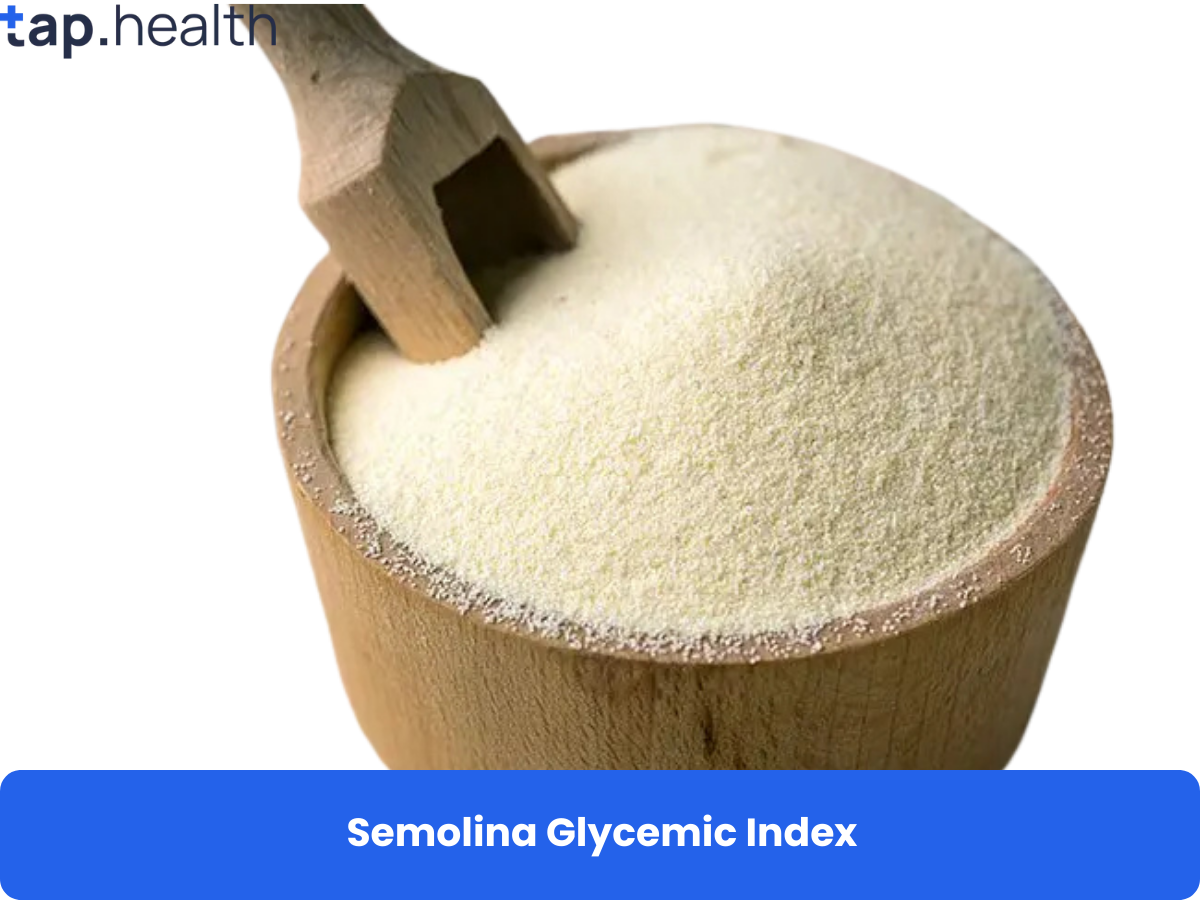
Semolina is fundamentally a type of coarsely milled flour derived primarily from durum wheat.1 Unlike the fine powder of standard wheat flour, semolina consists of small, purified granules from the wheat grain’s endosperm. This unique processing results in a product naturally high in protein and gluten.1
Globally, semolina is celebrated for its use in making high-quality pasta, spaghetti, and macaroni.1 In India, however, it is recognized by regional names: it is generally called Suji in North India and Rava in South India.1 It is the key ingredient in popular breakfast items like Upma and sweets such as Halwa.1
Suji vs. Rava: Understanding the Different Textures in India
Although Suji and Rava are interchangeable names for semolina, their textures in the Indian market often dictate their usage and, subtly, their effect on blood sugar. The granularity of semolina influences how quickly the body can digest it.
Commercially available semolina comes in various grinds. For instance, Bansi sooji or Bangalore rava is coarser and is commonly preferred for making Upma.4 Conversely, Chiroti sooji is finer and lighter in shade, often used for delicate sweets or mixed into doughs.3
The physical milling process—creating finer or coarser granules—directly impacts the final glycemic value, even before cooking begins. Finer grains have a larger surface area, allowing digestive enzymes to break down the starch much faster than they would with coarser grains. This means that highly refined, fine suji inherently presents a higher risk of rapid blood sugar spikes than a coarsely ground rava.
Semolina’s Nutritional Profile: More Than Just Carbohydrates
While semolina is primarily known for its carbohydrate content (72.83 grams per 100 grams) 2, it is also a source of vital nutrients that contribute to overall health. It stands out due to its relatively high protein content, providing about 12.68 grams per 100 grams of uncooked grain.2 This protein aids in promoting satiety, or the feeling of fullness, which is helpful for managing weight.6
It also contains moderate dietary fibre (around 3.9 grams per 100 grams).2 Furthermore, semolina is an excellent source of B vitamins, including Thiamine, Riboflavin, and particularly Folate (Vitamin B9).2 Folate is essential for converting food into usable energy in the body.6 Crucially for individuals focused on blood sugar, semolina is also a good source of minerals like Iron, which supports red blood cell production, and Magnesium, which is linked to effective blood sugar control and heart health.6
To provide a comprehensive overview, here is the nutritional profile of uncooked semolina:
Table 1: Semolina (Suji) Nutritional Profile (Per 100g Uncooked)
| Nutrient | Quantity | Key Health Benefit |
| Energy | 360 kcal | Sustained energy source |
| Carbohydrates | 72.83 g | Primary energy fuel (high quantity) |
| Protein | 12.68 g | Aids satiety and muscle health |
| Dietary Fiber | 3.9 g | Supports digestive health |
| Iron | 1.23 mg | Essential for red blood cell production |
| Magnesium | 47 mg | Supports heart and blood sugar regulation |
| Folate (B9) | 72 μg | Critical for cell growth and energy conversion |
Source: 2
The Science Simplified: Understanding Glycemic Index (GI) and Glycemic Load (GL)
When evaluating any carbohydrate-rich food like semolina, two key metrics must be understood: the Glycemic Index (GI) and the Glycemic Load (GL). These are the scientific tools used to predict how a food will impact post-meal blood sugar levels.
GI Explained: High, Medium, and Low Rankings (A Simple Traffic Light System)
The Glycemic Index (GI) is a numerical value, ranking carbohydrate-containing foods from 0 to 100, based on how quickly they are digested and converted into glucose (sugar) in the bloodstream.7 Think of the GI scale as a traffic light system:
- Low GI (Green Light): 55 or less. These foods are digested slowly, causing a gradual and mild rise in blood sugar.8
- Medium GI (Yellow Light): 56–69. These foods cause a moderate rise in blood sugar.8
- High GI (Red Light): 70 or above. These foods are digested quickly, leading to a rapid and often significant spike in blood sugar levels.8
It is important to remember that the GI value of a food is not fixed. Factors such as the nutrient composition, the amount of processing it has undergone, the ripeness of the ingredients, and the specific cooking method all affect the final GI value.8
Why Glycemic Load (GL) Matters More Than GI Alone (The Portion Size Factor)
While the GI tells us the speed at which sugar enters the blood, it does not account for the amount of carbohydrate consumed.7 This is where Glycemic Load (GL) becomes essential, especially in real-world eating habits.
Glycemic Load measures both the quality (GI) and the quantity (portion size) of carbohydrates consumed.8 GL is calculated by multiplying the GI by the carbohydrate content (in grams) of a typical serving and dividing that total by 100.
Since semolina is naturally high in total carbohydrates (72 grams per 100 grams) 5, a dish made from suji, even if it has a moderate GI, can result in a high GL if consumed in large quantities. For individuals managing diabetes in the Indian context, monitoring Glycemic Load by controlling serving sizes is arguably the more critical daily practice than simply knowing the GI number.5
What is the True Semolina Glycemic Index? (Raw Data & Variations)
The baseline GI value for raw, uncooked semolina (suji or rava) is typically cited as 66.5 This value places the raw ingredient in the Moderate GI category. However, this number represents the flour before it is turned into Upma or pasta, and the final prepared dish’s GI can vary dramatically based on processing and cooking method.
The Pasta Paradox: How Structure Lowers the GI of Durum Wheat
One of the most revealing facts about semolina is how its structure, when formed into dense products like pasta, dramatically alters its GI.
Research shows that while raw semolina is rated at 66 (moderate), dried pasta or spaghetti made from 100% durum wheat semolina has a much lower GI, often ranging from 44 to 58.11 This shift pushes the food from the moderate range deep into the low GI category.11
This decrease is not magic; it is structural integrity. The high protein and gluten content of durum wheat forms a dense, tightly bound structure when shaped into pasta. When pasta is cooked al dente (firm to the bite), this dense matrix physically resists the quick breakdown by digestive enzymes (amylase).14 This slower mechanical breakdown ensures a gradual release of glucose into the bloodstream, offering significantly better blood sugar control compared to eating soft, granular rava porridge.
GI Variability: Refined vs. Whole Wheat Semolina
The amount of processing that semolina undergoes is a vital factor in its final GI. Like rice or other grains, the refining process removes the bran and germ, which contain most of the fiber and micronutrients.
When the bran and germ are removed, the resulting refined white sooji has reduced fiber content (only 3.9g per 100g).5 This lack of fiber accelerates digestion and causes the glucose to enter the bloodstream faster. This explains why some highly processed white wheat products derived from semolina can have a very high GI, sometimes reaching 78.0 to 83.6.12
Conversely, choosing whole-wheat semolina—a less refined option that retains some of the grain’s original structure and fiber—is a crucial strategy for managing blood sugar.16 The presence of increased fiber naturally slows the absorption rate, contributing to a lower overall glycemic response.16
Table 2 highlights the dramatic difference preparation methods and refinement make on the semolina glycemic index:
Table 2: Glycemic Index (GI) of Semolina and Common Preparations
| Food Item/Preparation | GI Value | Classification | Impact Factor |
| Durum Wheat Semolina Pasta (Al Dente) | 44 – 58 | Low | Structural integrity, cooking method 12 |
| Raw Semolina (Suji/Rava) | 66 | Moderate | Baseline ingredient 5 |
| Standard Upma (Semolina Dish) | 68 | Moderate to High | High processing, fast digestion 18 |
| Instant Oats (Porridge) | 82 | High | Highly processed, rapid digestion 13 |
| Whole Wheat Pasta | 40 – 45 | Low | High fiber and structure 13 |
Source: 5
Semolina in Indian Cuisine: Analysing the GI of Popular Dishes
In the Indian kitchen, semolina is rarely eaten raw. Its final impact on blood sugar depends entirely on how it is cooked and what it is combined with.
The Upma GI: Why Preparation Method is Crucial
Upma, a popular breakfast staple, is a common cooked form of rava. Studies suggest the GI of standard Upma is around 68.10 This is slightly higher than the raw rava GI of 66.
The reason for this marginal increase is the cooking process itself. Upma involves cooking rava in liquid (water or milk) until it is soft and fully hydrated. This process is known as starch gelatinization. Once gelatinized, the starch becomes highly accessible to digestive enzymes, allowing for quicker digestion and accelerating the rate at which glucose is released into the bloodstream.
However, the preparation method offers opportunities for modification. Suji cooked primarily with water or low-fat milk, rather than fried in large amounts of oil (ghee/fat), tends to have a slower glucose release.5 Furthermore, loading the Upma with non-starchy vegetables dilutes the overall carbohydrate content, which effectively lowers the meal’s Glycemic Load.19
The Halwa Dilemma: Sweet Preparations and Rapid Spikes
Suji Halwa is a rich, traditional Indian dessert.1 While specific, independently tested GI data for Halwa is often challenging to find, its ingredients strongly suggest it causes rapid and significant blood sugar spikes.
Halwa relies heavily on two components: the suji base and refined sugar, which itself has a high GI (around 65).10 When sugar is combined with the easily digestible rava and often high quantities of clarified butter (ghee), the resulting dish carries an extremely high caloric density and a very high Glycemic Load, making it highly unsuitable for individuals managing blood sugar or pursuing weight loss goals.
Fermented Dishes: Do Idli and Dosa Recipes Lower the GI?
Semolina is sometimes used in fermented batters, such as Rava Idli or certain Dosa varieties. Fermentation is a natural process where beneficial bacteria and yeast break down carbohydrates and proteins, producing acidity (lactic acid).20 This process is scientifically associated with improved gut health, enhanced B vitamin content 21, and often a lower GI.20
Some studies on Indian fermented foods have indicated a low GI range, sometimes as low as 36% to 45%.22 However, the picture is complex. The low GI observed in dishes like traditional Idli or Dosa is generally attributed not just to fermentation, but also to the inclusion of lentils, typically urad dal (black gram). These legumes provide a high concentration of protein and fiber, which physically slow digestion.20 Additionally, the acidity produced during fermentation also slows the rate of carbohydrate breakdown.14
Therefore, when rava is used in Idli or Dosa recipes (like Rava Idli), the GI reduction achieved is a result of using protein-rich Dahi (curd) and other fibrous ingredients that accompany the suji base, rather than the simple act of fermenting the semolina alone.
Expert Contribution: Is Semolina Safe for Diabetics and Weight Management?
Considering the overall data, experts generally regard semolina as a food that falls in the moderately high GI range, often cited between 63 and 78 depending on the preparation.19 Consequently, health professionals often advise that suji is not an ideal choice for people with diabetes if it is consumed frequently or without careful modification, due to its ability to cause significant and rapid spikes in blood glucose.19
The Diabetic Caution: Moderation is the Only Key
The critical factor for diabetics is not the mere presence of suji in the diet, but the total carbohydrate amount in the serving (i.e., the Glycemic Load). Diabetics can integrate semolina into their diet, but only if they strictly control portion sizes and always pair the food strategically with components that slow glucose absorption.5
Health guidance emphasises the necessity of personalized tracking. Since individual responses to food vary widely based on insulin sensitivity and activity levels, monitoring blood sugar levels after consuming suji dishes is essential to understand one’s own Personalised Glycemic Response.5
Semolina vs. Oats and Broken Wheat (Daliya): A Nutritional Comparison for Better Choices
For individuals seeking superior blood sugar control, it is valuable to compare semolina to other common Indian breakfast grains like oats and daliya (broken wheat).
- Oats: When comparing the nutritional content, oats are significantly richer than semolina in manganese, phosphorus, iron, thiamine, copper, magnesium, and dietary fibre.23 While semolina contains notably more Vitamin B3 (Niacin) 23, the superior fiber content of oats means they provide better sustained energy and a lower GI. Steel-cut oats, which are minimally processed, have a low GI of 58, which is preferable to semolina’s baseline GI of 66.13 Instant oats, however, are highly processed and have a high GI (around 82).13
- Daliya (Broken Wheat): Often used as a healthier substitute for rava in Upma, daliya is typically a whole-grain option.19 As a whole grain, daliya retains more of its natural bran and fiber, resulting in a lower glycemic index and superior satiety compared to refined white suji.19
For weight loss, the data suggests that while suji is better than highly refined white rice due to its higher protein and fiber content, oats and daliya usually offer superior fiber density and more balanced sustained energy, supporting long-term satiety and body weight management goals.6
Recommendations Grounded in Proven Research and Facts: Strategies to Lower Semolina’s GI
For those who wish to include suji or rava in a health-conscious diet, especially for diabetes management, several research-backed culinary strategies can effectively reduce the Glycemic Load and moderate the blood sugar response.
The Power of Pairing: Adding Fiber and Protein to Your Suji Dish
The most effective proven strategy for lowering the glycemic response of a high-carb food is to consume it simultaneously with foods rich in fiber, protein, or healthy fats.5 These components slow down stomach emptying and carbohydrate digestion, resulting in a gentler rise in blood glucose.17
In an Indian context, this means transforming a simple Upma into a fiber and protein powerhouse:
- Maximize Vegetable Content: Load the Upma heavily with non-starchy, high-fiber vegetables such as carrots, peas, cabbage, and beans. This dilutes the concentration of rava per bite.19
- Add Protein: Serve the Upma or Cheela with a generous side of Dahi (curd/yogurt) or incorporate steamed sprouts into the meal. Soluble fibre, in particular, has been observed to significantly decrease the glycemic response of a meal.17
Cooking Hacks: The Al Dente and Cooling Trick
The way starches are cooked and handled post-cooking affects their digestibility. The concept of resistant starch is key here. Resistant starch is a type of starch that resists digestion in the small intestine, acting similarly to fiber and contributing to a lower glycemic response.
Studies on rice and pasta show that cooking, followed by chilling (e.g., for 24 hours), and then reheating the food, leads to the formation of resistant starch, resulting in a better glucose response than eating the food freshly cooked and hot.14 While rava dishes are rarely chilled and reheated, applying the Italian al dente principle—cooking the rava until it is firm rather than excessively soft or mushy—will prevent maximum starch gelatinization, offering a slightly slower glucose release.14
Acidic Additions: Using Lemon or Curd to Moderate Glucose Release
Adding acidic ingredients like vinegar or lemon juice to a carbohydrate-rich dish has been shown to reduce the glycemic response.14 The acid slows down the overall digestion of the carbohydrates and moderates the rate at which glucose is released into the bloodstream.14
Traditional Indian preparations often incorporate this principle naturally. Finishing a dish like Upma or Poha with a fresh squeeze of lemon juice is beneficial for flavour and for blood sugar control. Similarly, preparations like Dahi Sooji Cheela or Rava Idli, which use acidic Dahi (curd) in the batter, utilise this scientific mechanism to slow down digestion and reduce the overall Glycemic Load.5
Real-Life Scenario: A Diabetic-Friendly Rava Upma Strategy
Understanding the theory is only the first step. Applying these principles to everyday Indian meals demonstrates how the semolina glycemic index can be managed practically.
The Small Portion, High-Veg Method
Consider a hypothetical case: Mrs. Sharma (55), who has Type 2 diabetes, loves her traditional morning Rava Upma but often notices post-meal blood sugar spikes.
To manage this, Mrs. Sharma needs to shift her focus from eliminating rava entirely to modifying the meal’s composition and quantity. Instead of a large portion of pure rava, she adopts the Small Portion, High-Veg Method. She limits the rava to a small, measured portion (e.g., 50 grams uncooked), ensuring a low Glycemic Load.19 Critically, she compensates by adding double the volume in high-fiber, non-starchy vegetables—such as finely chopped carrots, peas, beans, and onions—cooked with minimal oil.19 This action significantly dilutes the carbohydrate density of the total meal volume, resulting in a far gentler rise in blood sugar than her previous habit.
Sample Meal Pairing: Dahi-Suji Cheela with Sprouts
A superior diabetic-friendly alternative is the Dahi Sooji Cheela (a savoury pancake). This preparation method intentionally incorporates the three key GI-lowering strategies:
- Whole-Grain Base: Using whole-wheat sooji or mixing rava with besan (chickpea flour) increases fiber and protein.
- Acidic Addition: The use of Dahi (curd) in the batter introduces acid, which naturally slows carbohydrate digestion.14
- Protein and Fiber Pairing: The batter is loaded with chopped vegetables, and the resulting Cheela is served hot alongside a side of high-protein steamed sprouts.19
By combining these elements, the Dahi-Suji Cheela strategy ensures the meal balances the moderate GI of the semolina base with protein, fiber, and acid, maximizing satiety while minimizing the blood sugar curve.5
The Importance of Personalised Glycemic Response (PGR)
It must be acknowledged that scientific GI values represent an average, but biological reality is highly individual. A person’s blood glucose response to Upma can vary significantly based on their current insulin sensitivity, level of physical activity, and the other foods consumed at the same time.9
Therefore, even when employing all recommended strategies, health experts strongly advise consulting a doctor or dietitian and using personal blood glucose monitoring to track the specific effects of suji dishes on one’s own body.5 This personalized tracking confirms whether the dietary modifications are successfully managing the semolina glycemic index in a real-life setting.
Key Takeaways: Mastering the Semolina Glycemic Index
Semolina, known as suji or rava in India, holds a moderate Glycemic Index (GI) of approximately 66 in its raw form. However, its widespread use in preparations like Upma (GI 68) means its consumption must be approached with caution by individuals focused on managing blood sugar levels.
The main challenge posed by semolina is not its GI alone, but its high total carbohydrate content, which can lead to a dangerously high Glycemic Load (GL) if consumed in large portions. The scientific evidence clearly shows that the GI of durum wheat is much lower when its structure is preserved (as in al dente pasta), but the loose structure of rava allows for fast digestion.
To master the semolina glycemic index and integrate suji responsibly into a balanced diet, the focus must shift entirely to preparation techniques. This includes strictly controlling portion sizes, consistently pairing suji with high-fibre vegetables and protein sources like Dahi or sprouts, and opting for coarser or whole-wheat varieties whenever possible. Semolina remains a nutrient-dense grain (rich in protein, B vitamins, and magnesium), but it requires wise consumption to ensure blood sugar stability.
Frequently Asked Questions (FAQ)
What is the exact semolina glycemic index (GI) number?
The GI of uncooked semolina (suji/rava) is generally cited around 66, placing it in the moderate category. However, popular cooked dishes like Upma often have a slightly higher GI, typically around 68.5
Is semolina (suji/rava) good for people with diabetes?
Semolina is not considered an ideal choice for regular or large consumption by diabetics due to its moderate-to-high GI, which can cause significant blood sugar spikes. It can be included safely only in strict moderation and must be paired heavily with low-GI foods like vegetables and protein.5
Does the preparation method affect the GI of rava upma?
Yes, preparation is crucial. Upma’s GI is slightly higher because the starch is fully cooked and gelatinized, allowing for rapid digestion. To reduce its impact, cook it with minimal oil, use coarser rava, and add large amounts of fiber-rich vegetables.5
Is whole wheat semolina better than regular semolina for blood sugar control?
Absolutely. Whole-wheat semolina retains more natural dietary fibre than refined white varieties, which slows down the rate of carbohydrate absorption. Choosing whole-grain options is a key research-backed strategy for lowering the overall glycemic response.16
How does semolina compare to oats in terms of GI and nutrition?
Semolina has a moderate GI (around 66), whereas steel-cut oats have a lower GI (around 58).13 Oats generally offer superior levels of fiber, manganese, and iron, making them a more consistently recommended choice for daily diabetes management and sustained energy.23
Is it possible to eat semolina while trying to lose weight?
Yes, in moderation. Semolina is higher in protein and fibre than white rice, which helps promote satiety and prevent overeating.6 Success depends entirely on controlling the portion size, as suji is calorically dense, and pairing it with ingredients that boost fullness.24
Do fermented dishes like Rava Idli have a lower glycemic index?
Rava Idli generally results in a better glycemic response than plain Upma because it is typically made using Dahi (curd) and sometimes lentils, which introduce protein, fibre, and acidity. These ingredients collectively reduce the rate of glucose release, mitigating the impact of the rava base.20
Can cooking and cooling semolina lower its GI?
Yes, research indicates that cooking carbohydrate-rich foods like pasta, chilling them, and then reheating them can form resistant starch, which digests slower than fresh, hot starch.14 Applying this principle to rava dishes, even partially, can contribute to a slightly lower glycemic response.
Works cited
- Semolina: Durum Wheat Flour – History, Properties – Rimping Supermarket, accessed November 27, 2025, https://www.rimping.com/blog/7683/what-is-semolina-en
- Semolina – Wikipedia, accessed November 27, 2025, https://en.wikipedia.org/wiki/Semolina
- What Is Sooji or Rawa ? – The Spruce Eats, accessed November 27, 2025, https://www.thespruceeats.com/sooji-rawa-definition-1957487
- Different types of sooji / semolina : r/IndianFood – Reddit, accessed November 27, 2025, https://www.reddit.com/r/IndianFood/comments/ovpsm7/different_types_of_sooji_semolina/
- Is Suji (Semolina) Good for Diabetes? A Doctor’s Guide to Healthy Eating, accessed November 27, 2025, https://www.sanidhyaclinic.com/post/is-suji-semolina-good-for-diabetes-doctor-tips
- Semolina: Nutrition, Benefits, Uses, and Downsides – Healthline, accessed November 27, 2025, https://www.healthline.com/nutrition/semolina
- Glycaemic index and diabetes, accessed November 27, 2025, https://www.diabetes.org.uk/living-with-diabetes/eating/carbohydrates-and-diabetes/glycaemic-index-and-diabetes
- What to Know About and How to Use a Glycemic Index – Healthline, accessed November 27, 2025, https://www.healthline.com/nutrition/glycemic-index
- Glycemic load chart of Indian foods – InDiabetes, accessed November 27, 2025, https://www.indiabetes.in/glycemic-load-chart-for-indian-foods
- Glycemic index chart of Indian foods – InDiabetes, accessed November 27, 2025, https://www.indiabetes.in/glycemic-index-chart-for-indian-foods
- Health Benefits of Semolina Flour – Is It Gluten-Free? – WebMD, accessed November 27, 2025, https://www.webmd.com/diet/health-benefits-of-semolina-flour
- Glycemic Index Values of Pasta Products: An Overview – PMC, accessed November 27, 2025, https://pmc.ncbi.nlm.nih.gov/articles/PMC8623826/
- GI /Glycemic Charts, accessed November 27, 2025, https://mchenrychamber.com/wp-content/uploads/2020/06/Glycemic-Charts.pdf
- Lower the Glycemic Response to These Carbohydrates – Type 2 Diabetes Revolution, accessed November 27, 2025, https://type2diabetesrevolution.com/glycemic-response/
- Semolina Nutrition Facts – Eat This Much, accessed November 27, 2025, https://www.eatthismuch.com/calories/semolina-4925
- Is Semolina Good For Diabetics? – Sahyadri Hospitals, accessed November 27, 2025, https://sahyadrihospital.com/blog/is-semolina-good-for-diabetics/
- Culinary strategies to manage glycemic response in people with type 2 diabetes: A narrative review – NIH, accessed November 27, 2025, https://pmc.ncbi.nlm.nih.gov/articles/PMC9684673/
- Can You Eat Upma If You Have Diabetes? – Sugar.Fit, accessed November 27, 2025, https://www.sugarfit.com/blog/upma-for-diabetes/
- Is Sooji (Rava) Good for Diabetes? Benefits, Practical Tips and …, accessed November 27, 2025, https://www.fitterfly.com/blog/is-sooji-good-for-diabetes/
- Can Idlis and Dosas Improve Your Gut Health? – Continental Hospitals, accessed November 27, 2025, https://continentalhospitals.com/blog/can-idlis-and-dosas-improve-your-gut-health/
- Preparation of idli batter, its properties and nutritional improvement during fermentation, accessed November 27, 2025, https://pmc.ncbi.nlm.nih.gov/articles/PMC3551127/
- The glycaemic index of fermented and non-fermented legume-based snack food – PubMed, accessed November 27, 2025, https://pubmed.ncbi.nlm.nih.gov/24351324/
- Semolina vs. Oats — In-Depth Nutrition Comparison, accessed November 27, 2025, https://foodstruct.com/nutrition-comparison/semolina-vs-oats
- Is semolina good for weight loss? – Elevate Now, accessed November 27, 2025, https://www.joinelevatenow.com/blogs/diet/is-semolina-good-for-weight-loss