tap.health logo
  • Diabetes Management
  • Health Assistant
  • About Us
  • Blog
  • Contact Us
Get Plan
  • Diabetes Management
  • Health Assistant
  • About Us
  • Blog
  • Contact Us
  • All Blogs
  • Diabetes
  • Type 2 Diabetes Kidney Damage – Causes, Symptoms, and Prevention

Type 2 Diabetes Kidney Damage – Causes, Symptoms, and Prevention

Diabetes
February 4, 2026
• 8 min read
Yasaswini Vajupeyajula
Written by
Yasaswini Vajupeyajula
Neha Sharma
Reviewed by:
Neha Sharma
Dietitian and Nutrition Officer
ChatGPT Perplexity WhatsApp LinkedIn X Grok Google AI
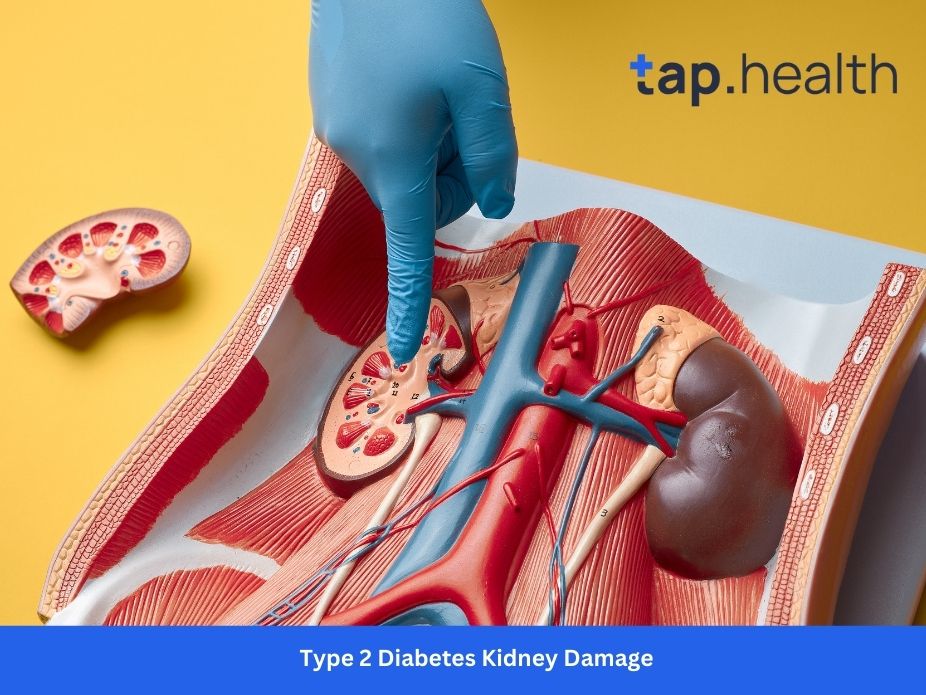
Type 2 Diabetes Kidney Damage

You are diligent. You take your Metformin on time. You try to avoid sweets at weddings. You walk when you can. But in the back of your mind, there is a nagging fear. You have heard stories about dialysis. You have seen elderly relatives with swollen feet.

The question haunts you: “Is my diabetes silently hurting my kidneys?”

This fear is valid. In India, and globally, Type 2 Diabetes Kidney Damage (medically known as Diabetic Nephropathy) is the leading cause of kidney failure. It is a silent saboteur. It doesn’t announce itself with pain or fever. Instead, it works quietly over years, turning your body’s filtration system from a high-tech purifier into a clogged, leaky sieve.

But here is the empowering truth: It is not inevitable.

Kidney damage is not a guaranteed destiny for every diabetic. It is a complication that can be delayed, prevented, and sometimes even halted if caught early.

In this comprehensive 3,000-word guide, written in simple Indian English, we will shine a light on this silent threat. We will explain exactly how sugar destroys kidney filters, the subtle warning signs you might be missing (check your toilet bowl!), and the actionable steps you can take today to protect your vital organs.


Understanding Diabetic Kidney Disease (Diabetic Nephropathy)

Let’s start with the basics. Your kidneys are two bean-shaped organs, each about the size of a fist. They are the hardest working cleaners in your body. Every day, they filter about 150 quarts of blood to produce about 1 to 2 quarts of urine. They remove waste, balance fluids, and keep your blood pressure steady.

Diabetic Nephropathy is the medical term for kidney damage caused by diabetes.

  • “Diabetic” = Related to diabetes.
  • “Nephro” = Kidney.
  • “Pathy” = Disease or damage.

It is a progressive condition. This means it doesn’t happen overnight. It happens slowly, often over 10 to 20 years, as high blood sugar slowly erodes the delicate machinery inside the kidneys.


Can Type 2 Diabetes Damage the Kidneys?

Yes, absolutely.

In fact, Type 2 diabetes is the number one reason people end up on dialysis. About 1 in 3 adults with diabetes currently has some form of kidney disease.

Why is the risk so high? Because your kidneys are full of tiny blood vessels. And diabetes is, at its core, a disease that damages blood vessels. Whether it is the vessels in your eyes (retinopathy), your nerves (neuropathy), or your kidneys (nephropathy), the culprit is the same: toxic levels of sugar in the blood.


How Type 2 Diabetes Causes Kidney Damage

To understand the damage, imagine your kidneys are a kitchen sieve or a tea strainer. You pour tea through it to catch the leaves (waste) while letting the liquid (clean blood) pass through.

High Blood Sugar and Blood Vessel Damage

When you have high blood sugar, your blood becomes thick and sticky.

  • This sticky blood is hard to push through the tiny, delicate filters of the kidney (called glomeruli).
  • Over time, the high sugar damages these filters, making them scar and thicken.
  • A scarred filter cannot clean effectively. It starts getting clogged.

Increased Kidney Workload

When there is too much sugar in your blood, your kidneys have to work overtime to filter it out.

  • This causes Hyperfiltration. The kidneys are forced to filter more blood than normal to keep you safe.
  • Imagine running a car engine at maximum speed, 24/7. Eventually, the engine burns out. That is what happens to your kidneys.

High Blood Pressure as a Risk Factor

Most people with Type 2 diabetes also have High Blood Pressure (Hypertension). This is a deadly duo.

  • Diabetes weakens the filters.
  • High Blood Pressure pounds against these weak filters with high force.
  • This accelerates the damage, causing the filters to collapse faster.

Protein Leakage Into Urine

As the filters get damaged, the holes in the “sieve” get bigger.

  • Big molecules that should stay in your blood—like Albumin (a protein)—start leaking through these holes and end up in your urine.
  • This is why Protein in Urine is the gold-standard sign of kidney damage.

Early Signs of Kidney Damage in Type 2 Diabetes

This is the tricky part. In Stage 1 and Stage 2, you will likely feel perfectly fine. There is no pain. This is why regular testing is non-negotiable.

Microalbuminuria (Protein in Urine)

This is the very first chemical sign.

  • The Sign: Your doctor finds tiny amounts of albumin in your urine test.
  • The Meaning: Your kidney filters are starting to leak.
  • The Good News: At this stage, the damage is often reversible with strict sugar and BP control.

Mild Swelling in Feet or Ankles

  • The Sign: Your shoes feel tighter in the evening. Or, if you press your thumb into your ankle, it leaves a dent (pitting edema).
  • The Reason: Your kidneys are losing protein. Protein holds water in your blood vessels. When protein is lost, water leaks out into your tissues, causing swelling.

Rising Blood Pressure

Kidneys help regulate blood pressure. If your BP starts creeping up and becomes harder to control with your usual medicine, it might be a sign your kidneys are struggling.


Symptoms of Advanced Kidney Damage

As the disease progresses to Stage 3 and 4, toxins build up in your blood because the kidneys can’t flush them out. This makes you feel physically sick.

Fatigue and Weakness

You feel tired all the time.

  • Why: Healthy kidneys make a hormone called EPO that tells your body to make red blood cells. Damaged kidneys make less EPO, leading to Anaemia (low blood count). Less oxygen reaches your muscles, leaving you exhausted.

Changes in Urination Frequency

  • Early Stage: You might pee more often, especially at night (Nocturia), as kidneys lose the ability to concentrate urine.
  • Late Stage: You might pee less and less as the kidneys shut down.

Foamy or Bloody Urine

  • Foamy: If your toilet bowl looks like it has beer foam or soap suds that don’t flush away easily, that is protein.
  • Bloody: Urine looks pink or cola-coloured.

Nausea and Poor Appetite

  • The Feeling: Food tastes like cardboard or metal. You feel nauseous in the morning.
  • Why: This is Uremia—the buildup of urea and waste products in the blood acting as a poison.

Shortness of Breath

Fluid builds up in the lungs because the kidneys can’t remove it. Plus, anaemia leaves you gasping for air even after a short walk.

Itching and Dry Skin

This isn’t a normal itch. It feels deep under the skin.

  • Why: Kidneys balance minerals. When they fail, Phosphorus builds up in the blood, causing severe itching.

Stages of Kidney Disease in Type 2 Diabetes

Kidney disease is measured by eGFR (estimated Glomerular Filtration Rate). Think of this as your “Kidney Percentage.”

  • Stage 1: Kidney damage with normal function (eGFR 90+).
  • Stage 2: Mild loss of function (eGFR 60-89).
  • Stage 3: Moderate loss (eGFR 30-59). Symptoms often start here.
  • Stage 4: Severe loss (eGFR 15-29). Preparation for dialysis begins.
  • Stage 5: Kidney Failure (eGFR < 15). Dialysis or Transplant needed.

Tests to Detect Kidney Damage Early

You cannot rely on symptoms. You must rely on numbers.

Urine Albumin Test (ACR)

This checks for the “Leak.”

  • Urine Albumin-to-Creatinine Ratio (uACR):
    • Normal: Less than 30 mg/g.
    • Warning Zone: 30 to 300 mg/g.
    • Severe Damage: Over 300 mg/g.

Blood Creatinine and eGFR

This checks the “Filter Power.”

  • Serum Creatinine: A waste product from muscles. If it is high in the blood, it means kidneys aren’t filtering it out.
  • eGFR: Calculated from creatinine. It tells you your stage.

Blood Pressure Monitoring

Checking your BP at home is part of kidney care. Keep it below 130/80 mmHg.


Risk Factors That Increase Kidney Damage in Type 2 Diabetes

Why does your neighbour with diabetes have healthy kidneys while yours are struggling? These factors add fuel to the fire:

  1. Uncontrolled Blood Sugar: The biggest factor. High HbA1c = High Risk.
  2. High Blood Pressure: The silent partner in crime.
  3. Smoking: Smoking narrows blood vessels, suffocating the kidneys.
  4. High Cholesterol: Clogs the renal arteries.
  5. Family History: If your parents had kidney issues, you are at higher risk.
  6. Obesity: Adds physical pressure on the kidneys.

How to Prevent Kidney Damage in Type 2 Diabetes

You are not helpless. You can build a fortress around your kidneys.

Controlling Blood Sugar Levels

Aim for an HbA1c of less than 7%. This single step reduces the risk of kidney damage by 30-50%.

Managing Blood Pressure

This is arguably as important as sugar.

  • Take your BP meds even if you feel fine.
  • Many BP meds (like ACE Inhibitors or ARBs) have a “double benefit”—they lower BP and protect the kidneys directly.

Kidney-Friendly Diet Changes

  • Cut Salt (Sodium): Salt raises BP and makes you retain water. Limit pickles (achar), papads, and processed foods.
  • Protein: Don’t go protein-crazy. Excess protein makes kidneys work harder. Stick to moderate portions of dal, fish, or chicken.
  • Hydration: Drink enough water, but don’t force-drink gallons unless advised.

Regular Screening and Checkups

  • Once a Year: Get a Microalbumin Urine Test and Creatinine Blood Test.
  • Every Visit: Check your Blood Pressure.

Treatment Options for Diabetic Kidney Disease

If damage is found, doctors have powerful tools to slow it down.

  1. Medicines:
    • ACE Inhibitors / ARBs: (e.g., Telmisartan, Enalapril). These lower pressure inside the kidney filters.
    • SGLT2 Inhibitors: (e.g., Dapagliflozin). These modern “wonder drugs” flush sugar out through urine and are proven to protect kidneys and heart.
  2. Dietary Modification: A renal dietician may restrict Potassium or Phosphorus if your levels are high.
  3. Dialysis/Transplant: In Stage 5, machines take over the cleaning job.

Real-Life Scenario

Meet Mrs. Desai (54, Teacher from Mumbai): Mrs. Desai had diabetes for 10 years. She felt healthy but noticed her feet were swollen after standing in class all day. She ignored it, thinking it was just fatigue.

The Check: During a routine checkup, her doctor insisted on a urine test. The Shock: Her ACR was 350 mg/g (Severe protein leakage). Her BP was 150/90. The Intervention: Her doctor started her on an SGLT2 inhibitor and an ARB for blood pressure. She cut her salt intake by half. The Outcome: Two years later, her kidney function (eGFR) is stable. She didn’t “cure” the damage, but she stopped it from getting worse. She saved herself from early dialysis by catching it just in time.


Expert Contribution

We consulted Dr. N. Mehta, Senior Nephrologist:

“The tragedy of diabetic kidney failure is that it is often preventable. Patients come to me in Stage 4 with nausea and breathlessness. I ask, ‘Did you check your urine protein 5 years ago?’ They say no.

My message is simple: Don’t wait for symptoms. If you have Type 2 diabetes, your urine test is your kidney’s report card. Check it every year. Catching protein leakage early gives us a huge window to save your kidneys.”


Recommendations Grounded in Proven Research and Facts

According to the National Kidney Foundation and CDC:

  1. SGLT2 Breakthrough: Research confirms that SGLT2 inhibitors reduce the risk of kidney failure progression by 30-40% in diabetics.
  2. The “Legacy Effect”: The famous UKPDS Study showed that controlling blood sugar early in your diabetes journey protects your kidneys for decades, even if control slips a little later. Early discipline pays lifelong dividends.

Key Takeaways

  • It’s Silent: Kidney damage starts long before you feel sick.
  • The “Leak”: Protein in urine (Microalbuminuria) is the first warning sign.
  • Double Trouble: High Sugar + High BP is the fastest way to destroy kidneys.
  • The Shield: Keep HbA1c < 7% and BP < 130/80.
  • New Meds: Ask your doctor about SGLT2 inhibitors if you are at risk.

Your kidneys fight for you every day. Fight for them by getting tested this year.

Read this: Does Insulin Affect Kidneys?


Frequently Asked Questions (Type 2 Diabetes Kidney Damage)

What are the symptoms of kidney failure due to diabetes?

In the early stages, there are no symptoms. As it advances, symptoms include swelling in feet and ankles, foamy urine, persistent fatigue, nausea, and itching. In severe cases, you may experience shortness of breath and confusion due to toxin buildup.

How to reverse kidney damage from diabetes?

Generally, you cannot reverse scarring on the kidneys once it happens. However, you can halt or significantly slow down the progression. By controlling blood pressure with ACE inhibitors/ARBs and using SGLT2 inhibitors, many patients stabilize their kidney function and avoid dialysis for life.

How long does it take for diabetes to cause kidney damage?

It typically takes 10 to 20 years of uncontrolled diabetes to develop severe kidney disease. However, because Type 2 diabetes can go undiagnosed for years, some patients already have kidney damage at the time of their diabetes diagnosis.

Can kidney damage from diabetes be reversed?

Early stage damage (Microalbuminuria) can sometimes be reversed or reduced with strict sugar and BP control. Advanced stage damage (Stage 3 and beyond) is permanent, but treatment focuses on preserving the remaining function to prevent failure.

What is the life expectancy with diabetes and kidney failure?

If a patient reaches kidney failure (Stage 5) and requires dialysis, the average life expectancy is 5 to 10 years, though many live much longer with good care. Receiving a kidney transplant significantly improves both life expectancy and quality of life compared to dialysis.

How does diabetes cause kidney failure?

High blood sugar thickens and scars the tiny blood vessels (glomeruli) in the kidneys. This destroys their ability to filter waste. Combined with high blood pressure, the filters collapse, leading to toxin buildup and eventual organ failure.

Is foamy urine always a sign of kidney damage?

Not always, but it is a major red flag. Persistent foam (that remains after flushing) usually indicates protein leakage. If you see this, you must get a urine test (ACR) immediately to rule out diabetic nephropathy.

What foods help repair kidneys?

There is no specific food that “repairs” kidneys, but a kidney-friendly diet protects them. This includes low-sodium foods (fresh fruits, vegetables), moderate protein, and avoiding processed foods. In advanced stages, you may need to limit potassium (bananas, potatoes) and phosphorus (dairy, cola).


References

  1. Mayo Clinic: Diabetic Nephropathy Symptoms and Causes

Disclaimer: This article is for informational purposes only. If you notice swelling, foamy urine, or fatigue, please consult a nephrologist immediately.

Tags
diabetes prevention foot health diabetes and sleep fasting blood sugar diabetes misconceptions diabetes medicine safety diabetic neuropathy symptoms diabetic foot ulcer warning signs can diabetics eat mango diabetes itching urinary infection diabetes diabetes slow wound healing metformin side effects diabetes numbness in hands banana for diabetes dates blood sugar jaggery for diabetes is poha good for diabetes guava blood sugar India diabetes pregnancy blood sugar targets diabetes medicine India blood sugar vs blood pressure LADA diabetes symptoms ED in diabetic men how to store insulin cataract surgery diabetes diabetes cholesterol levels Ramadan diabetes medicine timing walking after meals diabetes flu vaccine diabetes diabetes food cravings whey protein diabetes diabetes thirst fluids skipping breakfast diabetes diabetes and blurred vision breathlessness diabetes diabetes nausea causes dry mouth high blood sugar diabetes and shoulder pain diabetes and palpitations diabetes symptoms and tests diabetes and hand tremors causes A1C gestational diabetes poor sleep blood sugar HbA1c diabetes symptoms in women diabetes medicines diabetes nerve damage diabetes and blood pressure mango and diabetes dark patches diabetes diabetes stomach problems diabetes wounds metformin safety diabetes tingling hands banana blood sugar papaya for diabetes is jaggery good for diabetes poha blood sugar orange for diabetes sugar spike after rice postpartum diabetes risk type 1 vs type 2 diabetes diabetes vs high cholesterol latent autoimmune diabetes in adults diabetes and menopause insulin storage at home diabetes and muscle loss diabetes triglycerides diabetes and shift work diabetes and smoking GLP-1 diabetes medicines sugar cravings diabetes protein powder kidney diabetes diabetes diarrhoea vomiting diabetes breakfast skipping diabetic eye symptoms high sugar breathing problems diabetes and vomiting diabetes mouth symptoms diabetes frozen shoulder racing heart low sugar diabetes and tingling feet diabetes and appetite loss Medicine blood sugar pregnancy diabetes sleep and diabetes diabetes in India women diabetes signs diabetes treatment advice tingling feet diabetes high blood pressure diabetes mango sugar diabetes walking after meals for diabetes diabetic gastroparesis diabetic wound care diabetes ketoacidosis warning signs diabetic neuropathy hands coconut water and diabetes is papaya good for diabetes gur for diabetes sprouts for diabetes can diabetics eat oranges Indian diet diabetes diabetes after pregnancy type 1 and type 2 diabetes difference lipid profile diabetes diabetes vs MODY menopause blood sugar insulin fridge temperature diabetes muscle weakness diabetes and high blood pressure night shift diabetes smoking diabetes risk GLP-1 weight loss diabetes diabetes hunger cravings CGM skin irritation diabetes diabetes sick day vomiting morning sugar skipping breakfast diabetes and sweating diabetes and shaking vomiting with diabetes diabetes and itchy skin shoulder stiffness diabetes heart pounding diabetes diabetes and tingling feet causes diabetes and appetite loss causes Health fasting glucose blood sugar pregnancy diabetes and stress diabetes risk factors India diabetes risk women Indian diabetic diet chart diabetes eye disease diabetes heart kidney risk diabetes reversal vs remission post meal walk diabetes diabetes bloating nausea diabetes yeast infection DKA symptoms fasting with diabetes coconut water for diabetes papaya blood sugar watermelon for diabetes are sprouts good for diabetes orange blood sugar glucose spike symptoms gestational diabetes India difference between type 1 and type 2 diabetes diabetes vs neuropathy MODY diabetes symptoms type 2 diabetes menopause glucometer errors sarcopenia diabetes diabetes hypertension diabetes meal timing shift work diabetes quit smoking semaglutide diabetes diabetes and fever CGM sensor rash diabetes loose motions late dinner diabetes sweating low blood sugar tremors low blood sugar diabetes and cold feet itching high blood sugar diabetes and loss of appetite diabetes and muscle weakness diabetes and sweaty feet diabetes and burning feet Lifestyle A1C test low blood sugar stress blood sugar diabetes prevention India diabetes symptoms in men diabetic meal plan diabetic eye test borderline HbA1c diabetes remission walking lowers blood sugar diabetes sick day rules diabetes fungal infection ketones diabetes diabetes fasting safety can diabetics drink coconut water oats for diabetes can diabetics eat watermelon sprouts blood sugar brown bread for diabetes post meal blood sugar continuous glucose monitor India diabetes vs diabetes insipidus diabetes vs heart disease maturity onset diabetes of the young diabetes and frozen shoulder wrong blood sugar reading diabetes and anaemia BP in diabetes diabetes and vitamin D diabetes neuropathy pain relief diabetes and migraine best shoes for diabetic feet diabetes adhesive allergy CGM diabetes and kidney stones diabetes dinner timing diabetes and leg cramps shaky feeling diabetes cold feet diabetes diabetes fungal itching loss appetite diabetes weakness high blood sugar diabetes and sweaty feet causes diabetes and burning feet causes Home remedies diabetes diet hypoglycemia cortisol diabetes best fruits for diabetes men diabetes signs HbA1c test high protein breakfast for diabetes HbA1c 5.7 to 6.4 reverse type 2 diabetes diabetes grocery list India diabetes during illness diabetes vaginal itching diabetes blurry vision can diabetics fast curd for diabetes oatmeal diabetes watermelon blood sugar methi seeds for diabetes bread for diabetes insulin resistance symptoms CGM cost India diabetes mellitus vs diabetes insipidus diabetes heart disease risk continuous glucose monitor diabetes frozen shoulder diabetes reactive hypoglycaemia anaemia diabetes HbA1c diabetes and liver enzymes vitamin D deficiency diabetes diabetic neuropathy burning feet diabetes headache triggers diabetic socks foot ulcer prevention diabetes monsoon care kidney stones diabetes night sugar late dinner leg cramps diabetes diabetes and periods diabetes poor circulation feet diabetes and swollen ankles diabetes not feeling hungry diabetes leg weakness diabetes and neck pain diabetes and slow digestion Fitness balanced meals diabetes safety diabetes eye care diabetes fruits diabetes risk men HbA1c normal range diabetes breakfast India prediabetes HbA1c diabetes plate method diabetic food list India blood sugar fever infection diabetes night sweats high blood sugar blurry vision insulin injection sites is curd good for diabetes are oats good for diabetes apple for diabetes fenugreek for diabetes whole wheat bread diabetes diabetes blood pressure time in range diabetes insipidus symptoms diabetes and heart attack CGM diabetes diabetic shoulder pain low blood sugar after eating low haemoglobin diabetes high SGPT diabetes vitamin D insulin resistance diabetes gastroparesis blood sugar migraine diabetes and driving diabetes rainy season foot infection diabetes urine pain diabetes medicine timing diabetes muscle cramps periods affect blood sugar hair loss diabetes ankle swelling diabetes diabetes and restless legs diabetes and memory problems diabetes and neck pain causes diabetes and slow digestion causes Prevention healthy eating diabetes heart health diabetic retinopathy fruit and blood sugar type 1 diabetes how to lower HbA1c diabetic breakfast ideas post-meal blood sugar Indian diabetes plate foods for diabetes shopping diabetes and alcohol low blood sugar at night diabetes excessive thirst insulin site rotation diabetes curd milk for diabetes can diabetics eat apple methi diabetes avocado for diabetes diabetes heart risk glucometer accuracy diabetes vs metabolic syndrome gestational diabetes vs type 2 diabetes continuous glucose monitoring metformin vitamin B12 deficiency postprandial hypoglycaemia diabetes and uric acid SGOT SGPT diabetes diabetes and magnesium diabetic gastroparesis symptoms diabetes and thyroid medication driving with diabetes monsoon diabetes tips diabetes foot nail care diabetes medicine before or after food diabetes and frequent infections menstrual cycle diabetes diabetes hair fall causes diabetes leg swelling causes restless leg syndrome diabetes diabetes brain fog diabetes and chest pain Hygiene why diabetes is considered as a lifestyle disease blood pressure diabetes eye test rice and diabetes type 1 diabetes symptoms fasting sugar normal range PCOS and diabetes blood sugar after food diabetes portion control diabetes kidney tests alcohol blood sugar diabetes diabetes sweating at night diabetes dry mouth insulin lumps tea and coffee in diabetes can diabetics drink milk apple blood sugar cinnamon for diabetes is avocado good for diabetes ABC diabetes diabetes technology metabolic syndrome and diabetes pregnancy diabetes and type 2 diabetes steroid induced diabetes metformin B12 symptoms type 3c diabetes high uric acid diabetes diabetes and dental health magnesium deficiency diabetes delayed stomach emptying diabetes levothyroxine diabetes low blood sugar driving diabetes and antibiotics diabetic nail cutting missed diabetes medicine dose recurrent infections diabetes time in range diabetes diabetes wounds not healing diabetes and headache diabetes leg discomfort night memory loss blood sugar diabetes and chest pain causes Ailments lifestyle diabetes cholesterol diabetes kidney care can diabetics eat rice insulin diabetes high fasting blood sugar PCOS insulin resistance postprandial glucose low glycaemic index foods for diabetes urine albumin diabetes can diabetics drink alcohol diabetes headache frequent urination diabetes diabetes weight gain coffee diabetes best milk for diabetes eggs for diabetes cinnamon blood sugar avocado blood sugar kidney risk diabetes CGM vs glucometer India metabolic syndrome symptoms gestational diabetes future risk steroid diabetes symptoms vitamin B12 test metformin pancreatogenic diabetes diabetes gout risk tooth infection diabetes magnesium insulin sensitivity diabetes and UTI thyroid medicine blood sugar diabetes in older adults antibiotics blood sugar diabetes diabetes fungal nail infection diabetes airport travel diabetes infection symptoms CGM time in range diabetes and increased appetite headache low blood sugar fever high blood sugar diabetes and skin discolouration diabetes and cough Hindi type 2 diabetes lifestyle disease living with diabetes diabetic kidney disease diabetes diet India prediabetes diet reverse prediabetes naturally PCOS diabetes risk dawn phenomenon diabetes low GI foods India eGFR diabetes diabetes and dizziness high blood sugar headache diabetes fatigue diabetes and weight gain tea diabetes peanuts for diabetes are eggs good for diabetes dalchini for diabetes travelling with diabetes diabetes footwear diabetes reversal myths diabetes vs thyroid diabetes vs anaemia steroids high blood sugar diabetes distress diabetes caused by pancreas disease diabetes and PCOS diabetes and skin infections protein intake diabetes urinary tract infection diabetes diabetes fatigue after eating elderly diabetes care infection treatment diabetes antibiotics CGM vs glucometer insulin airport security dizziness low blood sugar time in range targets constant hunger diabetes high sugar headache sick day diabetes yellow skin diabetes diabetes and cough causes skin diseases exercise and diabetes diabetes habits kidney tests diabetes morning blood sugar prediabetes food prediabetes reversal gestational diabetes diet Indian morning sugar high diabetes low GI diet diabetes and dental problems dizziness diabetes low blood sugar headache diabetes tiredness insulin weight gain roti for diabetes are peanuts good for diabetes egg diabetes amla for diabetes diabetes travel checklist blurred vision diabetes HbA1c remission diabetes and thyroid disease diabetes fatigue or anaemia diabetes and hair loss diabetes burnout diabetes and bone health PCOS insulin resistance diabetes boils diabetes diabetes protein diet diabetes women's sexual health sleepy after meals diabetes diabetes low sugar older adults diabetes workplace health CGM vs finger prick diabetes travel documents dizziness high blood sugar millets for diabetes diabetes hunger causes diabetes and bladder problems diabetes and daytime sleepiness diabetes and night urination diabetes and snoring acne vulgaris symptoms blood sugar control diabetes management high blood sugar symptoms fasting sugar high lower diabetes risk how to prevent type 2 diabetes pregnancy diabetes diet high fasting sugar in morning diabetes and fatty liver diabetes gum disease low sugar dizziness blood sugar monitoring at home high blood sugar tiredness diabetes swollen feet best roti for diabetes peanuts blood sugar paneer for diabetes amla juice diabetes insulin travel storage fundus exam diabetes remission vs reversal thyroid blood sugar anaemia diabetes symptoms diabetes hair loss causes diabetes burnout symptoms diabetes osteoporosis diabetes and sleep apnoea diabetes and travel protein foods for diabetes diabetes vaginal dryness post meal sugar spike tiredness diabetes blood tests diabetes desk job diabetes CGM accuracy night hypoglycaemia symptoms diabetes and skin tags ragi jowar bajra diabetes diabetes and morning constipation diabetes urinary symptoms diabetes fatigue sleepiness urinating at night diabetes diabetes and snoring causes AI Search physical activity insulin resistance hyperglycemia symptoms dawn phenomenon diabetes and weight loss insulin resistance diet gestational diabetes meal plan diabetes and cholesterol fatty liver diabetes dry mouth diabetes diabetes leg pain when to check blood sugar diabetes constipation swollen feet diabetes chapati diabetes sweet potato for diabetes is paneer good for diabetes amla blood sugar diabetes hot weather eye care diabetes vildagliptin diabetes vs PCOS diabetes vs Cushing syndrome hair fall in diabetes diabetes depression anxiety diabetes fracture risk sleep apnea diabetes travel with diabetes diabetes and fibre diabetes sexual problems women diabetes meal timing diabetes test list office snacks diabetes early signs of insulin resistance diabetes low sugar during sleep dark neck insulin resistance best millet for blood sugar constipation diabetes morning diabetes and body odour diabetes and bloating nocturia diabetes diabetes and morning fatigue type 2 diabetes diabetes foot care insulin sensitivity diabetes warning signs diabetes myths weight loss diabetes Indian foods for insulin resistance diabetic foot ulcer diabetes lipid profile insulin resistance fatty liver diabetes urine infection diabetic leg cramps blood glucose monitoring diabetes and constipation diabetes foot swelling can diabetics eat dates can diabetics eat sweet potato paneer diabetes guava for diabetes diabetes dehydration diabetic retinopathy symptoms vildagliptin benefits in type 2 diabetes patients diabetes vs hypertension Cushing syndrome blood sugar diabetes and erectile dysfunction diabetes and depression diabetes and cataracts snoring diabetes insulin resistance diabetes Ramadan fasting fibre foods for diabetes diabetes and vaccines best time to eat for diabetes blood tests for diabetes checkup diabetes and dehydration insulin resistance tests constipation in diabetes acanthosis nigricans diabetes diabetes and nausea morning bowel movement diabetes diabetes smell sweat bloating with diabetes diabetes and numbness in hands diabetes and morning fatigue causes prediabetes diabetic foot type 2 diabetes risk normal blood sugar levels diabetes facts insulin resistance weight loss improve insulin sensitivity diabetes foot wound cholesterol in diabetes diabetes skin problems frequent UTI diabetes diabetes nerve pain legs metformin for diabetes constipation diabetes can diabetics eat banana dates for diabetes sweet potato blood sugar poha for diabetes can diabetics eat guava heat and blood sugar GDM screening DPP-4 inhibitor diabetes and hypertension diabetes vs LADA erectile dysfunction diabetes diabetes anxiety symptoms diabetic cataract symptoms diabetes and high cholesterol diabetes fasting Ramadan soluble fibre blood sugar vaccines for diabetes late night eating diabetes protein powder diabetes dehydration blood sugar walk after dinner blood sugar diabetes constipation relief diabetes and shortness of breath nausea with diabetes diabetes and dry mouth fruity breath diabetes diabetes stomach gas diabetes and numbness in hands causes diabetes and hand tremors
More blogs
Kazima Qureshi
Kazima Qureshi
• July 17, 2026
• 19 min read

Diabetes and Hand Tremors: Low Sugar, Medicines, Anxiety, and What to Do

A detailed, research-based guide to diabetes and hand tremors, including causes, tests, safe care, and warning signs.

Diabetes
Type 2 Diabetes Kidney Damage
K. Siva Jyothi
K. Siva Jyothi
• July 17, 2026
• 19 min read

Diabetes and Morning Fatigue: Sleep, High Sugar, Anaemia, Thyroid, and Tests

A detailed, research-based guide to diabetes and morning fatigue, including causes, tests, safe care, and warning signs.

Diabetes
Type 2 Diabetes Kidney Damage
Isha Yadav
Isha Yadav
• July 17, 2026
• 19 min read

Diabetes and Snoring: Sleep Apnoea, Weight, Blood Sugar, and Testing

A detailed, research-based guide to diabetes and snoring, including causes, tests, safe care, and warning signs.

Diabetes
Type 2 Diabetes Kidney Damage
Do you remember your last sugar reading?
Log and Track your glucose on the Tap Health App
All logs in one place
Smart trend graphs
Medicine Reminder
100% Ad Free
Start Now

Missed your diabetes meds

again? Not anymore.

Get medicine reminders on your phone.

✓ Glucose diary and Insights
✓ Smart Nudges
✓ All logs at one place
✓ 100% Ad free
Start for free
tap health
tap.health logo
copyright © 2025
2nd Floor,Plot No 4, Minarch Tower,
Sector 44,Gurugram, 122003,
Haryana, India
  • About Us
  • Blog
  • Doctor login
  • Contact Us
  • Privacy Policy
  • Return / Shipping Policy
  • Terms and Conditions
Get Your Free AI Diabetes Coach