It is 7:00 AM in an Indian kitchen. The mustard seeds are spluttering in hot oil. The smell of curry leaves fills the air. The kettle is boiling.
But the chef of the house faces a dilemma.
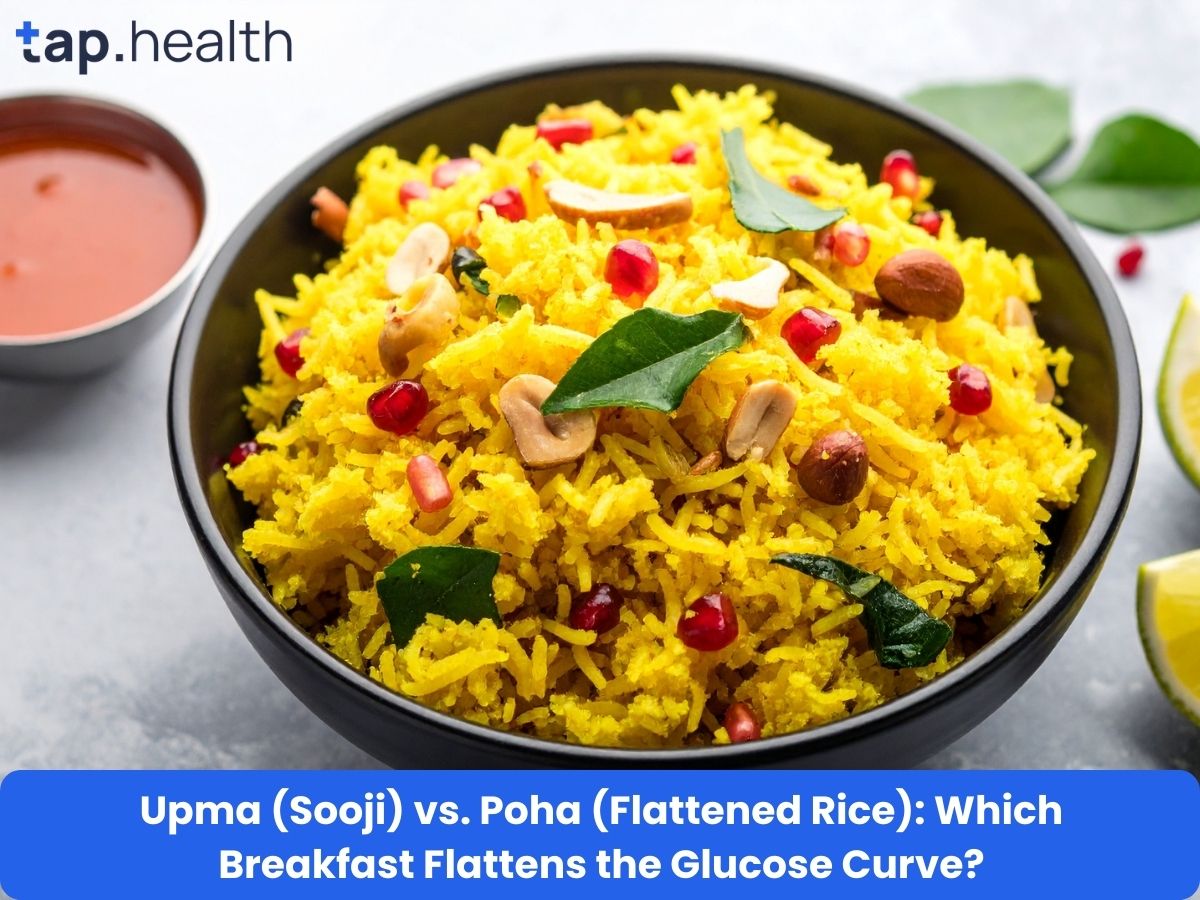
In one jar, there is white, granular Sooji (Semolina) waiting to be turned into a fluffy Upma.1
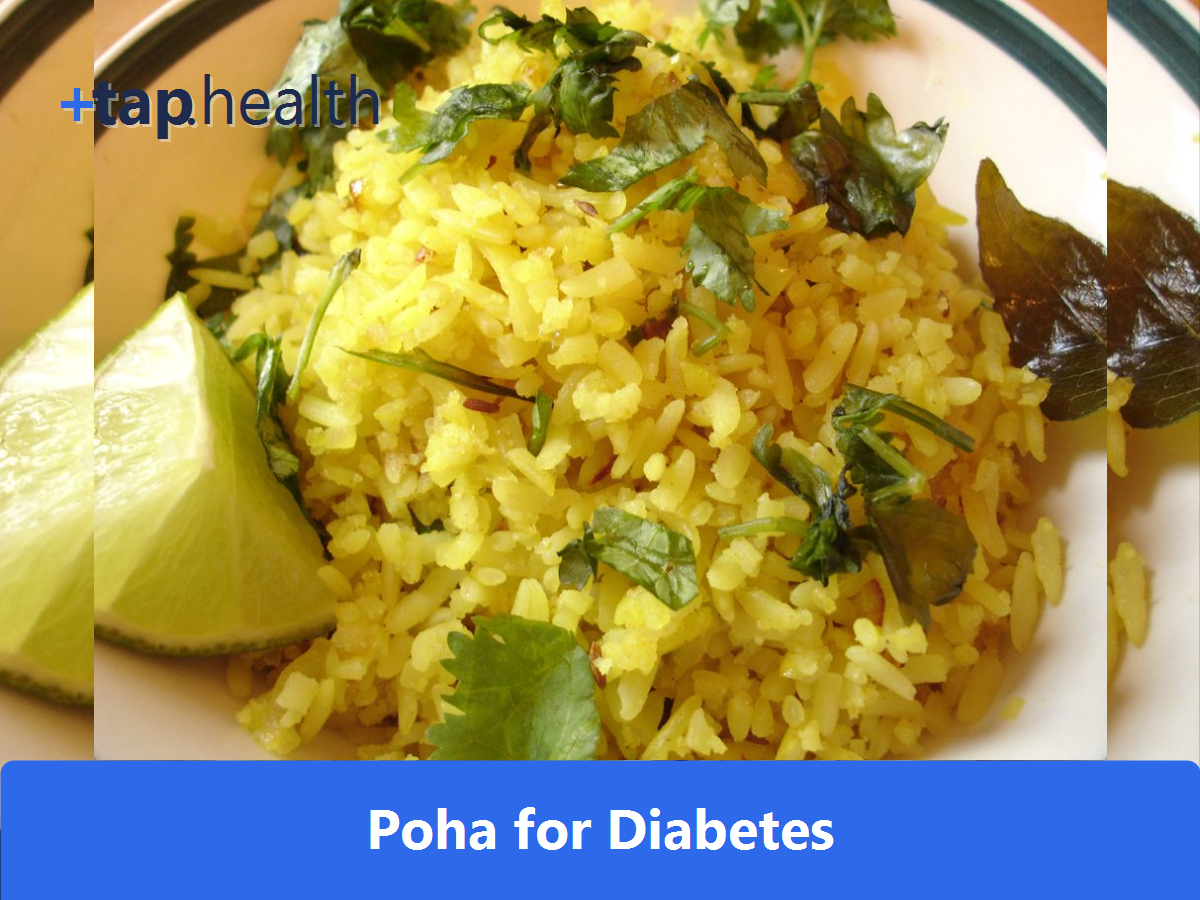
In the other jar, there are dry, flaky grains of Poha (Flattened Rice) waiting to be soaked.
Both are legendary breakfasts. Both are fast, savory, and comforting. Both are considered “lighter” than a heavy Paratha.
But for the diabetic, the weight watcher, or the health-conscious eater, “light” isn’t enough. We need to know: Which one spikes the blood sugar?
Is the wheat-based Upma safer because it has gluten protein? Or is the rice-based Poha better because it contains resistant starch and iron?
In this comprehensive guide, we are going to stage the ultimate morning showdown: Upma vs. Poha. We will analyze the Glycemic Index (GI), break down the nutritional differences, and reveal which bowl helps you flatten that glucose curve to start your day right.
The Contenders: Wheat vs. Rice
To understand the biology, we must first understand the grain.
1. Upma (Sooji / Rava)
- The Base: Semolina (Granulated Wheat).
- The Source: It is the coarse middlings of durum wheat. It is essentially wheat that hasn’t been ground into fine flour (Atta/Maida).
- The Profile: Since it is wheat, it contains Gluten. It has a grainy texture that requires roasting.
2. Poha (Flattened Rice / Aval)
- The Base: Rice.
- The Source: Paddy is parboiled, rolled, flattened, and dried to produce flakes.2
- The Profile: It is Gluten-Free. Because it is parboiled, it undergoes a partial fermentation process (in some traditional methods) and retains more B-vitamins than plain white rice.3
Nutritional Face-Off: The Numbers Game
Let’s compare a standard cooked portion: 1 Bowl (approx 150g cooked).
Note: This assumes a standard recipe with moderate oil and onions.
| Feature | Upma (Cooked, 1 Bowl) | Poha (Cooked, 1 Bowl) | The Winner |
| Calories | ~250 kcal | ~250 kcal | Tie |
| Carbohydrates | ~45g | ~48g | Upma (Slightly lower) |
| Protein | ~6-7g | ~3-4g | Upma (Wheat has more protein) |
| Fiber | ~2g | ~2g | Tie (Both are low fiber naturally) |
| Iron | Low | High | Poha (Significant Iron) |
| Gluten | Yes | No | Poha (Better for gut issues) |
The Analysis:
- Upma wins on Protein. Wheat naturally has more protein than rice. This helps with satiety (feeling full).
- Poha wins on Iron. The flattening process (often done in iron rollers) makes Poha an excellent source of iron, crucial for preventing anemia.4
The Glycemic Index Battle: The Glucose Curve
Here is the metric that matters most for diabetes.
1. The Glycemic Index of Upma (Sooji)
GI Score: ~66 (Medium)
Sooji is wheat.5 While it is not as refined as Maida, it is still a refined carb.
- The Spike: It digests moderately fast. However, the presence of Gluten (protein) forms a network that slightly slows down the enzyme access to starch.
- The Texture: If roasted well, the granules stay separate. This structure takes longer to digest than a mushy porridge, keeping the GI in the medium range.
2. The Glycemic Index of Poha (White)
GI Score: ~70 (High)
This is the shocker. White Poha is essentially rice.
- The Spike: Because it is flattened, the surface area is huge. This allows digestive enzymes to attack the starch instantly. It can spike blood sugar almost as fast as white rice.
- The Exception: This applies to White Poha. Red Poha (made from red rice) has a significantly lower GI (~50) due to the bran layer.
The Verdict:
Strictly speaking, Upma (Sooji) has a slightly lower GI than White Poha. The wheat protein acts as a small speed bump for sugar.
The “Recipe” Variable: How You Cook Matters More
If you eat plain boiled Sooji or plain soaked Poha, you will spike your sugar. But nobody eats them plain. The Tadka changes everything.
The Poha Advantage (Peanuts & Peas):
Poha is traditionally made with:
- Mustard Seeds & Curry Leaves: Antioxidants.
- Peanuts: Healthy Fats + Protein.6
- Green Peas: Fiber.
- Lemon Juice: Acidity.
The Chemistry:
The fat from the peanuts and the acidity from the lemon juice drastically lower the Glycemic Load of the Poha.
- Result: A well-made Poha with lots of peanuts and veggies might actually digest slower than a plain Upma.
The Upma Advantage (Ghee & Veggies):
Upma is often made with Ghee.7
- Ghee: Lowers the GI by slowing gastric emptying.
- Vegetables: Carrots and beans add the fiber that Sooji lacks.
The Probiotic/Fermentation Myth
You might hear that Poha is a probiotic.
Is it true?
Poha is made from parboiled rice.8 The parboiling process involves soaking the paddy, which can encourage mild fermentation. This makes Poha surprisingly easy on the gut (light digestion).
- Gut Health: Poha is often recommended for people with bloating or digestion issues because it is gluten-free and easily digestible.9 Upma, being wheat-based, can cause bloating in gluten-sensitive individuals.
Real-Life Scenario
Let’s meet Mrs. Iyer, a 60-year-old grandmother from Chennai.
The Context:
Mrs. Iyer had diabetes and arthritis. She found cooking difficult in the mornings. She switched to Instant Upma Mixes (Ready-to-Eat).
The Problem:
Her post-breakfast sugar was hitting 200 mg/dL.
- Why? Instant mixes are often made of highly refined Sooji, dehydrated fat (palm oil), and hidden sugars/maltodextrin. They digest instantly.
The Fix:
She switched to Red Poha.
- She soaked Red Poha (Aval) for 10 minutes.
- She tossed it with lots of peanuts, grated coconut, and lemon.
The Result:
- Sugar: Her levels dropped to 160 mg/dL.
- Pain: She felt less bloated (no gluten).
- Energy: The complex carbs in red rice gave her steady energy without the crash.
Expert Contribution
We consulted medical experts to get the professional stance.
Dr. V. Patel, Diabetologist:
“I usually vote for Upma if the patient is vegetarian and needs protein, but only if they use ‘Bansi Rava’ (broken wheat) instead of fine Sooji. Fine Sooji is just a step away from Maida. For Poha lovers, I say: If I can see the white rice flakes more than the vegetables, you made it wrong. The ratio must be 50% Poha, 50% Veggies.”
Nutritionist Perspective:
“Don’t forget the lemon! Squeezing lemon on Poha isn’t just for taste. The citric acid inhibits the enzyme amylase, which breaks down starch. 10This simple trick lowers the blood sugar impact of the meal by nearly 15%.”
Recommendations Grounded in Proven Research and Facts
Based on data from the Glycemic Index Foundation and NIN, here are actionable tips:
- Switch the Grain:
- For Upma: Do not use fine white Sooji. Use Bansi Rava (Red Wheat Rava) or Dalia (Broken Wheat). These have a much lower GI.
- For Poha: Buy Red Poha (Thick variety).11 It takes longer to soak but is far superior nutritionally.
- The 1:1 Rule:For every 1 cup of Poha or Sooji you use, you must use 1 cup of chopped vegetables (Carrots, Beans, Peas, Onions). This doubles the volume and halves the carb load.
- Protein Power:Neither Poha nor Upma has enough protein for a full meal.
- Eat them with a side of Boiled Egg.
- Or add a bowl of Sambar/Dal.
- Or toss in Paneer cubes.
- The “Sev” Trap:Do not garnish your Poha or Upma with Bhujia/Sev. That is deep-fried Besan. It adds unhealthy fats and calories. Garnish with fresh Coriander or Grated Coconut instead.
Key Takeaways
- Upma (Sooji) has a Medium GI (~66) and higher protein, making it slightly better for satiety, but it contains gluten.
- Poha (White) has a High GI (~70) but is rich in Iron and Gluten-Free.
- Red Poha is the true champion with a Low GI (~50).
- Cooking Method: Adding fat (Ghee/Peanuts), Acid (Lemon), and Fiber (Veggies) is essential to lower the glucose spike for both dishes.
- Verdict: Upma is technically lower in GI than White Poha, but Red Poha beats them both.
Conclusion
So, Upma vs. Poha: Which breakfast flattens the glucose curve?
If you are choosing between basic white Poha and regular Sooji Upma, Upma wins by a small margin due to its wheat protein content.
However, the margin is so small that the real winner is decided by You, the Cook.
A plate of White Poha loaded with peanuts, peas, and lemon will spike your sugar less than a plate of plain, oily Upma. Conversely, an Upma made from coarse Bansi Rava with carrots will beat any white rice dish.
The secret isn’t in the grain; it’s in the garnish. Stop eating “Carbs” for breakfast. Start eating “Carbs dressed in Fiber and Protein.”
Frequently Asked Questions (FAQ)
Is Poha good for weight loss?
Yes. Poha is very low in calories compared to other cereals.12 It contains about 76% carbohydrates and very little fat. It is also probiotic in nature (if fermented/parboiled), which keeps the gut healthy.13 A healthy gut is essential for weight loss.14+2
Can I eat Upma daily if I have diabetes?
It depends on the Rava. If you use fine, white Sooji, it may spike your sugar over time. If you use Wheat Rava (Bansi Rava) or Oats, you can eat it daily. Always ensure the quantity of vegetables equals the quantity of Rava.
Which is lighter for digestion: Upma or Poha?
Poha. Poha is gluten-free and pre-cooked (parboiled).15 It puts very little stress on the digestive system. Upma contains gluten (wheat protein), which can be heavy or bloating for some people in the morning.
Does lemon juice really lower Glycemic Index?
Yes. Acidic foods like lemon juice, vinegar, or pickles slow down the rate at which the stomach empties into the intestine. This slows down the digestion of carbohydrates, leading to a lower blood sugar spike.16
What is the best side dish for Upma/Poha?
Coconut Chutney or Sambar.
- Coconut Chutney: Provides healthy fats (lowers GI).17
- Sambar: Provides Lentil protein (lowers GI).18
- Avoid eating them with sugar or pickles alone.
Is Oats Upma better than Sooji Upma?
Yes, significantly. Oats have a high content of Beta-Glucan fiber.19 An Upma made with Rolled Oats (not instant powder) has a much lower GI (~55) than Sooji Upma and is better for cholesterol.
References:
- University of Sydney: GI Search Database. Link
- Times of India: Poha vs Upma Nutrition. Link
- National Institute of Nutrition (NIN): Indian Breakfast Analysis. Link
- PubMed: Effect of acid on Glycemic Index. Link
- Diabetes.co.uk: Breakfast choices. Link
(Disclaimer: This content is for educational purposes only. Always consult your doctor or a certified dietitian before making significant changes to your diet, especially if you have diabetes or celiac disease.)