tap.health logo
  • Diabetes Management
  • Health Assistant
  • About Us
  • Blog
  • Contact Us
Get Plan
  • Diabetes Management
  • Health Assistant
  • About Us
  • Blog
  • Contact Us
  • All Blogs
  • Product
  • What is Stage 1 Chronic Kidney Disease?

What is Stage 1 Chronic Kidney Disease?

Product
January 20, 2025
• 4 min read
Yasaswini Vajupeyajula
Written by
Yasaswini Vajupeyajula
Fashtana Khan
Reviewed by:
Fashtana Khan
ChatGPT Perplexity WhatsApp LinkedIn X Grok Google AI
What is Stage 1 Chronic Kidney Disease

Chronic Kidney Disease (CKD) often sounds intimidating, but understanding it step by step can make managing it a lot easier. Stage 1 is the initial phase of CKD, where early signs of kidney damage can be detected, but the kidneys are still functioning normally. Let’s break it all down—what it is, what to watch for, and how you can take control of your kidney health.

What Does Stage 1 CKD Mean?

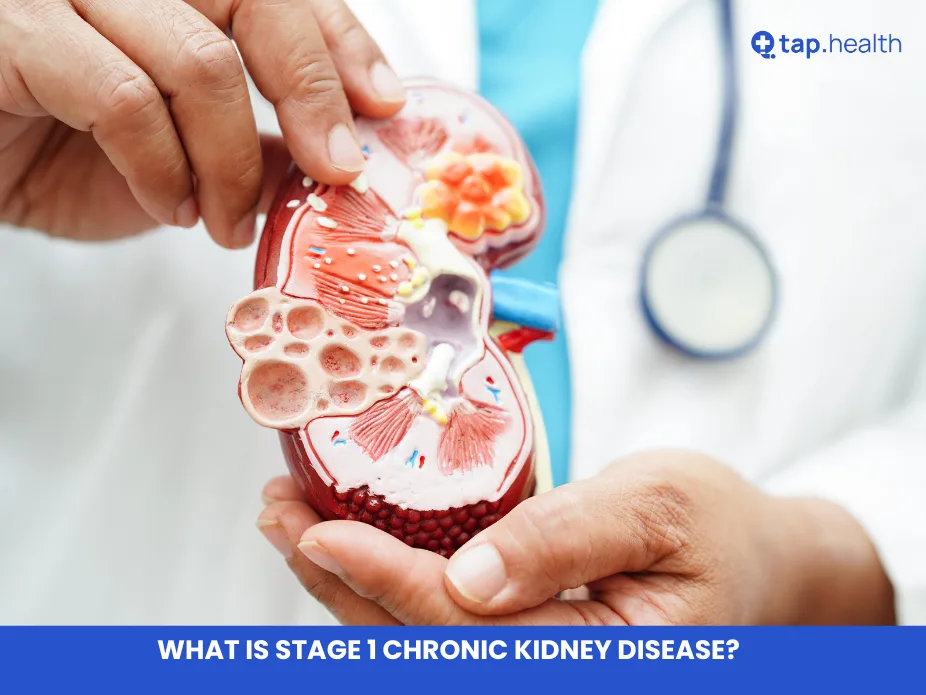
Stage 1 CKD means your kidneys are showing signs of damage, but they’re still working at near-full capacity. Doctors determine this by looking at your glomerular filtration rate (GFR), which measures how well your kidneys are filtering waste and toxins from your blood. At this stage, your GFR is 90 or higher, meaning your kidneys are functioning normally, but with visible damage such as protein in your urine (albuminuria) or abnormal test results.

Think of your kidneys as a water filter. If the filter is slightly damaged but still letting water flow through normally, that’s Stage 1 CKD. The damage might not be noticeable right away, but over time, it can cause more issues if left unchecked.

What Are the Symptoms of Stage 1 CKD?

Here’s the tricky part—early-stage CKD often doesn’t show any symptoms! This is why regular checkups are important, especially if you have risk factors. However, you might notice some warning signs like:

  • Blood or protein in your urine (proteinuria or hematuria)
  • High blood pressure
  • Swelling in your hands and feet (edema)

Often, these signs are subtle or mistaken for other conditions, so it’s essential to speak with your doctor about any changes in your health.

Real-Life Scenarios

To make it more relatable, let’s talk about Ravi, a 35-year-old engineer from Mumbai. Ravi went for a routine medical test where his doctor noticed high levels of protein in his urine. He didn’t have any symptoms, so the news was surprising. With his busy schedule and love for salty snacks, his doctor explained how high blood pressure and a diet high in sodium might have contributed to his kidney damage. Ravi also discovered his family had a history of kidney disease, making him more susceptible.

Thanks to early detection, Ravi now works closely with a dietitian to manage his salt intake, drinks plenty of water, and checks his blood pressure regularly. Early diagnosis helped him avoid a more severe progression.

Risk Factors You Should Know

Certain conditions increase the risk of CKD. If you identify with any of these, it’s time to pay attention:

  • Diabetes
  • High blood pressure
  • Family history of kidney diseases
  • Smoking
  • High-sodium or unhealthy diet
  • Being overweight

These factors don’t automatically mean you’ll develop CKD, but they do increase your chances.

Want to understand the connection between diabetes and CKD? Read our in-depth analysis here.

Expert Contributions

Dr. Santosh Varughese, a nephrology expert from Tamil Nadu, highlights that CKD cases in India are climbing due to lifestyle-related issues such as diabetes and hypertension. According to Dr. Varughese, “Timely screenings and lifestyle changes can help identify CKD early and prevent further complications.”

You can explore his comprehensive work on the subject through this helpful article.

How is Stage 1 CKD Diagnosed?

Diagnosis usually involves a combination of:

  1. Urine Tests – Checks for protein or blood in the urine.
  2. Blood Tests – Measures GFR to assess kidney function.
  3. Imaging – Ultrasounds or CT scans to examine structural irregularities.
  4. Biopsy – Sometimes, a small piece of kidney tissue is examined to get a clearer picture.

If your doctor finds abnormalities in any of these tests, they’ll recommend steps to protect your kidney health.

Recommendations Grounded in Proven Research

If you’re managing Stage 1 CKD, don’t worry—you have plenty of ways to slow progression. Here’s what research and experts suggest:

  1. Maintain a Healthy Diet
    • Focus on fresh fruits, vegetables, whole grains, and lean meats.
    • Limit sodium to reduce strain on your kidneys.
    • Drink enough water, but not too much.
  2. Control Blood Pressure
    High blood pressure accelerates kidney damage. Make sure it stays below 130/80 mmHg.
  3. Manage Blood Sugar
    If you’re diabetic, keeping your blood sugar within target ranges can prevent further damage.
  4. Avoid Smoking and Alcohol
    Smoking reduces blood flow to your kidneys, speeding up damage.
  5. Get Active
    Regular exercise helps control weight, lower blood pressure, and improve overall kidney health.
  6. Medications
    Follow your doctor’s guidance on medications. Angiotensin-converting enzyme (ACE) inhibitors or angiotensin receptor blockers (ARBs) are often recommended.

Preventing Progression of CKD

Preventing CKD from advancing requires consistent effort and monitoring. Here are some additional tips:

  • Schedule regular checkups with your nephrologist or healthcare provider.
  • Keep a close eye on your tests, including blood pressure, blood sugar, and cholesterol levels.
  • Discuss any medications with your doctor to ensure they’re kidney-safe.
  • Educate yourself about the condition. Knowledge is power, and the more you know, the better decisions you can make.

FAQ on What is Stage 1 Chronic Kidney Disease?

Can stage 1 CKD be reversed?

Stage 1 CKD cannot always be reversed, but with early intervention and lifestyle changes, its progression can be slowed or even stopped.

How often should I get tested for kidney disease?

If you have risk factors such as diabetes or high blood pressure, it’s recommended to get tested annually.

What foods should I avoid with stage 1 CKD?

Try to limit salt, processed foods, and sugary drinks. Focus on fresh and whole foods instead.

Is drinking a lot of water good for kidney health?

Yes, staying well-hydrated helps support kidney function, but consult your doctor on how much water you need based on your health.

Should I see a specialist for stage 1 CKD?

While your primary doctor can manage it, seeing a nephrologist for specialized advice is a good idea

Final Thoughts

Stage 1 CKD might sound scary, but with early diagnosis and proactive management, it’s entirely possible to avoid more serious complications. Think of your kidneys as your body’s “filtering team,” working hard to keep everything running smoothly. By making lifestyle changes and staying on top of your health, you can give them the support they need to keep you in great shape for years to come.

If you or someone you know is at risk, don’t delay in getting tested. After all, the earlier you catch it, the better your chances of keeping your kidneys happy and healthy.


Tags
A1C test diabetes heart health diabetic retinopathy fruit and blood sugar type 1 diabetes how to lower HbA1c diabetic breakfast ideas post-meal blood sugar Indian diabetes plate foods for diabetes shopping diabetes and alcohol low blood sugar at night diabetes excessive thirst insulin site rotation diabetes curd milk for diabetes can diabetics eat apple why diabetes is considered as a lifestyle disease blood pressure diabetes eye test rice and diabetes type 1 diabetes symptoms fasting sugar normal range PCOS and diabetes blood sugar after food diabetes portion control diabetes kidney tests alcohol blood sugar diabetes diabetes sweating at night diabetes dry mouth insulin lumps tea and coffee in diabetes can diabetics drink milk apple blood sugar Medicine lifestyle diabetes cholesterol diabetes kidney care can diabetics eat rice insulin diabetes high fasting blood sugar PCOS insulin resistance postprandial glucose low glycaemic index foods for diabetes urine albumin diabetes can diabetics drink alcohol diabetes headache frequent urination diabetes diabetes weight gain coffee diabetes best milk for diabetes eggs for diabetes Health type 2 diabetes lifestyle disease living with diabetes diabetic kidney disease diabetes diet India prediabetes diet reverse prediabetes naturally PCOS diabetes risk dawn phenomenon diabetes low GI foods India eGFR diabetes diabetes and dizziness high blood sugar headache diabetes fatigue diabetes and weight gain tea diabetes peanuts for diabetes are eggs good for diabetes Lifestyle exercise and diabetes diabetes habits kidney tests diabetes morning blood sugar prediabetes food prediabetes reversal gestational diabetes diet Indian morning sugar high diabetes low GI diet diabetes and dental problems dizziness diabetes low blood sugar headache diabetes tiredness insulin weight gain roti for diabetes are peanuts good for diabetes egg diabetes Home remedies blood sugar control diabetes management high blood sugar symptoms fasting sugar high lower diabetes risk how to prevent type 2 diabetes pregnancy diabetes diet high fasting sugar in morning diabetes and fatty liver diabetes gum disease low sugar dizziness blood sugar monitoring at home high blood sugar tiredness diabetes swollen feet best roti for diabetes peanuts blood sugar paneer for diabetes Fitness physical activity insulin resistance hyperglycemia symptoms dawn phenomenon diabetes and weight loss insulin resistance diet gestational diabetes meal plan diabetes and cholesterol fatty liver diabetes dry mouth diabetes diabetes leg pain when to check blood sugar diabetes constipation swollen feet diabetes chapati diabetes sweet potato for diabetes is paneer good for diabetes Prevention diabetes foot care insulin sensitivity diabetes warning signs diabetes myths weight loss diabetes Indian foods for insulin resistance diabetic foot ulcer diabetes lipid profile insulin resistance fatty liver diabetes urine infection diabetic leg cramps blood glucose monitoring diabetes and constipation diabetes foot swelling can diabetics eat dates can diabetics eat sweet potato paneer diabetes Hygiene diabetic foot type 2 diabetes risk normal blood sugar levels diabetes facts insulin resistance weight loss improve insulin sensitivity diabetes foot wound cholesterol in diabetes diabetes skin problems frequent UTI diabetes diabetes nerve pain legs metformin for diabetes constipation diabetes can diabetics eat banana dates for diabetes sweet potato blood sugar poha for diabetes Ailments foot health diabetes and sleep fasting blood sugar diabetes misconceptions diabetes medicine safety diabetic neuropathy symptoms diabetic foot ulcer warning signs can diabetics eat mango diabetes itching urinary infection diabetes diabetes slow wound healing metformin side effects diabetes numbness in hands banana for diabetes dates blood sugar jaggery for diabetes is poha good for diabetes Hindi gestational diabetes poor sleep blood sugar HbA1c diabetes symptoms in women diabetes medicines diabetes nerve damage diabetes and blood pressure mango and diabetes dark patches diabetes diabetes stomach problems diabetes wounds metformin safety diabetes tingling hands banana blood sugar papaya for diabetes is jaggery good for diabetes poha blood sugar skin diseases pregnancy diabetes sleep and diabetes diabetes in India women diabetes signs diabetes treatment advice tingling feet diabetes high blood pressure diabetes mango sugar diabetes walking after meals for diabetes diabetic gastroparesis diabetic wound care diabetes ketoacidosis warning signs diabetic neuropathy hands coconut water and diabetes is papaya good for diabetes gur for diabetes sprouts for diabetes acne vulgaris symptoms blood sugar pregnancy diabetes and stress diabetes risk factors India diabetes risk women Indian diabetic diet chart diabetes eye disease diabetes heart kidney risk diabetes reversal vs remission post meal walk diabetes diabetes bloating nausea diabetes yeast infection DKA symptoms fasting with diabetes coconut water for diabetes papaya blood sugar watermelon for diabetes are sprouts good for diabetes AI Search low blood sugar stress blood sugar diabetes prevention India diabetes symptoms in men diabetic meal plan diabetic eye test borderline HbA1c diabetes remission walking lowers blood sugar diabetes sick day rules diabetes fungal infection ketones diabetes diabetes fasting safety can diabetics drink coconut water oats for diabetes can diabetics eat watermelon sprouts blood sugar blood sugar hypoglycemia cortisol diabetes best fruits for diabetes men diabetes signs HbA1c test high protein breakfast for diabetes HbA1c 5.7 to 6.4 reverse type 2 diabetes diabetes grocery list India diabetes during illness diabetes vaginal itching diabetes blurry vision can diabetics fast curd for diabetes oatmeal diabetes watermelon blood sugar fasting glucose diabetes safety diabetes eye care diabetes fruits diabetes risk men HbA1c normal range diabetes breakfast India prediabetes HbA1c diabetes plate method diabetic food list India blood sugar fever infection diabetes night sweats high blood sugar blurry vision insulin injection sites is curd good for diabetes are oats good for diabetes apple for diabetes
More blogs
K. Siva Jyothi
K. Siva Jyothi
• May 30, 2026
• 19 min read

Apple for Diabetes: Blood Sugar Benefits, Best Time to Eat, Portion Size, and Juice Risks

A detailed guide to apple for diabetes, including fibre, blood sugar effects, portion size, apple juice risks, pairing ideas, and glucose monitoring.

Diabetes
What is Stage 1 Chronic Kidney Disease
Kazima Qureshi
Kazima Qureshi
• May 30, 2026
• 19 min read

Eggs for Diabetes: Blood Sugar Benefits, Cholesterol, Best Cooking Methods, and Meal Ideas

A practical guide to eggs for diabetes, covering blood sugar, protein, cholesterol, heart health, cooking methods, and Indian breakfast ideas.

Diabetes
What is Stage 1 Chronic Kidney Disease
Naimish Mishra
Naimish Mishra
• May 30, 2026
• 19 min read

Poha for Diabetes: Blood Sugar Impact, Portion Size, Add-Ins, and Healthier Breakfast Tips

A practical guide to poha for diabetes, including flattened rice, blood sugar impact, portion size, vegetables, peanuts, and healthier breakfast tips.

Diabetes
What is Stage 1 Chronic Kidney Disease
Do you remember your last sugar reading?
Log and Track your glucose on the Tap Health App
All logs in one place
Smart trend graphs
Medicine Reminder
100% Ad Free
Download Now

Missed your diabetes meds

again? Not anymore.

Get medicine reminders on your phone.

✓ Glucose diary and Insights
✓ Smart Nudges
✓ All logs at one place
✓ 100% Ad free
Download Free
tap health
tap.health logo
copyright © 2025
2nd Floor,Plot No 4, Minarch Tower,
Sector 44,Gurugram, 122003,
Haryana, India
  • About Us
  • Blog
  • Doctor login
  • Contact Us
  • Privacy Policy
  • Return / Shipping Policy
  • Terms and Conditions
Get Your Free AI Diabetes Coach