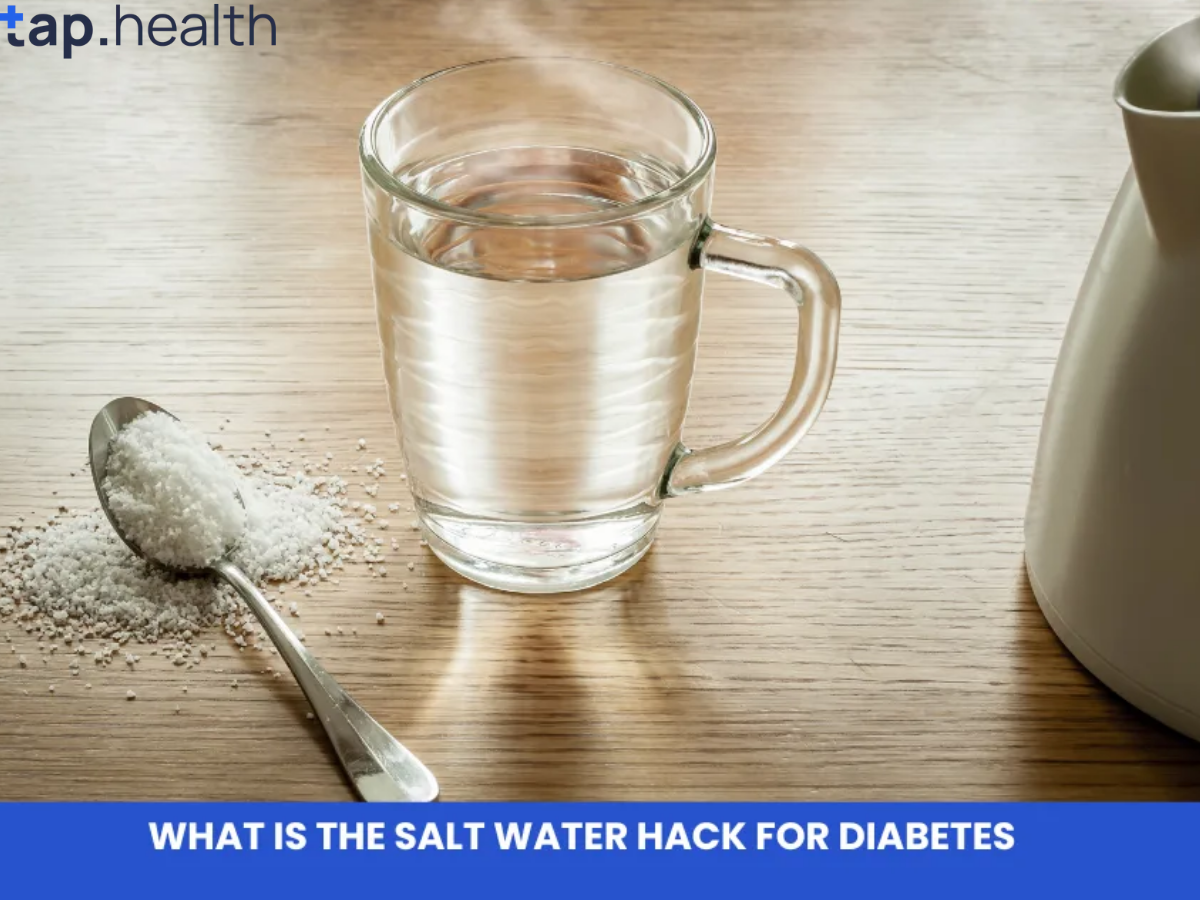
The Rise of the Salt Water Trend
The world of health and wellness is constantly evolving. Every day, new trends emerge on social media platforms. Some of these trends fade quickly. Others capture the attention of millions. The “Salt Water Hack” for diabetes is one of the latter. It has become a viral sensation on TikTok and Instagram. Videos featuring this hack have amassed millions of views. People are searching for simple solutions to complex health problems. Diabetes management is a daily struggle for millions. The promise of a simple, natural remedy is incredibly appealing.
This trend specifically targets hydration and blood sugar management. It suggests that the way we drink water is wrong. It claims that plain water often passes straight through the body. The solution proposed is adding salt. Not just any salt, but specific unrefined salts like Celtic Sea Salt. The method is precise. It involves placing a crystal of salt on the tongue. This is followed by drinking a glass of water. Proponents claim this drives water into the cells. They argue it replenishes lost minerals. They suggest it can help manage diabetes symptoms.
But is there truth to these claims? Or is it another fleeting fad? To answer this, we must look at the science. We need to understand the biology of hydration. We must explore the chemistry of salt. We need to examine the physiology of diabetes. This report will cover every angle. We will break down the complex mechanisms into simple terms. We will look at the potential benefits. We will also investigate the serious risks. Our goal is to provide a complete picture. This ensures you have the information needed to make safe choices.
The Viral Origins: TikTok and Barbara O’Neill
The current wave of interest can be traced back to specific sources. Clips of Barbara O’Neill have circulated widely. O’Neill is an alternative health educator from Australia. In these clips, she discusses hydration. She states that “water follows minerals.” She argues that drinking water without minerals is inefficient. She compares it to irrigation rather than hydration. Her recommendation is specific. She advises using Celtic Sea Salt. She suggests placing a crystal on the tongue before drinking.
These videos have resonated with many users. The logic seems sound on the surface. We know electrolytes are important. We know dehydration is a problem. The visual of a simple crystal of salt is compelling. It feels like a “hack” or a secret. It bypasses the need for expensive medications. It feels natural and accessible. This has fueled its rapid spread. User testimonials have added to the momentum. People claim to feel more energized. Some report better blood sugar readings. Others mention reduced headaches.
However, viral fame does not equal medical fact. Barbara O’Neill has faced scrutiny from health regulators. Her claims have been challenged by medical boards in Australia.1 It is crucial to separate the personality from the protocol. We must look at the salt water hack objectively. We need to verify the mechanism she describes. We need to see if it holds up against established physiology. This report will strip away the hype. We will focus on the biological reality.
Understanding the Target Audience
Who is this hack for? It appeals to a wide range of people. The primary group is those with Type 2 diabetes. This condition is often managed with lifestyle changes. Diet and exercise play a huge role. Patients are often looking for an edge. They want to lower their A1C levels. They want to reduce their reliance on insulin or metformin. The idea that a pinch of salt could help is powerful.
It also appeals to those with pre-diabetes. This group is on the verge of a diagnosis. They are often highly motivated to prevent progression. They are looking for preventative measures. They are open to natural remedies. The salt water hack fits this desire perfectly. It is low-cost and low-effort. It seems like a small change with a big potential payoff.
Finally, it appeals to the general wellness community. Bio-hackers and fitness enthusiasts are interested. They are always optimizing hydration. They understand the importance of electrolytes. They are skeptical of sugary sports drinks. They view Celtic salt as a superior alternative. They are looking for the most efficient way to hydrate. This report addresses all these groups. It provides the depth of information each group needs.
Deconstructing the “Hack”: Step-by-Step
To understand the hack, we must define it clearly. It is not just drinking salty water. The specific method matters to its proponents. It is a ritualized process. Each step has a claimed purpose. Let’s break down the typical protocol promoted online.
Step 1: Selecting the Right Salt
The hack forbids table salt. Regular table salt is viewed negatively. It is described as “dead” or toxic. It is heavily processed. It is stripped of trace minerals. It is almost 100% sodium chloride. It often contains anti-caking agents. It may have added iodine. Proponents argue this causes inflammation. They say it spikes blood pressure without benefit.
The required salt is unrefined. Celtic Sea Salt (Sel Gris) is the gold standard. It comes from Brittany, France. It is harvested by hand. It is sun-dried on clay. This gives it a grey color. It retains moisture. It contains trace minerals from the sea. Himalayan Pink Salt is a common alternative. It is mined in Pakistan. It contains iron oxide, giving it a pink hue. It is also unrefined. However, Celtic salt is preferred for its moisture content. The claim is that it has a unique mineral profile.3
Step 2: The Crystal on the Tongue
This is the controversial step. You do not dissolve the salt in the glass. You take a single crystal. You place it on your tongue. You let it sit there. The claim is that this aids absorption. Barbara O’Neill suggests it interacts with mucous membranes. She claims the minerals are absorbed directly. She says this prepares the cells for water.5
The theory is about signaling. The taste of salt signals the body. It tells the brain that minerals are coming. The claim is that magnesium is absorbed here. It is said to travel quickly to the cell membranes. This is supposed to open the channels for water. This mechanism is central to the “hack.” It differentiates it from just drinking electrolyte water.
Step 3: Drinking the Water
Immediately after the salt, you drink. A full glass of water is recommended. The water washes down the dissolving salt. The claim is that the magnesium is now waiting. It is at the cell membrane. It pulls the water inside. This creates “intracellular hydration.”
The alternative is described as “washing out.” Proponents say plain water just flushes the kidneys. It dilutes the blood. It makes you urinate more. It strips minerals from the body. By adding the salt crystal, the water stays. It plumps up the cells. It hydrates the tissues. It prevents the frequent urination common in diabetes.3
Real-Life Scenario
Let us visualize how this plays out. Meet “Robert.” Robert is a 55-year-old accountant. He was diagnosed with Type 2 diabetes three years ago. He takes metformin daily. He tries to watch his carbs. He walks three times a week. Despite this, his energy is low. He often feels thirsty. He wakes up twice a night to use the bathroom.
Robert’s Discovery
Robert sees a video on Facebook. A woman explains the salt water hack. She describes his symptoms perfectly. She talks about the constant thirst. She explains that he is not actually hydrated. She says his water is running right through him. She promises that Celtic salt is the answer. She says it has 82 minerals. She says it will stabilize his blood sugar.
Robert is intrigued. He dislikes the side effects of his medication. He is worried about his long-term kidney health. The idea of a natural remedy is exciting. He orders a bag of Celtic Sea Salt online. It arrives two days later. It looks different from his table salt. It is grey and slightly wet. It is clumpy.
Robert’s Experiment
The next morning, Robert tries it. He puts a large crystal on his tongue. It is intensely salty. He drinks a glass of filtered water. He repeats this before every meal. For the first few days, he feels different. He is paying attention to his hydration. He is drinking more water consciously. He feels proactive.
However, after a week, Robert notices something else. His wedding ring feels tight. His socks leave deep marks on his ankles. He checks his blood pressure at the pharmacy. It is 145/95. It is usually 130/85. He is confused. He thought the salt was good for him. He thought it would lower his pressure by hydrating him. He wonders what he did wrong. Did he take too much? Was it the wrong salt?
The Missing Context
Robert is experiencing the reality of sodium physiology. He fell for the marketing. He missed the nuance. He did not know that his kidneys are already under stress. He did not know that fluid retention is a side effect of sodium. He confused “hydration” with “fluid overload.” This scenario is common. It highlights the gap between viral trends and medical reality. It shows why understanding the science is vital.
What Is Celtic Salt?
To evaluate the hack, we must understand the substance. Celtic Sea Salt is unique. It is not just a brand name. It refers to a specific method of production. It has a specific chemical composition.
Origin and Harvesting
True Celtic salt comes from France. It is harvested in the Guérande region. The process is ancient. It dates back hundreds of years. It uses the tides and the sun. Sea water is channeled into clay ponds. The sun and wind evaporate the water. The salt crystallizes.
It is harvested by paludiers (salt workers). They use wooden tools. They do not use metal. This prevents contamination. The salt contacts the clay bottom. This clay is rich in minerals. The salt absorbs these minerals. This gives it the grey color. It is never washed. It is never refined. It retains the “mother liquor” (bitterns). This is why it feels moist to the touch.3
Mineral Profile vs. Table Salt
The main argument for Celtic salt is the minerals. Table salt is simple. It is Sodium Chloride (NaCl). It is 99% pure. It is a chemical isolate. Celtic salt is complex. It is still mostly Sodium Chloride. It is usually around 85-90% NaCl. The remaining percentage is water and other minerals.
Key Minerals in Celtic Salt:
- Magnesium: Essential for nerve function. Crucial for insulin sensitivity.
- Potassium: Balances sodium. Important for heart health.
- Calcium: Vital for bones. Helps muscle contraction.
- Trace Elements: It contains dozens of others. Zinc, manganese, iron, and iodine are present in tiny amounts.
The Quantity Reality Check
This is the critical data point. Celtic salt has minerals. But how much? Proponents claim it is a rich source. Nutrition data tells a different story. The amounts are “trace.”
- Magnesium Content: A teaspoon of Celtic salt might have 20-30mg of magnesium.
- Daily Requirement: An adult needs 300-400mg of magnesium daily.
- The Discrepancy: To get your daily magnesium from Celtic salt, you would need to eat 10+ teaspoons. This would be a lethal amount of sodium.
This does not mean the minerals are useless. They buffer the sodium slightly. They affect the taste. They may help absorption slightly. But calling it a “mineral supplement” is misleading. It is a seasoning with benefits. It is not a vitamin pill.4
The Biological Claim: “Water Follows Minerals”
The core of the hack is the phrase “water follows minerals.” Is this true? Yes, it is a fundamental law of physics. It is called osmosis. But how does it apply to the human body?
Osmosis Explained Simply
Imagine a tank divided by a semi-permeable membrane. On one side is fresh water. On the other side is salty water. The water will move to the salty side. It wants to dilute the salt. This is osmosis. Water follows the solute (salt).
In the body, cells rely on this balance.
- Extracellular Fluid: This is the fluid outside the cells. It is in the blood and tissues. Sodium is the main mineral here.
- Intracellular Fluid: This is the fluid inside the cells. Potassium is the main mineral here.
The Balance of Hydration
The body constantly balances these fluids. If you eat too much salt, your blood becomes salty. Water is pulled out of your cells to dilute the blood. This dehydrates the cells. This is the opposite of the hack’s claim.
However, if you are low on sodium, your body cannot hold water. You drink water, and the kidneys flush it out. This keeps your blood concentration safe. This is where the hack has a grain of truth. You need some sodium to retain water. This is why athletes use electrolytes. They lose salt in sweat. They need to replace it to stay hydrated.
The “Mucous Membrane” Theory
Barbara O’Neill claims absorption happens on the tongue. She suggests the mucous membranes absorb the crystal. This is scientifically debated. The mucous membranes in the mouth are thin. They can absorb some drugs (like nitroglycerin). But a salt crystal is large. It dissolves in saliva. You swallow the saliva.
Most absorption happens in the small intestine. The stomach mixes everything together. The salt you licked becomes part of the “chyme” (digested food). The small intestine absorbs the sodium and water. The idea that licking salt sends a “magnesium signal” to the cells is not supported by standard physiology. The body does not have a “magnesium hotline” from the tongue to the cell membrane.5
The Diabetes Connection: Insulin and Magnesium
Why is this hack targeted at diabetics? The link is magnesium. Magnesium is often called the “forgotten mineral” in diabetes care.
The Role of Magnesium in Insulin
Insulin is a hormone. It acts like a key. It unlocks cells to let sugar (glucose) in. Magnesium is the lubricant for this key. It is involved in the tyrosine kinase activity of the insulin receptor.
- With Magnesium: The key turns easily. The door opens. Sugar enters the cell. Blood sugar drops.
- Without Magnesium: The key gets stuck. The door stays closed. Sugar stays in the blood. The pancreas pumps more insulin to force the door. This is insulin resistance.
The Vicious Cycle of Deficiency
Diabetics are prone to magnesium deficiency. High blood sugar damages the kidneys’ ability to retain magnesium.
- Blood sugar spikes.
- Kidneys filter more urine to remove sugar (polyuria).
- Magnesium is washed out with the urine.
- Magnesium levels drop.
- Insulin resistance gets worse.
- Blood sugar spikes higher.
This cycle is real. It is well-documented. Correcting magnesium deficiency is a valid medical goal. It improves insulin sensitivity. It helps control blood sugar.
Does the Hack Fix the Cycle?
The hack attempts to break this cycle. It introduces magnesium via Celtic salt.
- Pros: Any magnesium is better than none. The salt helps retain some fluid. This might reduce the frequency of urination.
- Cons: The sodium load is high. The magnesium amount is low. You are fixing one problem (magnesium) while worsening another (sodium/blood pressure).
There are better ways to get magnesium. Leafy greens, nuts, and seeds are packed with it. Supplements are safer. Relying on salt for magnesium is an inefficient strategy for a diabetic.3
The Sodium-Glucose Co-Transporter (SGLT1) Mechanism
This is the most critical scientific point. It contradicts the idea that salt “lowers” blood sugar directly. We must look at how glucose enters the blood. It uses a specific transporter.
The “Ticket” to the Bloodstream
The gut lining has a barrier. Glucose cannot just walk through. It needs a transport vehicle. This vehicle is a protein called SGLT1 (Sodium-Glucose Cotransporter 1).
- How it works: The transporter acts like a revolving door. It has seats for two Sodium ions and one Glucose molecule.
- The Rule: The door only turns if both seats are filled. Sodium is the ticket. Glucose is the passenger.
Salt Increases Glucose Absorption
When you consume salt with your water, you provide the “tickets.” You fill the gut with sodium. This activates the SGLT1 transporters. They start grabbing glucose. They shuttle it into the blood efficiently.
- In a famine: This is great. It maximizes energy harvest.
- In diabetes: This is potentially counter-productive. You want to slow glucose absorption. You do not want to speed it up.
Research suggests that high salt intake can increase the number of SGLT1 transporters. The gut adapts. It becomes better at absorbing sugar. This can lead to higher post-meal blood sugar spikes. This is the opposite of what the hack promises. The hack claims to lower blood sugar. Biology suggests it might help absorb it faster.10
Expert Contribution
We have gathered insights from medical professionals and research organizations. This helps balance the viral claims.
The Dietitian’s View
Bridget Isaacs, MS, RD, addresses the trend directly. She states, “Hydration isn’t about adding salt to your water—it’s about consistency.” She emphasizes that we get electrolytes from food. A balanced diet provides what we need. She warns against the “magic bullet” mentality. She notes that the mineral content in pink or Celtic salt is “negligible” compared to food sources.13
The Medical Doctor’s View
Dr. Susan Cheng from Cedars-Sinai Medical Center warns about “fancy” salts. She notes that patients often think they are safe. They use them liberally. But the heart sees sodium as sodium. The coarseness of the crystals can be deceiving. A pinch of coarse salt can be heavier than fine salt. This leads to accidental overdosing. She links this directly to hypertension risks.14
The Diabetes Organization’s View
The American Diabetes Association (ADA) is clear. They recommend limiting sodium. They cite the link to cardiovascular disease. They acknowledge the need for magnesium. However, they recommend getting it from whole grains and vegetables. They do not endorse salt supplementation for the general diabetic population. They reserve electrolyte drinks for prolonged exercise only.15
The Nephrologist’s View (Kidney Specialist)
Kidney specialists are the most cautious. They treat the end-stage of diabetes. They see the damage hypertension does to the renal filters. They warn that “salt loading” creates hyperfiltration pressure. This accelerates kidney damage. For a patient with early-stage kidney disease (common in diabetics), the salt water hack could be harmful. It pushes the kidneys to work harder to excrete the excess sodium.4
The Dangers: Hypertension and Kidney Stress
We must elaborate on the risks. Diabetes is not just a sugar problem. It is a vascular problem. It damages blood vessels. Salt interacts directly with this system.
The Blood Pressure Spike
Sodium attracts water. When it enters the bloodstream, it pulls water from the tissues. This increases blood volume.
- Analogy: Think of a water balloon. If you fill it with more water, the pressure on the rubber increases.
- In the Body: The increased blood volume pushes against the artery walls. This is high blood pressure.
Diabetics already have stiff arteries. High sugar causes “glycation.” It makes the vessels rigid. They cannot expand to accommodate the volume. The pressure skyrockets. This can burst small vessels in the eyes (retinopathy). It can damage the vessels in the kidneys.
Edema (Swelling)
Many diabetics suffer from poor circulation. They get swollen ankles and feet. This is called edema. Salt makes this worse. It holds fluid in the tissues. The “salt water hack” can lead to uncomfortable swelling. It can make shoes tight. It can increase the risk of foot ulcers. Fluid retention is a sign the body is struggling with the sodium load.18
Kidney Overload
The kidneys are filters. They are made of millions of tiny units called nephrons. High blood pressure damages these nephrons. They scar and die. Once they are gone, they do not grow back. This is Chronic Kidney Disease (CKD).
- The Diabetes Link: Diabetes is the #1 cause of kidney failure.
- The Salt Link: High salt intake accelerates this process.
- The Conflict: The hack asks you to take more salt. This directly contradicts kidney preservation strategies.
If you have any degree of kidney impairment, you should not do this hack. Your kidneys cannot handle the extra sodium. It can lead to dangerous electrolyte imbalances.4
Recommendations Grounded in Proven Research and Facts
So, what should you do? We do not just want to debunk. We want to offer solutions. Here are evidence-based alternatives to the salt water hack.
1. Get Magnesium from Food
If you want the insulin benefits of magnesium, eat it. Food sources come with fiber and no sodium risk.
- Pumpkin Seeds: One ounce has ~150mg of magnesium. That is 5x more than a teaspoon of salt.
- Spinach: One cup cooked has ~157mg.
- Black Beans: One cup has ~120mg.
- Dark Chocolate: A delicious source of magnesium and antioxidants.
2. Use Potassium to Lower Pressure
Most people need more potassium, not sodium. Potassium counters the effects of salt. It relaxes blood vessels. It lowers blood pressure.
- Avocados: High in potassium and healthy fats.
- Sweet Potatoes: Lower glycemic index than white potatoes, high potassium.
- Yogurt: Good source of calcium and potassium.
3. Hydrate with Fiber
Do not just drink water; “eat” your water.
- Chia Seeds: Soaking chia seeds in water creates a gel. This releases water slowly in the gut. It is true “sustained hydration.”
- Vegetables: Cucumbers and celery are mostly water. They contain natural electrolytes in the perfect balance.
4. Flavor with Medicine
Use herbs that actually lower blood sugar.
- Cinnamon: Proven to improve insulin sensitivity. Add it to coffee or oats.
- Turmeric: Reduces inflammation.
- Vinegar: Apple Cider Vinegar before a meal can lower the glucose spike. It slows stomach emptying.
5. Electrolytes for Exercise Only
If you sweat heavily, you do need salt. If you run a marathon, use an electrolyte mix.
- Tip: Look for sugar-free options. Or, use a tiny pinch of Celtic salt in water. But save this for intense activity. Do not do it while sitting on the couch.
Comparisons: Salt Water vs. Other Trends
How does this hack stack up against other viral diabetes remedies?
Salt Water vs. Apple Cider Vinegar (ACV)
- Mechanism: Salt water claims to hydrate. ACV claims to block starch digestion.
- Evidence: ACV has stronger evidence for blood sugar control. The acetic acid slows gastric emptying. It reduces the post-meal spike.
- Verdict: ACV is a better choice for blood sugar management.
Salt Water vs. Cinnamon
- Mechanism: Cinnamon mimics insulin. It helps uptake glucose.
- Evidence: Meta-analyses show modest reductions in fasting glucose with cinnamon.
- Verdict: Cinnamon is safer for blood pressure than salt.
Salt Water vs. Okra Water
- Mechanism: Soaking okra creates a slime. This fiber slows sugar absorption.
- Evidence: Similar to other soluble fibers. It works by physical delay in the gut.
- Verdict: Okra water is safe and effective for blunting spikes. It has no sodium risk.
Conclusion: The Final Verdict
The “Salt Water Hack” for diabetes is a mixture of fact and fiction. It is built on a kernel of truth: hydration and minerals are vital. It correctly identifies that diabetics are often depleted of magnesium. It rightly champions unrefined salts over processed table salt.
However, the “hack” itself—placing crystals on the tongue to cure diabetes—is scientifically flawed. It overestimates the mineral content of the salt. It underestimates the risks of sodium for hypertensive patients. The mechanism of “mucous membrane absorption” is largely a myth in this context. The biological reality of SGLT1 transporters suggests that salt might actually speed up sugar absorption.
Key Takeaways:
- No Miracle Cure: Salt water will not reverse diabetes.
- Risk Profile: It poses a real risk to heart and kidney health due to sodium.
- Better Options: Food is a superior source of magnesium.
- Culinary Use: Celtic salt is excellent for cooking. It tastes better and has fewer additives. Use it to season healthy food, not as a supplement.
For Robert, our real-life example, the best path is moderation. He can enjoy the taste of Celtic salt on his avocado toast. But he should skip the crystal on the tongue. He should focus on fiber, whole foods, and his doctor’s advice. Health is not found in a hack. It is found in consistent, balanced habits.
Frequently Asked Questions (FAQ)
1. Does Celtic salt raise blood pressure as much as table salt?
Yes, it likely does. While Celtic salt has slightly less sodium per gram due to its moisture content, it is still primarily sodium chloride. Your body processes the sodium the same way. If you are salt-sensitive, Celtic salt can spike your blood pressure just like regular salt. You should use it in moderation.4
2. Can drinking salt water help with leg cramps?
Yes, it can. Leg cramps are often caused by an electrolyte imbalance or dehydration. A small amount of salt water can help replenish sodium and magnesium lost through sweat. This is one of the valid uses for the remedy. However, frequent cramps should be discussed with a doctor to rule out circulation issues.20
3. Is it true that diabetics are dehydrated even if they drink water?
It can be true if their blood sugar is consistently high. High glucose acts as a diuretic, pulling water out of the body. In this state, simply drinking water might not be enough if the sugar remains high. The priority is to lower the blood sugar first. Once sugar is controlled, normal water drinking is usually sufficient for hydration.3
4. How much water should a diabetic drink daily?
There is no single number, but the “8 glasses a day” rule is a good start. A better gauge is the color of your urine. It should be pale yellow. If you are diabetic, you may need more fluid than the average person to help your kidneys flush out excess glucose. Listen to your thirst, but do not ignore it.13
5. Can I use the salt water hack if I have kidney disease?
No, you should absolutely avoid it. If you have any stage of Chronic Kidney Disease (CKD), your kidneys struggle to filter sodium. Adding extra salt can cause fluid retention, dangerous blood pressure spikes, and further kidney damage. Always consult your nephrologist before taking any electrolyte supplements.4
6. Why does Celtic salt look wet?
Celtic salt looks wet because it contains “bitterns,” which is a magnesium-rich brine. Magnesium chloride is hygroscopic, meaning it attracts water from the air. This moisture is a sign that the salt is unrefined and retains its natural mineral balance. It creates a different texture and crunch compared to dry table salt.3
7. Does lemon water work better than salt water for diabetes?
Lemon water is often considered a better option. Lemon juice can slightly slow the digestion of starch, similar to vinegar. It adds flavor without adding sodium. It also contains Vitamin C. For a diabetic, warm lemon water is a safer morning ritual than salt water.21
8. What is the difference between “irrigation” and “hydration”?
“Irrigation” implies water passing through the body without being absorbed by cells, simply flushing the system. “Hydration” means the water enters the cells to facilitate metabolic processes. While proponents of the hack claim plain water only irrigates, science shows the body is very efficient at turning plain water into cellular hydration through its own electrolyte regulation mechanisms.3
Works cited
- A banned promoter of cancer ‘cures’ was hijacked by genAI. Now the internet is ‘flooded with garbage’ – The Guardian, accessed December 2, 2025, https://www.theguardian.com/australia-news/article/2024/aug/25/barbara-oneill-cancer-cure-promotion-ban-ai-ads-ntwnfb
- Naturopath who said bicarbonate soda cures cancer banned for life by health watchdog, accessed December 2, 2025, https://www.theguardian.com/lifeandstyle/2019/oct/03/naturopath-who-said-bicarbonate-soda-cures-cancer-banned-for-life-by-health-watchdog
- Surprising Celtic Salt Benefits for Diabetes – Safe Hands Home Health Care, accessed December 2, 2025, https://safehandshhc.com/2025/07/17/celtic-salt-benefits-for-diabetes/
- What are the health benefits and risks of using Celtic salt? – Dr.Oracle, accessed December 2, 2025, https://www.droracle.ai/articles/363677/what-are-the-health-benefits-and-risks-of-using
- accessed December 2, 2025, https://www.saltoftheearth.com.au/salt-and-water-insights-inspired-by-barbara-oneill/#:~:text=Barbara%20recommends%20taking%20a%20crystal,the%20water%20inside%20the%20cell.
- Salt and Water: Insights Inspired by Barbara O’Neill, accessed December 2, 2025, https://www.saltoftheearth.com.au/salt-and-water-insights-inspired-by-barbara-oneill/
- Benefits of French Sea Salt: Can It Really Impact Your Health? – GoodRx, accessed December 2, 2025, https://www.goodrx.com/well-being/diet-nutrition/benefits-of-celtic-salt
- Himalayan Salt: Is It Good for You? – WebMD, accessed December 2, 2025, https://www.webmd.com/diet/himalayan-salt-good-for-you
- 10 Magnesium-Rich Foods That Are Super Healthy – Healthline, accessed December 2, 2025, https://www.healthline.com/nutrition/10-foods-high-in-magnesium
- Sodium-glucose cotransport – PMC – PubMed Central – NIH, accessed December 2, 2025, https://pmc.ncbi.nlm.nih.gov/articles/PMC5364028/
- Rapid Upregulation of Sodium-Glucose Transporter SGLT1 in Response to Intestinal Sweet Taste Stimulation – NIH, accessed December 2, 2025, https://pmc.ncbi.nlm.nih.gov/articles/PMC4123655/
- Na+-d-glucose Cotransporter SGLT1 is Pivotal for Intestinal Glucose Absorption and Glucose-Dependent Incretin Secretion – American Diabetes Association, accessed December 2, 2025, https://diabetesjournals.org/diabetes/article/61/1/187/15785/Na-d-glucose-Cotransporter-SGLT1-is-Pivotal-for
- The Truth About Pink Salt: A Nutrition Expert Explains the Science – Berry Street, accessed December 2, 2025, https://www.berrystreet.co/blog/the-truth-about-pink-salt-a-nutrition-expert-debunks-the-hype
- Sea salt, pink salt, Celtic salt: Experts say these ‘fancy’ salts may secretly harm your heart health | – Times of India, accessed December 2, 2025, https://timesofindia.indiatimes.com/life-style/health-fitness/health-news/sea-salt-pink-salt-celtic-salt-experts-say-these-fancy-salts-may-secretly-harm-your-heart-health/articleshow/121973483.cms
- accessed December 2, 2025, https://www.diabetes.org.uk/living-with-diabetes/eating/salt-and-diabetes#:~:text=Although%20salt%20does%20not%20affect,can%20raise%20your%20blood%20pressure.
- Watching Salt When You Have Diabetes, accessed December 2, 2025, https://www.urmc.rochester.edu/encyclopedia/content?contenttypeid=85&contentid=P00352
- Salt and diabetes, accessed December 2, 2025, https://www.diabetes.org.uk/living-with-diabetes/eating/salt-and-diabetes
- Saltwater Flush: Safety, Recipe, and More – Healthline, accessed December 2, 2025, https://www.healthline.com/health/salt-water-flush
- Understanding The Risks, Benefits, and Procedure of A Salt Water Flush – thegoodbug, accessed December 2, 2025, https://thegoodbug.com/blogs/news/salt-water-flush
- Shaking up the Salt Myth: The Human Need for Salt – Chris Kresser, accessed December 2, 2025, https://chriskresser.com/shaking-up-the-salt-myth-the-human-need-for-salt/comment-page-1/
- Don’t believe dangerous zombie claims that restricting sugar, hot lemon water or coconut oil can make cancer ‘disappear’ – Africa Check, accessed December 2, 2025, https://africacheck.org/fact-checks/meta-programme-fact-checks/dont-believe-dangerous-zombie-claims-restricting-sugar-hot
- 11 Apple Cider Vinegar Recipes for Your Health, And 4 Methods to – Healthline, accessed December 2, 2025, https://www.healthline.com/health/food-nutrition/apple-cider-vinegar-recipes