Managing diabetes through diet is essential for maintaining healthy blood sugar levels and preventing complications. For Indian diabetics, finding the right balance of nutrients can be tricky, but with a 1400-calorie diet plan, it’s possible to keep blood sugar levels stable while still enjoying delicious meals.
In this blog post, we will guide you through a 1400-calorie Indian diet plan designed specifically for diabetics. We’ll cover the importance of controlling carbohydrate intake, the right portion sizes, and the types of foods to include and avoid. Additionally, we’ll answer common questions and provide a detailed meal plan tailored to meet the dietary needs of individuals with diabetes.
Why a 1400 Calorie Diet for Diabetics?
For diabetic individuals, maintaining a healthy weight and blood sugar levels is crucial. A 1400-calorie diet offers a balanced approach to controlling blood sugar levels while providing adequate nutrition for overall health. The primary goal of a diabetic-friendly diet is to focus on low-glycemic foods that do not cause spikes in blood sugar, while also ensuring adequate nutrient intake.
A 1400-calorie diet is especially useful for overweight diabetics, as it helps with weight management, which is key to improving insulin sensitivity and managing type 2 diabetes. The key to a successful diet plan for diabetics is moderation, choosing the right kinds of carbohydrates, proteins, and fats.
Key Nutrients in a 1400-Calorie Diet for Diabetics
When creating a 1400-calorie diet for diabetics, it’s important to consider not only the total calorie count but also the type of foods consumed. Here’s a breakdown of the essential nutrients and the role they play in managing diabetes:
1. Carbohydrates
Carbohydrates have the most significant impact on blood sugar levels, which is why it’s crucial to choose complex carbs that release sugar slowly into the bloodstream. Foods with a low glycemic index (GI) are ideal for diabetics.
Low-GI Carbohydrates:
- Whole grains like brown rice, quinoa, and millets
- Legumes like lentils, chickpeas, and black beans
- Non-starchy vegetables like spinach, cauliflower, and broccoli
- Fruits like apples, berries, and oranges (in moderation)
2. Proteins
Protein helps in maintaining muscle mass and can aid in controlling blood sugar levels by reducing the need for rapid insulin secretion after meals. It also keeps you feeling full for longer, which can prevent overeating.
Good Protein Sources:
- Lean meats like chicken or fish
- Tofu
- Paneer
- Legumes like dal (lentils)
- Eggs
- Greek yogurt (unsweetened)
3. Healthy Fats
Healthy fats are important for overall health, including heart health, which is vital for diabetics. Unsaturated fats can help in managing cholesterol levels and reducing inflammation.
Healthy Fat Sources:
- Olive oil
- Nuts and seeds (almonds, walnuts, chia seeds)
- Avocados
- Coconut oil (in moderation)
4. Micronutrients
Vitamins and minerals like magnesium, vitamin D, and chromium are important for blood sugar regulation. Including a variety of vegetables, fruits, and whole grains ensures you get enough micronutrients to support overall health.
Important Micronutrients for Diabetics:
- Magnesium (for blood sugar control) – found in leafy greens and nuts
- Chromium (helps with insulin function) – found in broccoli and tomatoes
- Vitamin D (supports immune function) – found in fortified dairy and sunlight exposure
1400 Calorie Indian Diet Plan for Diabetics
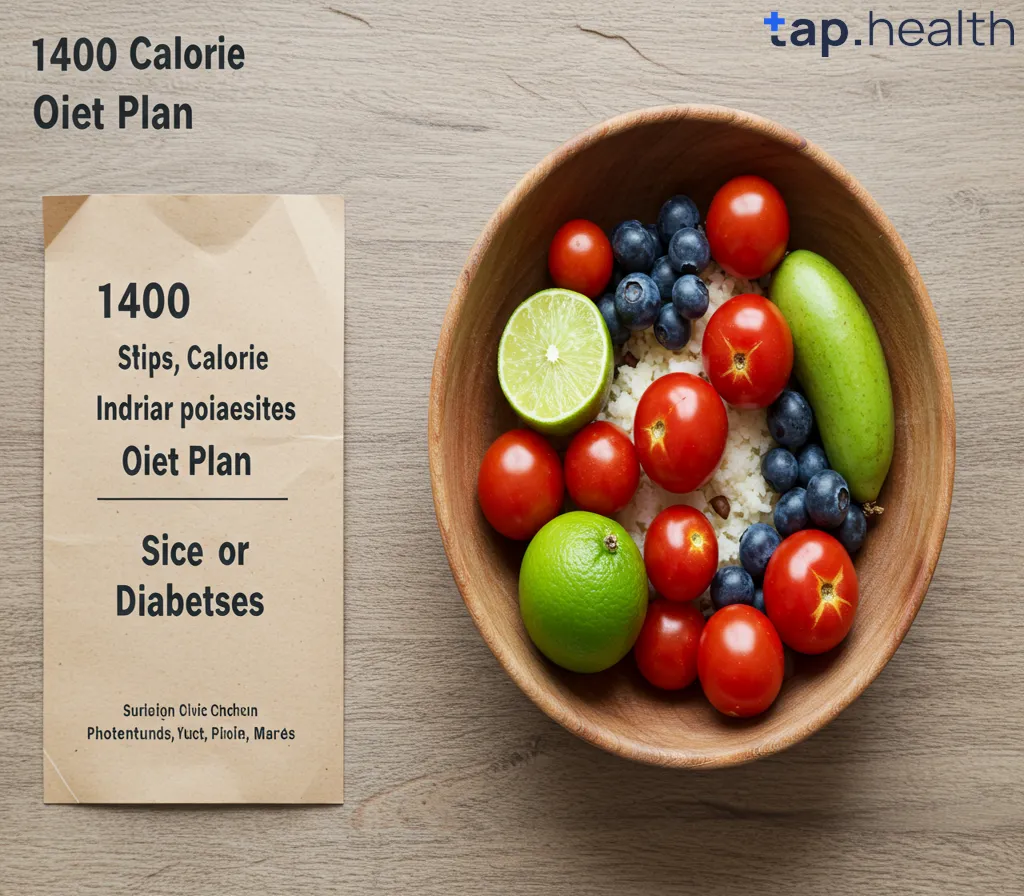
Below is a sample 1400-calorie Indian diet plan designed specifically for diabetics. It focuses on foods with a low glycemic index to help manage blood sugar levels, while also ensuring balanced nutrition.
Day 1 – 1400 Calorie Indian Meal Plan
Breakfast (300 Calories)
- 1 boiled egg (70 calories)
- 1 small whole wheat toast with 1 teaspoon peanut butter (120 calories)
- 1/2 apple (40 calories)
- 1 cup green tea (5 calories)
Mid-Morning Snack (100 Calories)
- 10-12 almonds (100 calories)
Lunch (400 Calories)
- 1 small bowl of dal (lentils) (150 calories)
- 1 small serving of brown rice (120 calories)
- 1 small serving of mixed vegetable curry (broccoli, carrots, peas) (100 calories)
- 1 small cucumber and tomato salad (30 calories)
Afternoon Snack (100 Calories)
- 1 small cup of Greek yogurt (unsweetened) (100 calories)
Dinner (500 Calories)
- 1 small serving of grilled chicken or tofu (150 calories)
- 1 small serving of quinoa or millet (150 calories)
- 1 small serving of sautéed spinach (50 calories)
- 1 small bowl of mixed vegetable soup (100 calories)
- 1 teaspoon olive oil for cooking (50 calories)
Day 2 – 1400 Calorie Indian Meal Plan
Breakfast (300 Calories)
- 1 scrambled egg with spinach (150 calories)
- 1 slice of whole wheat toast (80 calories)
- 1 small orange (70 calories)
Mid-Morning Snack (100 Calories)
- 1 small handful of walnuts (100 calories)
Lunch (400 Calories)
- 1 small bowl of moong dal (green lentils) (150 calories)
- 1 small serving of brown rice (120 calories)
- 1 small side of vegetable salad (tomatoes, cucumber, and lemon) (50 calories)
- 1 teaspoon olive oil for dressing (50 calories)
Afternoon Snack (100 Calories)
- 1 small apple (100 calories)
Dinner (500 Calories)
- 1 small serving of grilled paneer or chicken (200 calories)
- 1 small serving of quinoa (150 calories)
- 1 small serving of steamed broccoli (50 calories)
- 1 small bowl of vegetable soup (100 calories)
Day 3 – 1400 Calorie Indian Meal Plan
Breakfast (300 Calories)
- 1 small bowl of oats cooked with almond milk and topped with chia seeds (150 calories)
- 1 boiled egg (70 calories)
- 1 cup green tea (5 calories)
Mid-Morning Snack (100 Calories)
- 1 small handful of pumpkin seeds (100 calories)
Lunch (400 Calories)
- 1 small bowl of chickpea curry (150 calories)
- 1 small whole wheat roti (80 calories)
- 1 small cucumber salad (50 calories)
- 1 teaspoon olive oil for cooking (50 calories)
Afternoon Snack (100 Calories)
- 1 small cup of Greek yogurt (unsweetened) (100 calories)
Dinner (500 Calories)
- 1 small serving of grilled fish or tofu (200 calories)
- 1 small serving of quinoa or brown rice (150 calories)
- 1 small serving of sautéed spinach and carrots (50 calories)
- 1 small bowl of vegetable soup (100 calories)
FAQs: Common Questions About the 1400-Calorie Diet Plan for Diabetics
1. How can I ensure I am eating the right carbs on a 1400-calorie diet?
For diabetics, focus on complex carbohydrates such as whole grains, legumes, and vegetables. Avoid foods with a high glycemic index like white rice, white bread, and sugary foods. Instead, choose brown rice, millets, quinoa, and lentils.
2. Can I eat fruits on a 1400-calorie diet?
Yes, you can eat fruits, but it’s important to choose fruits with a low glycemic index and consume them in moderation. Berries, apples, and oranges are great options. Avoid high-sugar fruits like mangoes or grapes in large quantities.
3. Can I replace dairy with plant-based alternatives?
Yes, you can replace dairy with plant-based alternatives like almond milk, soy milk, and coconut yogurt. Just make sure these alternatives are unsweetened and fortified with calcium and vitamin D.
4. How can I control my blood sugar with this 1400-calorie diet?
To control blood sugar, focus on low-glycemic foods, balance each meal with proteins, healthy fats, and fibrous vegetables, and avoid skipping meals. Portion control is also important, especially for carbohydrate-rich foods.
5. Should I consult a nutritionist before starting this diet?
Yes, it’s always a good idea to consult with a nutritionist or doctor before starting a new diet plan, especially if you have diabetes. They can help personalize the meal plan according to your specific needs, medications, and lifestyle.
Conclusion
A 1400-calorie Indian diet plan for diabetics focuses on providing the necessary nutrients while ensuring blood sugar levels remain stable. By choosing low-glycemic foods, eating in moderation, and balancing proteins, healthy fats, and complex carbs, you can successfully manage diabetes and improve overall health. Remember to consult with a healthcare provider before starting any new diet plan, especially if you are managing a chronic condition like diabetes.