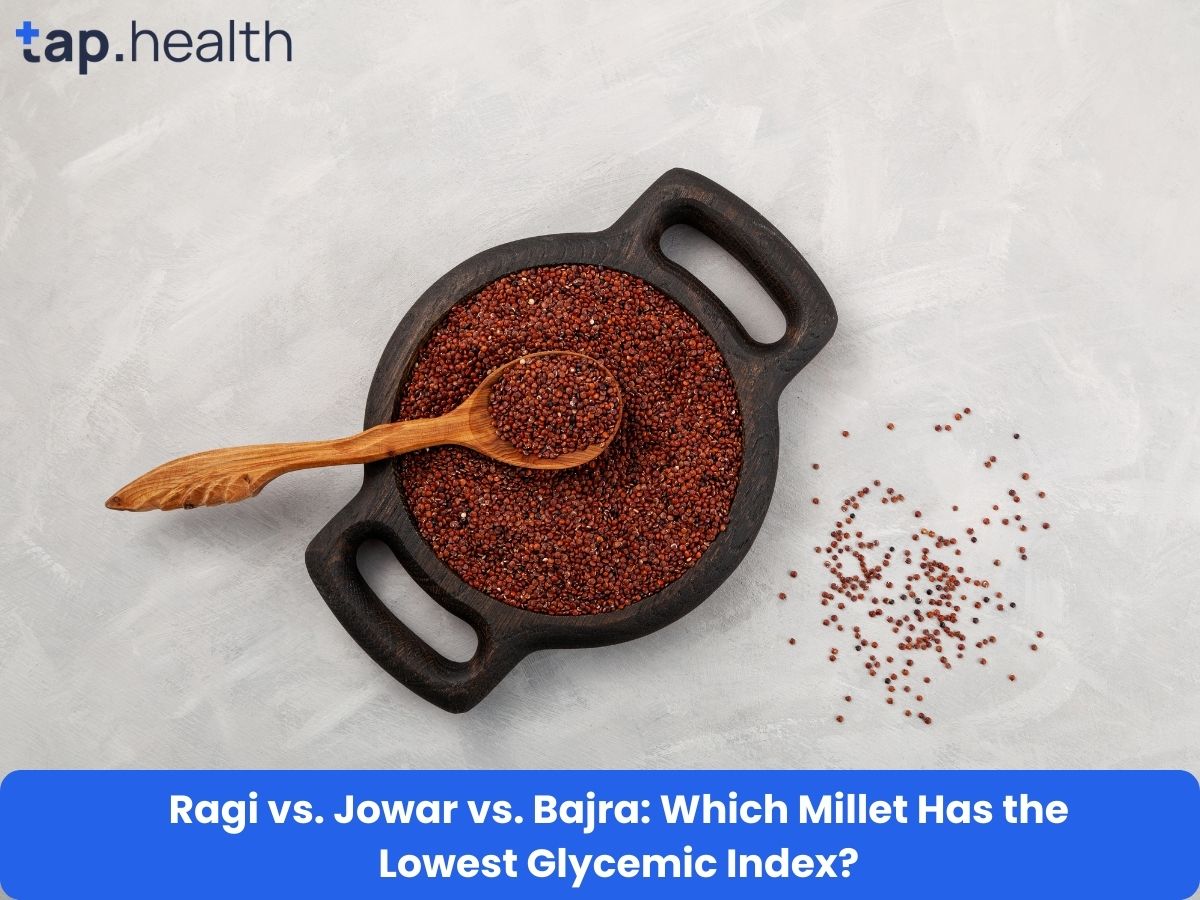
In the last few years, our kitchen shelves have seen a revolution. The white bags of refined wheat flour are being pushed aside. In their place, earthen jars filled with coarse, colourful flours are taking over. We are going back to our roots. We are going back to Millets.
The year 2023 was the “International Year of Millets,” and suddenly, everyone from your grandmother to your gym trainer is talking about Ragi, Jowar, and Bajra.
But for someone managing diabetes or trying to lose weight, the choice isn’t simple. You stare at the three packets in the supermarket aisle:
- The reddish Ragi (Finger Millet).
- The white Jowar (Sorghum).
- The greyish Bajra (Pearl Millet).
You wonder: “Which one is actually best for my blood sugar?” “Is Ragi healthier than Jowar?” “Which one will keep me full the longest?”
To answer these questions, we need to look at the scientific metric that matters most: The Glycemic Index.
In this detailed guide, we will stage a showdown between these three Indian superfoods. We will analyze the Ragi vs. Jowar vs. Bajra glycemic index, break down their nutritional profiles, and help you decide which flour deserves to become your daily Roti.
Read this: Is Bajra Good for Diabetes?
Understanding the Contenders
Before we look at the numbers, let’s briefly meet the contestants. These grains are “Smart Carbs”—they are hardy, require less water to grow, and are naturally gluten-free.
- Bajra (Pearl Millet):Commonly eaten in Rajasthan and Gujarat, especially during winter. It is known for generating heat in the body. It has a nutty, rustic flavour.
- Jowar (Sorghum):A staple in Maharashtra and Karnataka. It is often called the “New Quinoa” globally because of its incredible nutrient profile. It has a milder taste, closer to wheat.
- Ragi (Finger Millet):The pride of Karnataka (think Ragi Mudde). It is famous for its high calcium content and is traditionally given to growing children.
What is Glycemic Index (GI)?
To judge the winner, we use the Glycemic Index (GI).
Think of GI as a speedometer for your blood sugar. It measures how fast a food converts to glucose and hits your bloodstream on a scale of 0 to 100.
- Low GI (0-55): These digest slowly. (Ideal for Diabetics).
- Medium GI (56-69): Moderate rise.
- High GI (70+): These digest instantly, causing a rapid “sugar spike.”
Our goal is to find the millet that sits comfortably in the Low range.
1. Bajra Glycemic Index: The Winter Warrior
Let’s start with the grey grain.
The Glycemic Index of Bajra is approximately 54.
This places Bajra firmly in the Low GI category.
Why is it so low?
Bajra is incredibly complex structurally. It takes a long time for your digestive enzymes to break down the starch in Bajra. This slow digestion means sugar trickles into your blood rather than flooding it.
Bonus Benefits:
- Magnesium: Bajra is rich in magnesium, a mineral that directly improves insulin sensitivity.
- Satiety: It is heavy. Two Bajra rotis will keep you full for 5-6 hours, preventing snacking.
Verdict: An excellent choice for diabetes control, specifically in winter.
2. Jowar Glycemic Index: The Gut Healer
Next, the white grain.
The Glycemic Index of Jowar is approximately 62.
This places Jowar in the Medium GI category.
Wait, is Medium bad?
Not at all. While 62 is higher than Bajra (54), it is still lower than wheat (~65-69) and much lower than rice (~73).
Why choose Jowar?
Jowar shines in its Resistant Starch content. Resistant starch acts like fiber; it doesn’t get fully digested in the small intestine. Instead, it goes to your gut bacteria, feeding them and improving gut health. A healthy gut is crucial for managing long-term blood sugar levels.
Verdict: A safe, everyday alternative to wheat that is light on the stomach.
3. Ragi Glycemic Index: The Calcium King
Finally, the red grain.
The Glycemic Index of Ragi ranges from 65 to 80 (depending on preparation).
Shocked?
Many people assume Ragi is the best for diabetes because it is “healthy.” While Ragi is undeniably a superfood, it is not always Low GI.
- Ragi Roti: Because the flour is fine, it can digest relatively quickly.
- Ragi Mudde (Balls): The traditional method of steaming Ragi balls retains a lower GI because the starch structure isn’t broken down by dry roasting.
Why choose Ragi?
Calcium. No other grain comes close. 100g of Ragi has nearly 344mg of Calcium (Rice has only 10mg!). It is essential for bone health.
Verdict: Excellent for nutrition, but diabetics must practice portion control. It has a higher GI than Bajra.
The Showdown: Ragi vs. Jowar vs. Bajra Glycemic Index
Let’s put them side-by-side to see the clear winner.
| Feature | Bajra (Pearl Millet) | Jowar (Sorghum) | Ragi (Finger Millet) |
| Glycemic Index | ~54 (Lowest) | ~62 (Medium) | ~65-80 (Med-High) |
| Fiber Content | Very High | High | High |
| Best Season | Winter (Heating) | All Seasons | All Seasons |
| Key Nutrient | Magnesium/Iron | Antioxidants | Calcium |
| Taste | Rustic, Nutty | Mild, Bland | Earthy |
The Winner for Diabetes:
Bajra is the clear winner. With a GI of 54, it has the lowest impact on blood sugar.
The Runner Up:
Jowar. It is a reliable, gluten-free option that mimics the texture of wheat without the high glucose spike.
Nutritional Comparison Beyond GI
We shouldn’t just look at sugar. Your body needs more than just glucose control.
Protein Power:
- Jowar: ~10g protein per 100g.
- Bajra: ~11g protein per 100g.
- Ragi: ~7g protein per 100g.
- Comparison: Bajra wins on protein too, making it great for muscle maintenance.
Fiber Factor:
Fiber is what slows down digestion.
- Bajra: ~11g fiber.
- Jowar: ~10g fiber.
- Ragi: ~11g fiber.
- Comparison: It is a tie. All three are fibre powerhouses compared to Rice (0.2g) or Refined Wheat (2g).
Seasonality: When to Eat What?
Ayurveda plays a huge role in Indian diets. We don’t just eat for calories; we eat for the climate.
1. Bajra (The Heat Generator):
Bajra is considered “Garram” (heating). It is traditionally eaten in winter months. Eating too much Bajra in the scorching heat of May or June can cause acidity or body heat issues.
- Best time: November to February.
2. Jowar (The Cool/Neutral Grain):
Jowar is cooling. It is light on the digestive system and is the perfect summer millet. In Maharashtra, Jowar Bhakri is a staple during hot summers.
- Best time: March to October (or year-round).
3. Ragi (The Versatile Grain):
Ragi is generally neutral to cooling. It is excellent for summer drinks (Ragi Koozh or Ambali).
- Best time: Year-round.
Real-Life Scenario
Let’s meet Mr. Das, a 52-year-old accountant from Mumbai.
The Struggle:
Mr. Das was diagnosed with Type 2 Diabetes. His doctor told him to lose weight. He started eating Ragi Porridge for breakfast every day, thinking it was the healthiest choice. However, his post-breakfast sugar levels were spiking to 180 mg/dL. He was confused. “But Ragi is a millet!” he argued.
The Correction:
He visited a nutritionist who explained: “Mr. Das, porridge requires boiling the grain into a semi-liquid form. This makes it very easy to digest, raising the Glycemic Index. Also, Ragi naturally has a higher GI than other millets.”
The Switch:
Mr. Das switched to Bajra Roti for lunch and Jowar Upma (with lots of vegetables) for breakfast.
The Result:
- Sugar Levels: His post-meal spikes dropped to 140 mg/dL.
- Weight: He felt fuller for longer because of Bajra’s density and stopped his 11 AM biscuit snacking. He lost 3 kgs in two months.
Expert Contribution
We consulted nutritional experts to get a medical perspective.
Dr. V. Sharma, Diabetologist:
“I see a lot of ‘Millet Mistakes.’ Patients stop wheat and start eating 4-5 Ragi rotis. That is still too much carbohydrate. The hierarchy for diabetes is clear: Bajra is best for low GI, followed by Jowar. Ragi is great for calcium but should be eaten in moderation. I usually advise mixing them.”
Nutritionist Perspective:
“The texture matters. Gluten-free rotis like Jowar and Bajra can be hard. People often add Maida or Wheat to make them soft. Do not do that! It defeats the purpose. Instead, use warm water to knead the dough. This softens the fiber without raising the GI.”
Recommendations Grounded in Proven Research and Facts
Based on data from the Indian Institute of Millets Research (IIMR), here are actionable tips:
- The “Mix and Match” Strategy:Don’t stick to one. Rotate your grains.
- Winter: Eat Bajra.
- Summer: Eat Jowar.
- Breakfast: Have Ragi (in solid form like Idli, not porridge).This ensures you get Magnesium from Bajra, Antioxidants from Jowar, and Calcium from Ragi.
- The “70-30” Rule:If you find it impossible to make pure millet rotis (they break easily), try the 70-30 mix.
- 70% Millet Flour (Bajra/Jowar).
- 30% Whole Wheat Flour.This gives you a bit of gluten for binding while still keeping the GI much lower than pure wheat.
- How to Cook for Lower GI:
- Coarse Grind: Don’t grind your flour too fine. A slightly coarse texture takes longer to digest.
- Add Fat: Smear a little Ghee on your Jowar or Bajra roti. The healthy fat slows down the emptying of the stomach, further lowering the glycemic spike.
- Watch the Ragi Porridge:If you have diabetes, avoid drinking Ragi malt or porridge. Liquids digest faster than solids. Eat Ragi Roti or Ragi Dosa instead.
Key Takeaways
- Bajra has the lowest Glycemic Index (~54), making it the champion for diabetes control.
- Jowar is a close second (GI ~62) and is excellent for gut health and summer consumption.
- Ragi has a higher GI (65+) but is unmatched for Calcium. Use it for bone health but control portions if you are diabetic.
- Seasonality matters: Eat Bajra in winter and Jowar in summer for optimal digestion.
- Texture: Coarse rotis with added vegetables and a touch of ghee are the best way to consume these millets.
Conclusion
So, in the battle of Ragi vs. Jowar vs. Bajra, who takes the crown?
If your only goal is lowering blood sugar, Bajra (Pearl Millet) is the undisputed king.
However, a healthy diet is about balance. You don’t have to pick just one. Embrace the wisdom of our ancestors who rotated grains with the seasons. Let Bajra keep you warm and steady in the winter, let Jowar cool and heal you in the summer, and let Ragi build your bones throughout the year.
The most important step is simply starting. Replacing refined wheat or white rice with any of these three millets is a massive victory for your health.
Frequently Asked Questions (FAQ) on Ragi vs. Jowar vs. Bajra
Which millet has the lowest glycemic index?
Bajra (Pearl Millet) generally has the lowest Glycemic Index, typically around 54. This makes it the most effective millet for keeping blood sugar levels stable and preventing insulin spikes.
Is Ragi good for diabetics?
Yes, but in moderation. While Ragi is nutritious and rich in calcium, its Glycemic Index is moderate to high (65-80). Diabetics should prefer Ragi in solid forms like Roti or Mudde rather than porridge, and practice portion control.
Can I eat Jowar roti daily for weight loss?
Absolutely. Jowar is high in fiber and protein, which increases satiety (feeling of fullness). Eating Jowar roti prevents overeating and snacking between meals, making it an excellent tool for weight loss.
Is Bajra heaty or cooling?
Bajra is heaty. It generates warmth in the body, which is why it is traditionally consumed during the winter months in North India. Eating it in peak summer might cause digestive issues or acidity for some people.
Which is better: Jowar or Wheat?
Jowar is generally better. It is gluten-free, has a slightly lower Glycemic Index than wheat, and contains more antioxidants. It is easier on the gut and prevents the bloating that some people feel after eating wheat.
Can I mix Ragi, Jowar, and Bajra together?
Yes, you can. Multigrain flour is a popular choice. However, remember that they have different cooking properties. Bajra and Jowar need warm water for kneading. Mixing them ensures you get a broad spectrum of nutrients—calcium, iron, and magnesium—in one meal.
Why is my sugar high after eating Ragi porridge?
Liquid carbs digest fast. When Ragi is cooked into a porridge or malt, the starch is gelatinized and requires very little digestion. This allows the sugar to enter your bloodstream rapidly, causing a spike. It is better to eat Ragi in solid forms.
Does Jowar contain gluten?
No. Jowar (Sorghum) is naturally 100% gluten-free. It is safe for people with Celiac disease or gluten intolerance. Because it has no gluten, the dough is harder to roll than wheat, and usually requires hand-patting (Bhakri style).
References:
- Indian Institute of Millets Research (IIMR): Nutritional Benefits of Millets. Link
- Harvard T.H. Chan School of Public Health: The Nutrition Source – Whole Grains. Link
- National Institute of Nutrition (NIN): Glycemic Index of Indian Foods. Link
- Diabetes Care Journal: Effect of Millets on Blood Glucose. Link
- WebMD: Health Benefits of Sorghum and Millet. Link
(Disclaimer: This content is for educational purposes only. Always consult your doctor or a certified dietitian before making significant changes to your diet, especially if you have diabetes or thyroid issues.)