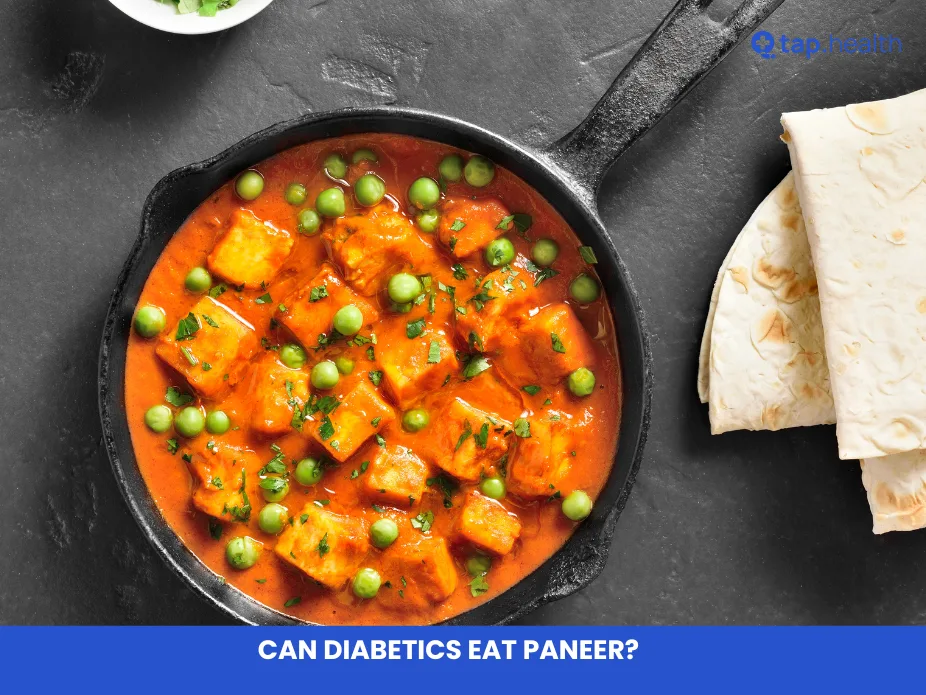
Imagine a Sunday lunch spread in an Indian household. There is rice, dal, salad, and a rich, creamy bowl of Paneer Butter Masala. It looks delicious, and your mouth waters. But then, you remember your recent blood sugar test results. A wave of hesitation hits you.
You pause and ask yourself: “Can diabetics eat paneer, or will it spike my sugar?”
It is a question that haunts millions of Indians living with diabetes. We love our paneer. It is our “comfort food” and our “celebration food.” But because it is made from milk, many people worry it has hidden sugars. Others worry about the fat content.
The good news? You can relax.
The short answer is: Yes, diabetics can absolutely eat paneer. In fact, when eaten correctly, it is one of the best foods to help control your blood sugar.
In this comprehensive guide, written in simple Indian English, we will explain exactly why paneer is safe. We will look at its nutritional superpowers, bust the myths about fat, and tell you exactly how to cook it so it becomes a medicine for your metabolism, not a poison.
Understanding Diabetes and Blood Sugar Control
To understand why paneer fits into your diet, we first need to understand the enemy: High Blood Sugar.
When you have diabetes (Type 1 or Type 2), your body struggles to handle Carbohydrates.
- When you eat carbs (like Roti, Rice, Sugar, Potato), your body breaks them down into glucose (sugar).
- This glucose enters your blood.
- In a healthy person, insulin moves this sugar into cells for energy.
- In a diabetic, this system is broken. The sugar stays in the blood, causing spikes.
Therefore, the golden rule of a diabetic diet is: Control the Carbs.
You need foods that digest slowly and don’t dump sugar into your bloodstream. This is where protein and fat come in—and paneer is full of them.
Nutritional Profile of Paneer
Let’s strip away the creamy taste and look at the hard numbers. What is actually inside that white cube?
Here is the breakdown for 100 grams of fresh Paneer:
| Nutrient | Amount | Impact on Diabetes |
| Protein | 18g – 20g | Excellent. Slows digestion. |
| Fat | 20g – 25g | Good/Caution. Slows sugar absorption but adds calories. |
| Carbohydrates | 1.2g – 3g | Excellent. Extremely low carb. |
| Sugar | < 1g | Negligible impact. |
| Calcium | ~200mg | Good for bones. |
The Big Takeaway: Paneer is almost entirely Protein and Fat. It has virtually zero carbohydrates. This is the most important fact for a diabetic.
Does Paneer Affect Blood Sugar Levels?
This is the main concern: “Does paneer increase blood sugar?”
To answer this, we look at the Glycemic Index (GI).
- Glycemic Index measures how fast a food raises blood sugar.
- Glycemic Load (GL) measures the total impact of a serving.
Glycemic Index of Paneer
Paneer has a Very Low Glycemic Index (0-15).
Because it has almost no carbs, it does not trigger a direct rise in blood glucose. In fact, it is classified as a “non-glycemic” food in many medical charts.
Why Paneer Has Minimal Impact on Glucose
- The “Carb Void”: Without carbs, there is no glucose to enter the blood.
- The “Fat Brake”: The fat in paneer acts like a speed breaker. It slows down the emptying of your stomach. If you eat paneer along with a little rice, the paneer will actually prevent the rice from spiking your sugar too fast.
Verdict: Paneer itself does not spike blood sugar. It helps stabilize it.
Is Paneer Safe for People with Diabetes?
Scientific Perspective:
Yes. Whether you have Type 1 or Type 2 diabetes, paneer is safe.
- For Type 2: The high protein helps manage hunger and weight (if portions are controlled), which reduces insulin resistance.
- For Type 1: It provides fuel (calories) without requiring a large dose of insulin.
Short-Term vs. Long-Term:
- Short-Term: Immediate blood sugar control after a meal.
- Long-Term: The calcium and quality protein support muscle health, which is crucial because muscles are the main organs that burn sugar in your body.
Can pre-diabetics eat paneer?
Absolutely. In fact, swapping high-carb snacks (like biscuits) for paneer cubes can help reverse pre-diabetes by lowering your overall insulin demand.
Read this: Paneer Glycemic Index
Health Benefits of Paneer for Diabetics
Why should you add it to your grocery list? Here are four solid reasons.
1. Blood Sugar Stability
Protein is the best friend of blood sugar. By eating paneer, you avoid the “rollercoaster” of sugar spikes and crashes. It keeps your energy levels flat and stable throughout the day.
2. Improved Satiety (Appetite Control)
Diabetics often struggle with hunger pangs (“polyphagia”).
- Paneer stimulates hormones like CCK (Cholecystokinin) that tell your brain, “I am full.”
- Eating a paneer salad for lunch prevents you from craving sweets at 4 PM.
3. Muscle Maintenance
High blood sugar can damage muscles over time (Diabetic Amyotrophy).
- Paneer contains Casein, a slow-digesting protein. It provides a steady stream of amino acids to your muscles for hours, repairing and maintaining them.
4. Calcium Support
Diabetics are at higher risk for osteoporosis (weak bones). Paneer is a powerhouse of calcium, which protects your bone density.
Potential Risks of Eating Paneer for Diabetics
It is not all good news. There are some “Red Flags” you must watch out for.
1. High Saturated Fat Intake
Is paneer good for cholesterol?
Regular paneer is high in Saturated Fat.
- If you have diabetes AND heart issues (high cholesterol/BP), eating too much full-fat paneer can clog arteries over time.
- Solution: Use Low-Fat Paneer made from cow milk or toned milk. It has all the protein but half the fat.
2. Calorie Excess
Paneer is calorie-dense (approx. 265-300 kcal per 100g).
- If you eat huge portions, you will gain weight. Weight gain worsens insulin resistance.
- Rule: Treat it as a protein source, not an unlimited snack.
3. Lactose Sensitivity
Some diabetics find that dairy causes bloating or gas. Inflammation in the gut can sometimes make blood sugar harder to control. If paneer upsets your stomach, switch to Tofu.
How Much Paneer Can Diabetics Eat Per Day?
This is the most common question: “Can diabetics eat paneer daily?”
The Answer: Yes, daily is fine, but Portion Size is key.
- Safe Limit:50g to 100g per day.
- This looks like: 4 to 6 standard cubes.
- Or: One small bowl of curry.
- Frequency: You can eat it every day if you fit it into your calorie limit. If you are trying to lose weight, restrict it to 3-4 times a week.
Warning: Do not eat 200g or 250g in one sitting. That is too much fat for one meal.
Best Ways to Eat Paneer for Diabetes Management
The way you cook paneer determines if it is a “Superfood” or a “Sugar Bomb.”
The Good Methods (Do This):
- Raw Paneer: Sprinkle with black pepper and chaat masala. Best snack.
- Grilled/Tikka: Marinate in curd and spices. Grill in a pan or oven. (Search for “glycemic index of paneer tikka”—it’s very low!).
- Palak Paneer: Spinach (Fiber) + Paneer (Protein) = Perfect Diabetic Meal. “Is palak paneer good for diabetes?” Yes, it is arguably the best dish.
- Bhurji: Scramble it with onions, tomatoes, and chilies. Eat with one multigrain roti.
The Bad Methods (Avoid This):
- Deep Fried: Paneer Pakoras. The besan batter and oil increase inflammation.
- Sugary Gravies: “Can diabetics eat paneer butter masala?” Be careful. Restaurant gravies have added sugar, honey, cream, and cashew paste. This raises the carb count significantly. If making it at home, skip the sugar and cream.
- Sweet Dishes: Paneer Kheer or Rasgulla (made from Chenna/Paneer) are strictly forbidden due to sugar syrup.
Combining Foods:
- Do: Combine Paneer with Fiber (Broccoli, Capsicum, Spinach).
- Don’t: Combine Paneer with High Carbs (White Naan, Fried Rice).
Paneer vs Other Protein Sources for Diabetics
How does it stack up against the competition?
Paneer vs Tofu (Soya Paneer)
- Tofu: Lower fat, zero cholesterol, heart-healthy. Good for weight loss.
- Paneer: Better taste, higher calcium, higher protein quality.
- Winner: Tofu is slightly better for heart patients; Paneer is better for taste and bone health.
Paneer vs Soya Chunks
- Soya Chunks: Higher protein per rupee, lower fat. But can cause gas.
- Paneer: Easier to digest (if not lactose intolerant), better satiety.
- Winner: Rotate them! Use Soya for lunch and Paneer for dinner.
Paneer vs Eggs
- Eggs: The “Gold Standard” of protein. Zero carbs.
- Paneer: Great vegetarian alternative.
- Winner: Both are excellent. Paneer is the vegetarian’s egg.
Who Should Limit or Avoid Paneer?
While safe for blood sugar, these groups should be careful:
- High Cholesterol Patients: If your LDL (bad cholesterol) is high, the saturated fat in paneer is a risk. Switch to Low-Fat Paneer or Tofu.
- Kidney Patients (CKD): If your creatinine is high, your doctor restricts protein. Paneer is dense protein. Consult your nephrologist.
- Severe Lactose Intolerance: If milk gives you diarrhea, avoid paneer.
Can Diabetics Eat Paneer Grapes?
We see a specific query: “can diabetics eat paneer grapes?”
This likely refers to eating paneer with grapes.
- Grapes: High GI fruit (sugar spikes).
- Paneer: Zero GI (no spike).
- Combination: Eating paneer WITH grapes is actually smart. The fat/protein in the paneer slows down the absorption of the grape sugar.
- Advice: Eat 5-6 grapes with a few cubes of paneer. Do not eat a bowl of grapes alone.
Real-Life Scenario
Meet Sunita (42, Homemaker from Delhi):
Sunita has Type 2 diabetes and struggles with evening hunger. She used to eat 4-5 Marie biscuits with her tea. Her sugar before dinner was always high (180+).
The Change: Her dietician told her to stop the biscuits. Instead, she started eating 50g of Raw Paneer with a sprinkle of roasted jeera (cumin).
The Result:
- Her hunger vanished because protein is filling.
- Her pre-dinner sugar dropped to 130 because paneer has no carbs.
- She felt more energetic.Lesson: Swapping carb snacks for paneer snacks is a game-changer.
Expert Contribution
We consulted Dr. V. Mohan, a renowned Diabetologist, regarding dairy.
“Many patients ask me if they should stop dairy. I tell them: ‘Milk has sugar (lactose), but Paneer and Cheese do not.’ The fermentation and curdling process removes the sugar. So, for a diabetic, Paneer is actually safer than a glass of milk. It is an excellent source of Class-A protein for vegetarians. Just watch the portion size—don’t treat it like a vegetable; treat it like a protein concentrate.”
Recommendations Grounded in Proven Research and Facts
According to the American Diabetes Association (ADA) and Indian Council of Medical Research (ICMR):
- The “Quarter Plate” Rule: Your plate should be:
- 1/2 Vegetables (Salad/Sabzi).
- 1/4 Carbohydrates (Roti/Rice).
- 1/4 Protein (Paneer/Dal).
- Cooking Oil: When cooking paneer, use heart-healthy oils like Mustard Oil or Olive Oil instead of excessive Butter or Ghee to keep the meal heart-friendly.
- Check Labels: If buying store-bought paneer (“Malai Paneer”), check the label. Some brands add starch to make it soft. Always buy “Fresh Paneer” or make it at home.
Conclusion: Key Takeaways
So, can diabetics eat paneer?
- YES! It is a safe, low-GI superfood.
- Why: It has almost zero carbs and does not spike blood sugar.
- Portion: Stick to 50-100g per day.
- Best Dish: Palak Paneer or Paneer Tikka.
- Caution: Avoid sugary gravies and deep-fried options. If you have heart issues, choose low-fat paneer.
You don’t have to give up your favorite food. Just cook it smartly, eat it in moderation, and enjoy the creamy goodness without the guilt!
FAQ: Can Diabetics Eat Paneer?
Can diabetics eat paneer daily?
Yes, eating 50g to 100g of paneer daily is safe for most diabetics. It provides essential protein and calcium. However, if you are trying to lose weight, ensure you account for the calories in your daily plan.
Does paneer increase blood sugar?
No. Paneer has a very low Glycemic Index (0-15) and contains negligible carbohydrates. It does not cause a direct spike in blood sugar levels. In fact, eating it with carbs can help lower the overall sugar spike of a meal.
Is paneer good for cholesterol?
Regular paneer contains saturated fat, which can raise LDL (bad) cholesterol if eaten in excess. If you have high cholesterol, it is best to eat Low-Fat Paneer (made from double-toned milk) or limit your intake to occasional treats.
Can diabetics eat paneer butter masala?
Ideally, no. While the paneer is fine, the “Butter Masala” gravy in restaurants is loaded with cream, butter, and often sugar or honey. This makes it a high-calorie, high-carb dish. A homemade version without sugar and minimal cream is safe.
Is paneer good for gestational diabetes?
Yes, paneer is excellent for Gestational Diabetes (pregnancy diabetes). It provides the high protein and calcium needed for the baby’s growth without spiking the mother’s blood sugar. It helps manage hunger cravings effectively.
Can diabetics eat paneer cheese?
“Paneer” is a type of fresh cheese. If you mean processed cheese slices or cheddar, they are also low in carbs but high in salt and preservatives. Fresh Paneer is always the healthier choice compared to processed cheese.
Is palak paneer good for diabetes?
Yes, Palak Paneer is one of the best diabetic-friendly dishes. Spinach (Palak) is high in fiber and vitamins, and paneer provides protein. The combination is very low in carbs and very filling.
Is paneer good for Diabetes Type 1?
Yes. People with Type 1 diabetes need to match insulin to carbohydrates. Since paneer has almost no carbs, it requires very little to no immediate insulin dosing, making it an easy food to manage.
References
- American Diabetes Association: Protein Choices for Diabetes
- Healthline: Is Cheese Safe for People with Diabetes?
- Harvard Health: Glycemic Index and Glycemic Load
- WebMD: Health Benefits of Cottage Cheese
Disclaimer: This article is for informational purposes only and does not constitute medical advice. Always consult with a doctor or dietician before making significant changes to your diet, especially if you have heart or kidney conditions.