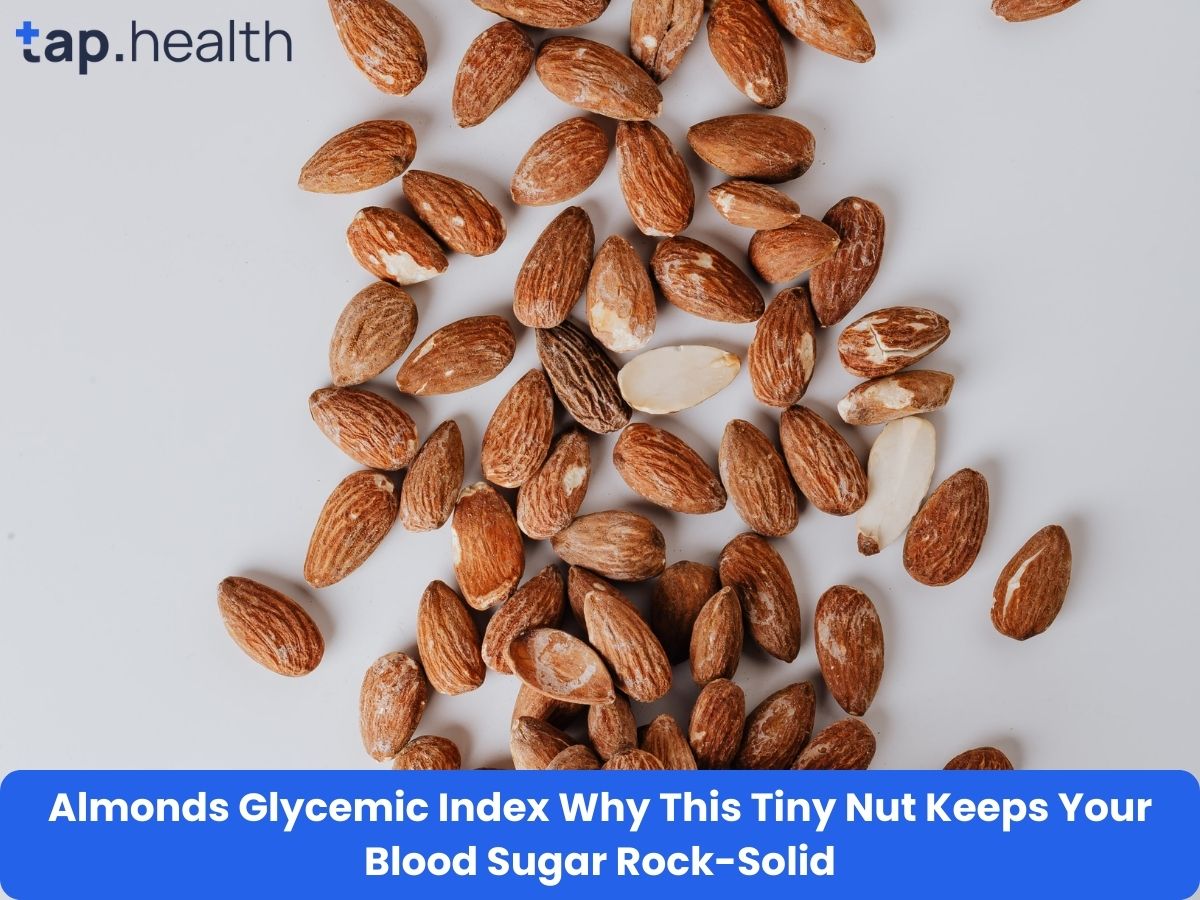
Picture this: It’s mid-afternoon. Your energy’s crashing, your stomach’s growling, and you’re eyeing that vending machine like it holds the secrets of the universe. What if I told you the perfect snack to crush that craving and keep your blood sugar steady is small enough to fit in your palm? Enter the humble almond.
You’ve probably heard almonds are “healthy.” But what does that really mean for your blood sugar? If you’ve ever skipped nuts thinking they’re too fatty or carb-heavy, you’re not alone. I used to avoid them too—until I learned the truth about their glycemic index.
Spoiler: Almonds are basically superheroes for stable blood sugar. And no, you don’t need a science degree to understand why. Let’s crack this nut open (pun intended!) with simple, real-talk facts. No jargon. No fluff. Just what works.
What’s Glycemic Index (GI)? Your Blood Sugar’s Traffic Light
Imagine your blood sugar is a car. High-GI foods are like slamming the gas pedal—your sugar rockets up, then crashes hard. Low-GI foods? They’re the smooth cruise control that keeps you steady for miles.
- Red Light (High GI: 70+): White bread, soda, corn flakes. Sugar spikes FAST.
- Yellow Light (Medium GI: 56-69): Brown rice, bananas, honey. Moderate rise.
- Green Light (Low GI: 55 or less): Beans, broccoli, plain yogurt… and almonds. Slow, gentle rise.
Why care? Wild blood sugar swings make you tired, hungry, and foggy-headed. Over time, they strain your heart and raise diabetes risk. Choosing low-GI foods like almonds is like giving your body a chill pill.
How Scientists Measure GI (The 2-Minute Version)
Researchers feed people a food with 50 grams of digestible carbs (like bread), then track blood sugar every 15 minutes for 2 hours. They compare it to pure sugar (GI = 100). Simple, right? But here’s the twist: Almonds barely register on this test. Why? Because they’re so low in carbs, you’d need to eat over 5 cups of whole almonds to get 50 grams of carbs. Nobody does that! So, their official GI score? Less than 1. Almost zero.
Why Almonds Have a Near-Zero Glycemic Index
Let’s get real: Almonds do have carbs—about 6 grams per ounce (23 nuts). But they also packed with body-loving stuff that blocks sugar spikes:
The Power Trio Inside Every Almond
- Fiber (3.5g per ounce): Acts like a sponge, soaking up sugar and slowing its trip into your blood. Think of it as a bouncer for your bloodstream.
- Healthy Fats (14g per ounce): Monounsaturated fats (the good kind) literally put the brakes on digestion. Sugar can’t rush through when fat’s in the driver’s seat.
- Protein (6g per ounce): Takes ages to break down. While it’s working, carbs get delayed too.
Real-world proof: In a study by the American Journal of Clinical Nutrition, people who ate almonds with white bread had 30% lower blood sugar spikes than those who ate bread alone. The almonds didn’t just not spike sugar—they tamed the bread’s chaos!
How Almonds Compare to Common Snacks
| Almonds (1 oz) | <1 | Barely a blip |
| Apple | 36 | Gentle rise |
| Pretzels | 83 | SPIKE then crash |
| Granola Bar | 60+ | Rollercoaster ride |
See why swapping pretzels for almonds is a game-changer?
Almonds: A Diabetes Game-Changer (Backed by Docs)
If you manage prediabetes or type 2 diabetes, almonds aren’t just safe—they’re recommended. The American Diabetes Association lists nuts as “star foods” for blood sugar control. Here’s why:
How Almonds Work for Diabetics
- They blunt post-meal spikes: Eating 1-2 oz of almonds with a carb-heavy meal (like pasta) slows glucose absorption. It’s like adding shock absorbers to a bumpy road.
- They improve insulin sensitivity: Magnesium in almonds (20% of your daily needs per ounce!) helps cells respond better to insulin. Think of it as oiling rusty hinges.
- No hidden sugars: Unlike “healthy” snacks like yogurt cups or protein bars, plain almonds have zero added sugar. Always check labels though—some roasted varieties sneak in honey or syrup.
Pro tip: Pair almonds with higher-GI foods. Have them with fruit, whole-grain crackers, or even dessert. They’re the ultimate blood sugar bodyguard.
Portion Control: The Golden Rule
Almonds are calorie-dense (160 calories per ounce). That’s good—it keeps you full—but overdoing it can pack on pounds. Stick to 1 ounce (a small handful or 23 almonds) daily. Measure once to learn what it looks like. Pro move: Buy pre-portioned packs or dump a month’s supply into snack bags on Sunday.
Beyond Blood Sugar: 3 Surprising Perks of Daily Almonds
Stable energy is awesome, but almonds do way more:
Heart Health Hero
Almonds slash LDL (“bad”) cholesterol. How? Their vitamin E (a potent antioxidant) protects artery walls, while monounsaturated fats lower triglycerides. In a Journal of the American Heart Association review, eating 1.5 oz of almonds daily reduced heart disease risk by 20%.
Weight Management Ally
That crunch isn’t just satisfying—it triggers fullness signals in your brain. A European Journal of Clinical Nutrition study found people who ate almonds as a snack lost 65% more belly fat than those who didn’t. Why? Protein + fiber = fewer cravings later.
Gut and Brain Booster
Almond skins feed good gut bacteria. Happy gut = better mood and immunity. Plus, their riboflavin and L-carnitine support brain health. Grandma was right: “Nuts for brains” is legit science.
Smart Ways to Eat Almonds Every Day (No Boredom!)
Tired of plain nuts? Try these easy, real-life ideas:
Breakfast Boosters
- Overnight oats: Stir in 10 chopped almonds before bed.
- Smoothie armor: Blend 12 almonds into your fruit smoothie to slow sugar absorption.
- Yogurt upgrade: Skip sugary granola. Top plain Greek yogurt with almonds + cinnamon.
Savory Swaps
- “Bread” crumbs: Pulse almonds into crumbs for coating chicken or fish.
- Salad confetti: Toast slivered almonds for crunch (skip store-bought croutons!).
- Rice replacement: Swap half your rice for chopped almonds in stir-fries.
Dessert Hacks
- Chocolate fix: Dip 5 almonds in dark chocolate (70%+ cacao). Freeze for 10 mins.
- Cookie swap: Crumble almond flour cookies into Greek yogurt.
- Ice cream topper: Sprinkle toasted almonds on a small scoop of low-sugar ice cream.
Warning: Avoid honey-roasted, chocolate-covered, or “yogurt-dipped” almonds. Added sugars cancel out the low-GI magic. Stick to raw or dry-roasted (no oil) versions.
Almonds vs. Other Nuts: Who’s Best for Blood Sugar?
All plain nuts are low-GI, but some edge out others:
| Almonds | <1 | Fiber + vitamin E | None! |
| Walnuts | <1 | Omega-3s (brain health) | More bitter taste |
| Pecans | <1 | Antioxidants | Higher calories |
| Cashews | 22 | Creamy texture (sauces, “cheese”) | Higher carbs (9g/oz) |
| Peanuts* | 14 | Budget-friendly | Often salted/oil-roasted |
*Technically legumes, but we snack on them like nuts.
Winner? Almonds take the crown for highest fiber (3.5g/oz) and vitamin E. But variety is key—rotate nuts weekly for diverse nutrients.
Busting 3 Big Almond Myths (That Hold You Back)
Myth 1: “Nuts are too fatty to eat daily.”
Truth: Almonds have healthy fats that fight inflammation and keep you full. Studies show nut-eaters weigh less than non-nut-eaters. It’s added oils and sugars in processed snacks that hurt—not whole almonds.
Myth 2: “Almond milk gives the same benefits as whole almonds.”
Truth: Nope. Most almond milk is 98% water. One cup has just 1 gram of protein (vs. 6g in whole almonds) and barely any fiber. It’s fine as a drink, but don’t expect blood sugar benefits. Always choose unsweetened versions—many brands add sugar.
Myth 3: “Eating almonds at night causes weight gain.”
Truth: A small handful before bed can actually improve sleep and morning blood sugar. Their magnesium relaxes muscles, and the protein prevents overnight sugar crashes. Just stick to 10-12 nuts (not the whole bag!).
Your Action Plan: 3 Simple Steps to Start Today
- Buy smart: Grab raw or dry-roasted almonds (no oil/salt). Store in the freezer to prevent rancidity.
- Portion right: Measure 23 almonds into 30 snack bags. Keep them everywhere—in your desk, purse, gym bag.
- Pair up: Always eat almonds with a higher-GI food (fruit, toast, oats). This unlocks their blood sugar-balancing superpower.
The Bottom Line: Small Nut, Giant Impact
Almonds aren’t just a snack—they’re a blood sugar stabilizer, heart protector, and energy guardian all in one tiny package. With a glycemic index of less than 1, they’re one of the safest foods for steady glucose. No spikes. No crashes. Just calm, lasting fuel.
You don’t need to overhaul your diet. Start with one small handful daily. Toss them on your salad. Blend them into your morning shake. Or just eat them plain while answering emails. Your body will thank you with clearer focus, fewer cravings, and energy that lasts.
So next time that 3 p.m. slump hits? Skip the vending machine. Reach for almonds instead. Your blood sugar—and your future self—will high-five you.
Almonds Glycemic Index FAQ
Q1: What is the glycemic index of almonds?
A: Almonds have a glycemic index of less than 1—effectively zero. This is because they’re very low in carbs (6g per ounce) and high in fiber, fat, and protein, which block blood sugar spikes.
Q2: Are almonds good for diabetics?
A: Yes! The American Diabetes Association recommends almonds for blood sugar control. Their near-zero GI, magnesium, and healthy fats improve insulin sensitivity. Stick to 1 ounce (23 nuts) of plain almonds daily, paired with carb-containing foods.
Q3: How many almonds should I eat per day for blood sugar control?
A: 1 ounce (about 23 almonds) is the ideal daily portion. This provides blood sugar benefits without excess calories. Measure once to learn what a serving looks like—don’t eat from the bag!
Q4: Do almonds lower blood sugar immediately?
A: Not instantly like medication. But when eaten with a meal, almonds slow digestion and reduce blood sugar spikes by up to 30% within 1-2 hours. Consistent daily intake also improves long-term insulin sensitivity.
Q5: Is almond flour low glycemic?
A: Yes. Almond flour has a GI around 0-5 because it’s made from ground almonds (same fiber/fat/protein benefits). It’s a great low-GI swap for wheat flour in baking. Just check labels—avoid blends with added starches or sugars.