tap.health logo
  • Diabetes Management
  • Health Assistant
  • About Us
  • Blog
  • Contact Us
Get Plan
  • Diabetes Management
  • Health Assistant
  • About Us
  • Blog
  • Contact Us
  • All Blogs
  • Diabetes
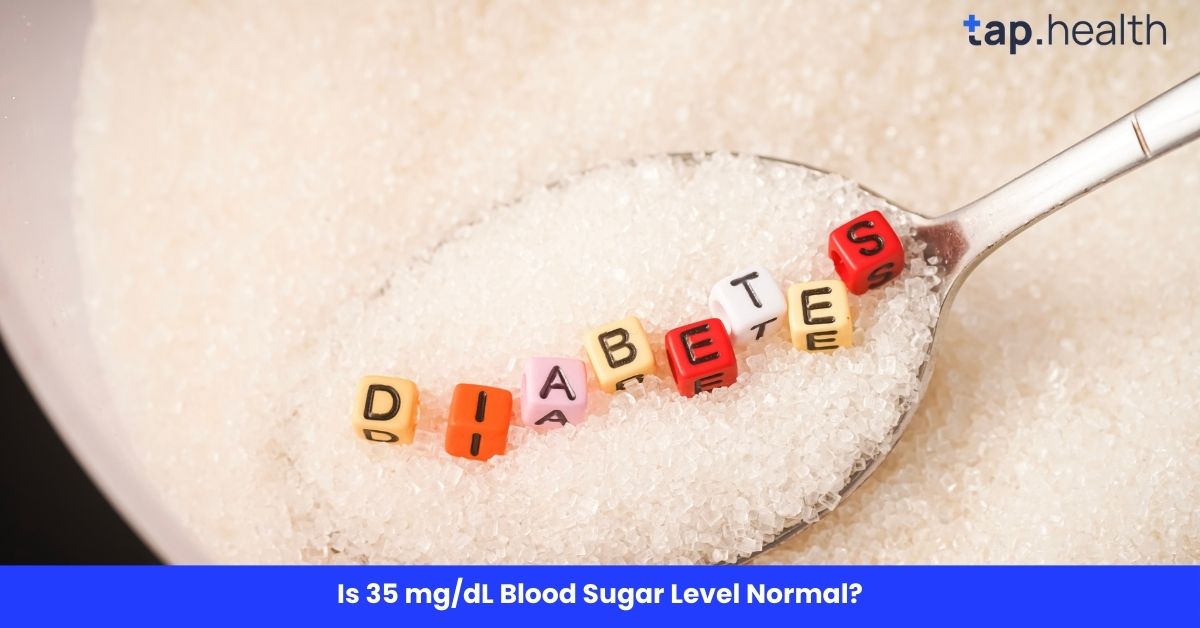
  • Is 35 mg/dL Blood Sugar Level Normal? Causes, Risks, and Management

Is 35 mg/dL Blood Sugar Level Normal? Causes, Risks, and Management

Diabetes
March 16, 2026
• 6 min read
Fashtana Khan
Written by
Fashtana Khan
ChatGPT Perplexity WhatsApp LinkedIn X Grok Google AI
Is 35 mgdL Blood Sugar Level Normal

A blood sugar level of 35 mg/dL is severely low and is considered a medical emergency. Low blood sugar, or hypoglycemia, occurs when the glucose level in your blood drops below normal levels, and at 35 mg/dL, it can have serious health implications. This article will explain why a 35 mg/dL blood sugar level is concerning, what causes it, the symptoms to look out for, and how to manage it.

What is a Normal Blood Sugar Level?

Blood sugar (also known as glucose) is the primary energy source for your body. It’s important to understand what a normal blood sugar range looks like before we discuss the dangers of hypoglycemia.

Here are the general guidelines for normal blood sugar levels:

  • Fasting (before meals): 70-99 mg/dL
  • After meals (2 hours post-meal): Less than 140 mg/dL
  • Random (any time of the day): Less than 200 mg/dL

If your blood sugar level falls below 70 mg/dL, it is considered low, and anything below 50 mg/dL requires immediate action to prevent serious complications.


plications.


Is a 30 Sugar Level Normal?

No, a 35 mg/dL blood sugar level is not normal and is considered severely low. This is a condition known as hypoglycemia, where the glucose level in your blood falls below the healthy threshold, usually below 70 mg/dL. At 35 mg/dL, your body is facing a serious medical emergency that requires immediate intervention.

How Bad is a 35 Blood Sugar Level?

A blood sugar level of 35 mg/dL is dangerously low, and it’s much lower than normal ranges. When your blood sugar level falls this low, it’s an indication that your body is unable to meet its energy needs. This condition, known as hypoglycemia, is particularly concerning because it can lead to severe health issues if not treated immediately.

The Effects of a 35 mg/dL Blood Sugar Level:

At this level, your body will likely show several immediate symptoms of hypoglycemia, such as:

  • Severe confusion and difficulty concentrating
  • Shaking or trembling
  • Dizziness or lightheadedness
  • Profuse sweating
  • Rapid heartbeat (due to adrenaline release)

If blood sugar continues to stay low and isn’t treated, you can experience:

  • Loss of consciousness
  • Seizures
  • Coma
  • Permanent brain damage (if untreated for a prolonged period)

Because the brain relies heavily on glucose for fuel, a blood sugar of 35 mg/dL can severely impair brain function, affecting decision-making, motor skills, and even speech. Immediate action is necessary to prevent life-threatening com

What Happens at a 35 mg/dL Blood Sugar Level?

A blood sugar level of 35 mg/dL is well below the normal threshold and is considered severe hypoglycemia. At this point, the body lacks enough glucose to perform basic functions, especially in the brain, which relies on glucose to operate.

Effects on the Body:

  • Brain Impairment: The brain’s primary fuel source is glucose, and at such a low level, cognitive function is severely impaired. You may experience confusion, poor concentration, or even difficulty speaking clearly.
  • Physical Symptoms: The body releases stress hormones like adrenaline to counteract the low glucose level. This can result in symptoms like sweating, shaking, and a rapid heartbeat.
  • Loss of Consciousness: If untreated, hypoglycemia at this level can cause a person to lose consciousness, fall into a coma, or even suffer seizures.

Why 35 mg/dL Is Dangerous:

At this level, the body is in a state where it can’t produce or release glucose quickly enough to meet its energy needs. This can lead to serious complications if immediate action isn’t taken. Without intervention, prolonged hypoglycemia can cause irreversible damage to the brain and other organs.

Causes of a 35 mg/dL Blood Sugar Level

Several factors can lead to a 35 mg/dL blood sugar level. Most often, this happens in people with diabetes due to insulin treatment, but there are other causes as well.

1. Diabetes and Insulin Overdose

People with type 1 or type 2 diabetes may take insulin or other medications to control their blood sugar. However, if insulin is administered in too high of a dose or at the wrong time, it can cause blood sugar levels to fall dangerously low.

2. Skipping Meals or Eating Inadequate Meals

Skipping meals or eating insufficient food for the amount of insulin taken can also lead to hypoglycemia. If the body doesn’t have enough glucose from food, it can’t maintain normal blood sugar levels.

3. Excessive Physical Activity

When you exercise vigorously or for an extended period without eating enough, your muscles use up the glucose in your bloodstream. If you don’t replenish it with food, it can lead to hypoglycemia.

4. Alcohol Consumption

Drinking alcohol, especially without eating food, can lower your blood sugar significantly. Alcohol can interfere with the liver’s ability to release stored glucose into the bloodstream, putting you at risk of hypoglycemia.

5. Medications

Certain medications, including sulfonylureas, which are often prescribed to people with diabetes, can cause your blood sugar to drop too low. Other medications like beta-blockers and some antibiotics can also affect glucose metabolism.

Symptoms of a 35 mg/dL Blood Sugar Level

At 35 mg/dL, your body will show severe symptoms of hypoglycemia, which can become life-threatening if not addressed quickly. Recognizing these symptoms is crucial for prompt intervention.

Early Symptoms:

  • Shakiness or trembling
  • Sweating
  • Hunger
  • Nausea
  • Dizziness or lightheadedness
  • Irritability or anxiety
  • Fatigue or weakness

Severe Symptoms:

  • Confusion or disorientation
  • Difficulty speaking
  • Blurred vision
  • Rapid heartbeat
  • Severe drowsiness or lethargy
  • Loss of consciousness
  • Seizures

If you experience any of these symptoms, it’s important to treat low blood sugar immediately.

What to Do if Your Blood Sugar is 35 mg/dL?

A blood sugar level of 35 mg/dL is an emergency situation that requires immediate intervention. Here’s what you should do:

1. Consume Fast-Acting Carbohydrates

The quickest way to raise blood sugar levels is to consume foods or drinks that contain fast-acting carbohydrates. These will raise your blood sugar quickly:

  • Glucose tablets (recommended amount varies by brand)
  • Fruit juice (about half a cup)
  • Regular soda (not diet soda, about half a cup)
  • Honey (1-2 tablespoons)
  • Sugar (1-2 teaspoons, dissolved in water)

2. Wait and Recheck

After consuming fast-acting carbs, wait for about 15 minutes and then recheck your blood sugar. If it remains below 70 mg/dL, consume another dose of fast-acting carbohydrates and recheck in another 15 minutes.

3. Follow Up with a Snack

Once your blood sugar has risen above 70 mg/dL, eat a balanced snack that contains both carbohydrates and protein. For example, crackers with peanut butter, a small sandwich, or cheese and whole-grain crackers.

4. Seek Medical Help If Necessary

If the blood sugar remains low after repeated interventions, or if the person loses consciousness or has a seizure, call emergency medical services immediately.

Preventing Low Blood Sugar

If you have diabetes or another condition that affects your blood sugar, preventing episodes of hypoglycemia is essential. Here’s how to reduce the risk of having your blood sugar drop too low:

1. Monitor Blood Sugar Regularly

Regular monitoring of blood glucose is key to identifying any imbalances before they become serious. This is especially important for those using insulin or other medications that can cause low blood sugar.

2. Eat Regular Meals

To maintain stable blood sugar levels, make sure you eat regular, balanced meals that combine carbohydrates, protein, and healthy fats. Avoid skipping meals or eating too little.

3. Adjust Medications As Needed

If you’re on insulin or diabetes medications, consult your healthcare provider about adjusting doses, especially if you’re experiencing frequent episodes of hypoglycemia. Never adjust medications without professional advice.

4. Be Prepared for Exercise

If you plan to exercise, check your blood sugar before, during, and after activity. Exercise can cause blood sugar to drop, so it’s important to monitor and adjust your diet or insulin intake accordingly.

5. Limit Alcohol

Drink alcohol in moderation, and never drink on an empty stomach. Alcohol can impair your liver’s ability to release glucose into your bloodstream, leading to low blood sugar.

Frequently Asked Questions (FAQ) on Is 35 mg/dL Blood Sugar Level Normal?

1. What is a normal blood sugar level?

A normal blood sugar level for most people is:

  • Fasting (before meals): 70-99 mg/dL
  • After meals: Less than 140 mg/dL
  • Random (any time): Less than 200 mg/dL

Anything below 70 mg/dL is considered low.

2. Can a 35 mg/dL blood sugar level be dangerous?

Yes, a 35 mg/dL blood sugar level is severely low and can be dangerous. If not treated quickly, it can lead to seizures, unconsciousness, or even death. Immediate treatment is required.

3. How do I raise my blood sugar from 35 mg/dL?

To raise blood sugar from 35 mg/dL:

  • Consume fast-acting carbohydrates like glucose tablets, fruit juice, or regular soda.
  • Wait 15 minutes, recheck your blood sugar, and repeat if necessary.
  • Follow up with a balanced snack.

4. What are the symptoms of low blood sugar?

Symptoms include shaking, sweating, dizziness, confusion, rapid heartbeat, blurred vision, and in severe cases, loss of consciousness or seizures.

5. How can I prevent my blood sugar from dropping too low?

To prevent low blood sugar:

  • Monitor your blood sugar regularly.
  • Eat regular, balanced meals.
  • Adjust insulin or medications as needed.
  • Be cautious with exercise and alcohol.

Read this : How Long Do Diabetics Live After Amputation?

Conclusion

A 35 mg/dL blood sugar level is a serious condition that requires immediate attention. Low blood sugar can cause dangerous symptoms like confusion, seizures, and loss of consciousness. By following proper management techniques and monitoring your blood sugar regularly, you can reduce the risk of hypoglycemia and keep yourself safe.

If you experience symptoms of low blood sugar, always act quickly by consuming fast-acting carbohydrates and seeking medical help if needed. And remember, if you have diabetes, work closely with your healthcare provider to manage your blood glucose levels safely.

References:

  1. Mayo Clinic – Hypoglycemia (Low Blood Sugar)

Tags
A1C gestational diabetes poor sleep blood sugar HbA1c diabetes symptoms in women diabetes medicines diabetes nerve damage diabetes and blood pressure mango and diabetes dark patches diabetes diabetes stomach problems diabetes wounds metformin safety diabetes tingling hands banana blood sugar papaya for diabetes is jaggery good for diabetes poha blood sugar orange for diabetes sugar spike after rice gestational diabetes India blood sugar pregnancy diabetes sleep and diabetes diabetes in India women diabetes signs diabetes treatment advice tingling feet diabetes high blood pressure diabetes mango sugar diabetes walking after meals for diabetes diabetic gastroparesis diabetic wound care diabetes ketoacidosis warning signs diabetic neuropathy hands coconut water and diabetes is papaya good for diabetes gur for diabetes sprouts for diabetes can diabetics eat oranges Indian diet diabetes continuous glucose monitor India Medicine fasting glucose blood sugar pregnancy diabetes and stress diabetes risk factors India diabetes risk women Indian diabetic diet chart diabetes eye disease diabetes heart kidney risk diabetes reversal vs remission post meal walk diabetes diabetes bloating nausea diabetes yeast infection DKA symptoms fasting with diabetes coconut water for diabetes papaya blood sugar watermelon for diabetes are sprouts good for diabetes orange blood sugar glucose spike symptoms CGM cost India Health A1C test low blood sugar stress blood sugar diabetes prevention India diabetes symptoms in men diabetic meal plan diabetic eye test borderline HbA1c diabetes remission walking lowers blood sugar diabetes sick day rules diabetes fungal infection ketones diabetes diabetes fasting safety can diabetics drink coconut water oats for diabetes can diabetics eat watermelon sprouts blood sugar brown bread for diabetes post meal blood sugar time in range Lifestyle diabetes diet hypoglycemia cortisol diabetes best fruits for diabetes men diabetes signs HbA1c test high protein breakfast for diabetes HbA1c 5.7 to 6.4 reverse type 2 diabetes diabetes grocery list India diabetes during illness diabetes vaginal itching diabetes blurry vision can diabetics fast curd for diabetes oatmeal diabetes watermelon blood sugar methi seeds for diabetes bread for diabetes diabetes blood pressure glucometer accuracy Home remedies balanced meals diabetes safety diabetes eye care diabetes fruits diabetes risk men HbA1c normal range diabetes breakfast India prediabetes HbA1c diabetes plate method diabetic food list India blood sugar fever infection diabetes night sweats high blood sugar blurry vision insulin injection sites is curd good for diabetes are oats good for diabetes apple for diabetes fenugreek for diabetes whole wheat bread diabetes diabetes heart risk diabetes technology Fitness healthy eating diabetes heart health diabetic retinopathy fruit and blood sugar type 1 diabetes how to lower HbA1c diabetic breakfast ideas post-meal blood sugar Indian diabetes plate foods for diabetes shopping diabetes and alcohol low blood sugar at night diabetes excessive thirst insulin site rotation diabetes curd milk for diabetes can diabetics eat apple methi diabetes avocado for diabetes ABC diabetes CGM vs glucometer India Prevention why diabetes is considered as a lifestyle disease blood pressure diabetes eye test rice and diabetes type 1 diabetes symptoms fasting sugar normal range PCOS and diabetes blood sugar after food diabetes portion control diabetes kidney tests alcohol blood sugar diabetes diabetes sweating at night diabetes dry mouth insulin lumps tea and coffee in diabetes can diabetics drink milk apple blood sugar cinnamon for diabetes is avocado good for diabetes kidney risk diabetes diabetes reversal myths Hygiene lifestyle diabetes cholesterol diabetes kidney care can diabetics eat rice insulin diabetes high fasting blood sugar PCOS insulin resistance postprandial glucose low glycaemic index foods for diabetes urine albumin diabetes can diabetics drink alcohol diabetes headache frequent urination diabetes diabetes weight gain coffee diabetes best milk for diabetes eggs for diabetes cinnamon blood sugar avocado blood sugar blurred vision diabetes HbA1c remission Ailments type 2 diabetes lifestyle disease living with diabetes diabetic kidney disease diabetes diet India prediabetes diet reverse prediabetes naturally PCOS diabetes risk dawn phenomenon diabetes low GI foods India eGFR diabetes diabetes and dizziness high blood sugar headache diabetes fatigue diabetes and weight gain tea diabetes peanuts for diabetes are eggs good for diabetes dalchini for diabetes travelling with diabetes fundus exam diabetes remission vs reversal Hindi exercise and diabetes diabetes habits kidney tests diabetes morning blood sugar prediabetes food prediabetes reversal gestational diabetes diet Indian morning sugar high diabetes low GI diet diabetes and dental problems dizziness diabetes low blood sugar headache diabetes tiredness insulin weight gain roti for diabetes are peanuts good for diabetes egg diabetes amla for diabetes diabetes travel checklist eye care diabetes skin diseases blood sugar control diabetes management high blood sugar symptoms fasting sugar high lower diabetes risk how to prevent type 2 diabetes pregnancy diabetes diet high fasting sugar in morning diabetes and fatty liver diabetes gum disease low sugar dizziness blood sugar monitoring at home high blood sugar tiredness diabetes swollen feet best roti for diabetes peanuts blood sugar paneer for diabetes amla juice diabetes insulin travel storage diabetic retinopathy symptoms acne vulgaris symptoms physical activity insulin resistance hyperglycemia symptoms dawn phenomenon diabetes and weight loss insulin resistance diet gestational diabetes meal plan diabetes and cholesterol fatty liver diabetes dry mouth diabetes diabetes leg pain when to check blood sugar diabetes constipation swollen feet diabetes chapati diabetes sweet potato for diabetes is paneer good for diabetes amla blood sugar diabetes hot weather GDM screening AI Search diabetes foot care insulin sensitivity diabetes warning signs diabetes myths weight loss diabetes Indian foods for insulin resistance diabetic foot ulcer diabetes lipid profile insulin resistance fatty liver diabetes urine infection diabetic leg cramps blood glucose monitoring diabetes and constipation diabetes foot swelling can diabetics eat dates can diabetics eat sweet potato paneer diabetes guava for diabetes diabetes dehydration pregnancy blood sugar targets prediabetes diabetic foot type 2 diabetes risk normal blood sugar levels diabetes facts insulin resistance weight loss improve insulin sensitivity diabetes foot wound cholesterol in diabetes diabetes skin problems frequent UTI diabetes diabetes nerve pain legs metformin for diabetes constipation diabetes can diabetics eat banana dates for diabetes sweet potato blood sugar poha for diabetes can diabetics eat guava heat and blood sugar postpartum diabetes risk diabetes prevention foot health diabetes and sleep fasting blood sugar diabetes misconceptions diabetes medicine safety diabetic neuropathy symptoms diabetic foot ulcer warning signs can diabetics eat mango diabetes itching urinary infection diabetes diabetes slow wound healing metformin side effects diabetes numbness in hands banana for diabetes dates blood sugar jaggery for diabetes is poha good for diabetes guava blood sugar India diabetes diabetes after pregnancy
More blogs
Naimish Mishra
Naimish Mishra
• June 10, 2026
• 5 min read

Metabolic Flexibility: How to Train Your Body to Burn Both Carbs and Fats Efficiently

In discussions about weight loss, energy levels, and metabolic diseases like Type 2 diabetes, we often search for a single, primary fuel source. Some argue that carbohydrates are the body’s preferred fuel, while others suggest that fat-burning ketosis is the optimal metabolic state. However, the human body was not designed to rely on only one […]

Product
Is 35 mgdL Blood Sugar Level Normal
Naimish Mishra
Naimish Mishra
• June 10, 2026
• 5 min read

Continuous Ketone Monitoring (CKM): The Future of Metabolic Health and Dual-Fuel Tracking

Over the past decade, Continuous Glucose Monitors (CGMs) have transformed diabetes management. By providing real-time glucose data, CGMs have helped millions of individuals identify glycemic swings, understand their response to specific foods, and optimize their insulin regimens. As biosensor technology continues to advance, a new metabolic marker is entering the consumer and clinical space: Continuous […]

Product
Is 35 mgdL Blood Sugar Level Normal
Naimish Mishra
Naimish Mishra
• June 10, 2026
• 6 min read

GLP-1 Natural Stimulators: The Ultimate Dietary Guide to Satiety Hormones

The global weight management and diabetes landscape has been transformed by the emergence of GLP-1 receptor agonists (such as semaglutide and tirzepatide). These medications, sold under brand names like Ozempic, Wegovy, and Mounjaro, work by mimicking a natural gut hormone to regulate appetite, slow digestion, and improve insulin secretion. While these medications are highly effective […]

Product
Is 35 mgdL Blood Sugar Level Normal
Do you remember your last sugar reading?
Log and Track your glucose on the Tap Health App
All logs in one place
Smart trend graphs
Medicine Reminder
100% Ad Free
Download Now

Missed your diabetes meds

again? Not anymore.

Get medicine reminders on your phone.

✓ Glucose diary and Insights
✓ Smart Nudges
✓ All logs at one place
✓ 100% Ad free
Download Free
tap health
tap.health logo
copyright © 2025
2nd Floor,Plot No 4, Minarch Tower,
Sector 44,Gurugram, 122003,
Haryana, India
  • About Us
  • Blog
  • Doctor login
  • Contact Us
  • Privacy Policy
  • Return / Shipping Policy
  • Terms and Conditions
Get Your Free AI Diabetes Coach