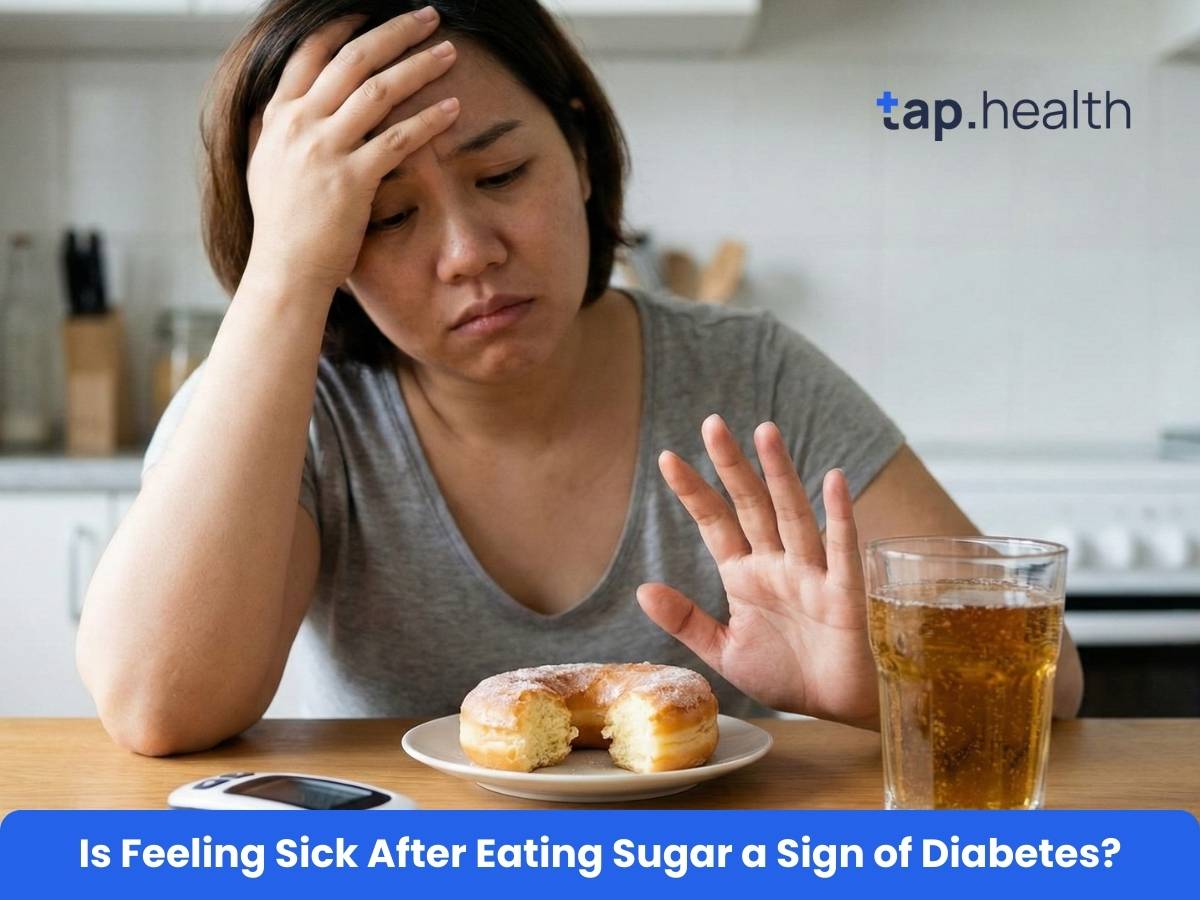
Feeling dizzy, shaky, or nauseous after eating sugary foods can be scary. Many people immediately wonder, “Does this mean I have diabetes?”
The truth is more nuanced. These symptoms can be linked to diabetes, but they can also happen for many other harmless reasons.
This article breaks everything down in simple language so you understand:
- How your body handles sugar
- Why you might feel sick after eating sweets
- When these symptoms may indicate diabetes
- What tests can confirm your blood sugar status
Let’s go step by step.
Does Sugar Cause Type 2 Diabetes?
Many people believe sugar directly causes diabetes, but the truth is more nuanced. Sugar itself doesn’t instantly lead to diabetes, but consistently eating too much of it—especially in drinks—can raise your long-term risk. Here’s how sugar influences weight, insulin resistance, and overall metabolic health.
However, regularly consuming too much sugar, especially in sugary drinks, can increase your risk of diabetes over time.
1. Sugar adds calories → weight gain → insulin resistance
When you consume more calories than you burn, you gain weight. Extra belly fat makes your cells less responsive to insulin — a condition called insulin resistance, which is the starting point of type 2 diabetes.
2. Sugary drinks increase risk the most
Soda, sweetened juice, energy drinks, and sugary coffee drinks digest very quickly and cause sharp spikes in blood sugar.
Large Harvard studies show sugary beverages significantly increase diabetes risk.
3. Ultra-processed foods worsen the effect
Foods high in both sugar and fat — like pastries, desserts, and ice cream — make your body work harder to manage blood sugar.
Correct takeaway:
Sugar alone doesn’t instantly cause diabetes, but high sugar intake over the years — especially from sweet drinks — increases the risk.
How Does Your Body Process Sugar?
Your body depends on glucose for energy, and every time you eat sugar or carbs, your system works to break them down. The problem begins when this process becomes disrupted due to insulin resistance. Understanding how sugar moves through your body helps explain why symptoms appear after eating sweets.
1. Sugar breaks down into glucose
Your stomach and intestines convert carbohydrates into glucose, your body’s main fuel.
2. Glucose enters your bloodstream
This raises your blood sugar level.
3. Your pancreas releases insulin
Insulin acts like a key that helps glucose enter your cells.
4. Your cells use glucose as energy
Your brain, muscles, and organs run on this fuel.
5. Excess glucose is stored
If you eat more than you need:
- Some becomes glycogen (stored in the liver and muscles)
- Once glycogen stores are full, extra glucose converts to fat
Where problems start
When your cells stop responding well to insulin, glucose builds up in your blood instead of entering cells. This leads to high blood sugar, a hallmark of diabetes.
What Happens When You Eat Too Much Sugar?
When you eat more sugar than your body can manage, it leads to quick spikes and drops in blood sugar. These rapid changes can stress your body, causing uncomfortable symptoms. This section explains the typical reactions your body has when overloaded with sugar.
Common effects of eating too much sugar:
- Sugar crash: tiredness, irritability, weakness
- Nausea: too much sugar can upset your stomach
- Headache: from rapid blood sugar changes
- Dizziness: especially after a fast spike and drop
- Rapid heartbeat: your body releases adrenaline when blood sugar changes suddenly
- Thirst: your body tries to dilute excess sugar
- Gas & bloating: sugar can ferment in the gut
These reactions don’t always mean diabetes — but in some people, they can be early warning signs.
Is Feeling Sick After Eating Sugar a Sign of Diabetes?
Feeling unwell after sugary meals can be alarming, but it doesn’t always point to diabetes. However, for some people, it can be an early sign of insulin problems or blood sugar dysregulation. Below are the conditions where sugar sickness may be connected to diabetes.
Let’s separate the possibilities.
When Sugar Makes You Sick Because of Diabetes
1. Insulin resistance (prediabetes or early type 2 diabetes)
If your cells don’t respond well to insulin:
- Blood sugar stays high longer
- You may feel tired, nauseous, or shaky after sugary foods
This stage is often silent – many people don’t know they have insulin resistance.
2. Hyperglycemia (high blood sugar)
If your blood sugar rises too high:
- You may feel nauseous
- You may feel thirsty
- You may feel unusually tired
- Vision may blur
Important correction about vomiting:
Vomiting is not a common sign of mild blood sugar spikes.
It usually occurs in serious conditions like diabetic ketoacidosis (DKA) or hyperosmolar hyperglycemic state (HHS) – medical emergencies.
If high blood sugar is accompanied by vomiting, confusion, or deep breathing, seek emergency care immediately.
3. Reactive Hypoglycemia (low blood sugar after eating)
This is one of the most misunderstood conditions.
Reactive hypoglycemia happens when:
- Blood sugar rises after eating
- The body releases too much insulin
- Blood sugar drops too low 2–4 hours later
Symptoms include:
- Shakiness
- Sweating
- Weakness
- Hunger
- Feeling sick or faint
Important correction:
Reactive hypoglycemia is not diabetes, but it may be seen in people who are at risk or in the early stages of glucose regulation problems.
Only proper testing can determine this.
Non-Diabetic Reasons You Might Feel Sick After Eating Sugar
You can feel sick from sugar for many reasons unrelated to diabetes:
1. Sugar sensitivity
Some people naturally react strongly to sugar.
2. Eating sugar on an empty stomach
This causes a sharper blood sugar spike → worse symptoms.
3. Gut issues or imbalances
Too much sugar can feed bad bacteria, leading to gas, bloating, or nausea.
4. Food intolerances
The sugary food may contain dairy, gluten, or additives your body dislikes.
5. Dumping syndrome
Common after stomach surgery — sugar moves too fast through the digestive system.
6. Anxiety or stress
Stress hormones already affect digestion; sugar can intensify symptoms.
When You Should Suspect Diabetes
Feeling sick after sugar becomes concerning when accompanied by:
- Excessive thirst
- Frequent urination
- Blurry vision
- Fatigue all day
- Unexplained weight loss
- Tingling in hands or feet
- Slow-healing cuts
These are classic diabetes indicators.
How to Know for Sure: Diabetes Testing
If you suspect diabetes or blood-sugar issues, ask your doctor for these tests:
1. A1C Test
Shows average blood sugar for the past 2–3 months.
- 6.5% or higher → diabetes
- 5.7–6.4% → prediabetes
2. Fasting Plasma Glucose
Measures blood sugar after not eating for 8 hours.
- 126 mg/dL or higher → diabetes
- 100–125 mg/dL → prediabetes
3. Oral Glucose Tolerance Test (OGTT)
Measures blood sugar 2 hours after drinking a glucose drink.
- 200 mg/dL or higher → diabetes
These tests provide clear answers. Symptoms alone are not enough.
Do Artificial Sweeteners Increase Your Risk of Diabetes?
Artificial sweeteners are marketed as safer alternatives to sugar, but research shows mixed results. They don’t raise blood sugar directly, but they may influence appetite, gut bacteria, and long-term metabolic health. Here’s what science currently suggests about their impact on diabetes risk.
True: Artificial sweeteners do NOT raise blood sugar directly.
Partly true: Some studies suggest links between artificial sweeteners and higher diabetes risk.
Important nuance: Most studies showing risk are observational, meaning:
- People who already have weight issues or diabetes risk tend to choose diet drinks.
- This makes it difficult to prove the sweeteners caused the problem.
Gut bacteria may play a role
Some research shows that certain sweeteners may alter gut bacteria in ways that affect metabolism — but findings are mixed.
Best advice (evidence-based)
Instead of replacing sugar with artificial sweeteners, aim to reduce overall sweetness in your diet.
Better choices:
- Stevia
- Monk fruit
Use sparingly:
- Sucralose
- Aspartame
- Saccharin
Not because they “cause” diabetes — but because evidence about long-term metabolic effects is mixed.
The Bottom Line
Feeling sick after eating sugar does not automatically mean you have diabetes — but it can be a warning sign if:
- Symptoms happen frequently
- They are severe
- They come with classic diabetes symptoms
What you should do:
- Get tested (A1C, fasting glucose, OGTT).
- Reduce sugar intake — especially sugary drinks.
- Pair sugar with protein or fiber to avoid spikes.
- Track your symptoms to spot patterns.
- Seek urgent care if vomiting, confusion, or extreme fatigue occur with high blood sugar.
Listening to these early signals can help you prevent long-term problems.
FAQs on Is Feeling Sick After Eating Sugar a Sign of Diabetes?
1. Why do I feel nauseous after eating sugary foods?
Your blood sugar may be rising and falling quickly, or your stomach may simply be sensitive to sugar. It can also be an early sign of insulin resistance.
2. Is feeling shaky after sugar linked to diabetes?
It can be — shakiness is a common symptom of reactive hypoglycemia or spikes and drops in blood sugar.
3. Should I avoid sugar completely?
Not necessary. Focus on balanced meals, reducing sugary drinks, and pairing carbs with protein or fiber.
4. Is vomiting after sugar a sign of diabetes?
Not usually. Vomiting is typically linked to dangerously high blood sugar in emergencies like DKA, not normal sugar spikes. Seek immediate help if vomiting happens with high glucose.
5. What is the best test to check if sugar is making me sick because of diabetes?
Start with A1C and fasting glucose. If symptoms occur after meals, ask for an oral glucose tolerance test.