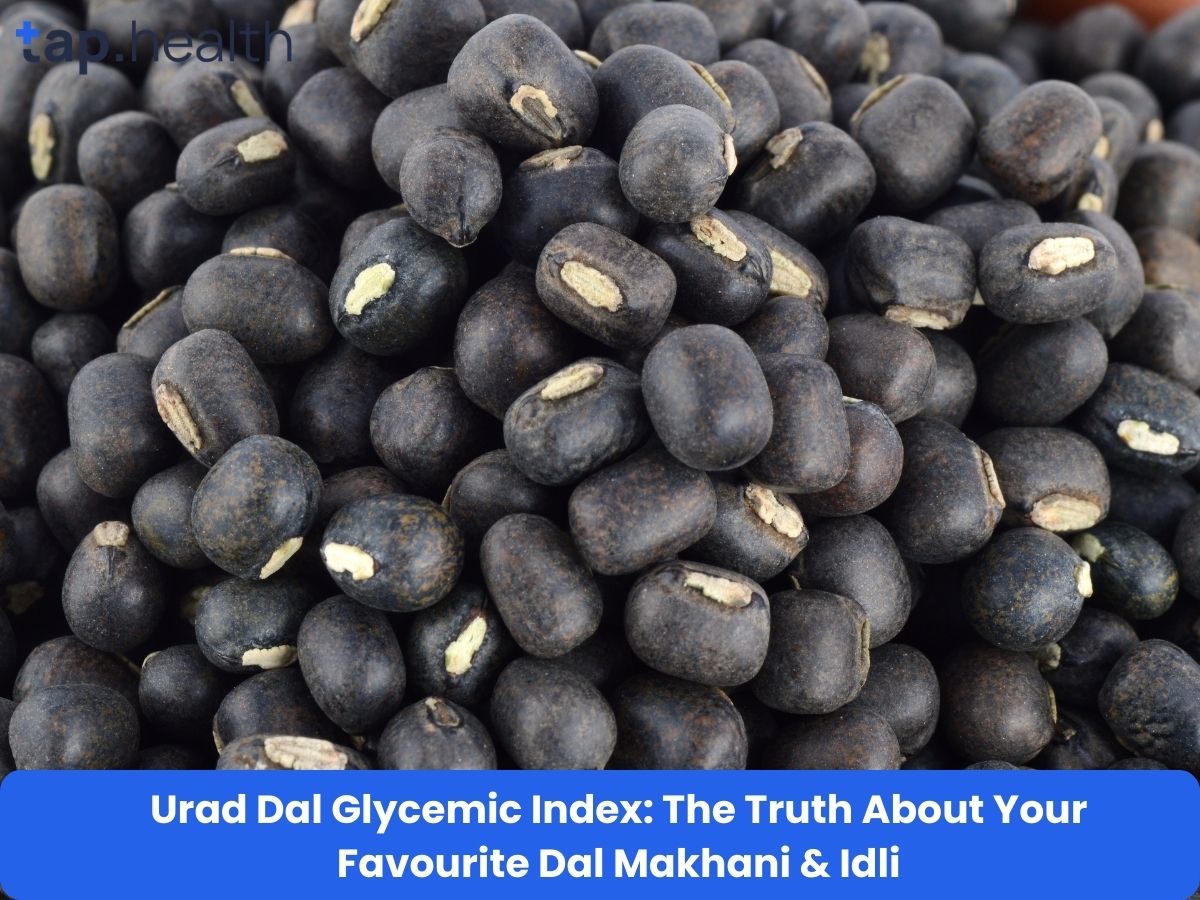
In India, our love for dal is unconditional. Whether it is the creamy Dal Makhani of Punjab, the fluffy Idlis of Tamil Nadu, or the crispy Medu Vada served at weddings, one ingredient binds them all: Urad Dal (Black Gram).
It is a staple in almost every Indian kitchen. But if you or a loved one has recently been diagnosed with diabetes, that jar of white or black lentils might suddenly look suspicious. You might be asking: “Can I still eat my favourite Dosa?” or “Will Urad Dal spike my sugar levels?”
To answer these questions, we need to look at the urad dal glycemic index.
In this comprehensive guide, we will peel back the layers (literally, since we eat both whole and split urad!). We will compare it with other household favourites like Moong and Toor dal, understand the science of blood sugar, and give you a clear, honest answer about whether this dal deserves a place on your plate.
What is Urad Dal?
Before we dive into the numbers, let’s identify what we are eating. Urad Dal, also known as Black Gram, comes in a few different avatars in the Indian market:
- Whole Urad Dal (Black): This has the black skin intact. It is used for Dal Makhani.
- Split Urad Dal (Chilka): Split but still has some black skin.
- Dhuli Urad Dal (White): Skinless and split. This is the main ingredient for Idli and Dosa batter.
Regardless of the form, Urad Dal is a powerhouse of nutrition. It is richer in protein than most other lentils and has a unique mucilaginous texture (that sticky quality) which makes our batters ferment so well.
Understanding Glycemic Index (GI)
To judge if Urad Dal is safe for diabetics, we use the Glycemic Index (GI).
Think of GI as a speedometer for glucose. It measures how fast a food raises your blood sugar on a scale of 0 to 100.
- Low GI (0-55): These foods digest slowly. They release sugar into the blood gradually, like a slow-burning candle.
- Medium GI (56-69): These cause a moderate rise.
- High GI (70+): These are like rocket fuel. They spike your sugar instantly.
For a diabetic, the goal is to stick to Low GI foods to avoid dangerous insulin spikes.
The Magic Number: Urad Dal Glycemic Index
So, what is the urad dal glycemic index?
The Glycemic Index of Urad Dal is approximately 43.
This places it firmly in the Low GI category.
Whether you are looking for the black urad dal glycemic index or the white urad dal glycemic index, the number hovers in this safe range (43–45). This means that eating Urad Dal will not cause a sudden spike in your blood sugar levels, making it a safe choice for most people with diabetes.
Why is the GI Low?
- High Fibre: Urad dal is packed with dietary fibre, both soluble and insoluble. Fibre acts like a barrier, slowing down the absorption of carbohydrates.
- Complex Carbs: Unlike the simple sugars in white rice, the carbs in Urad dal are complex chains that take time to break down.
- Protein Content: Protein further slows down digestion, ensuring a steady release of energy.
Nutritional Profile of Urad Dal
It is not just about the GI. Urad dal is a nutrient bomb.
- Protein: Excellent source of plant-based protein.
- Magnesium & Potassium: Crucial for heart health and controlling blood pressure.
- Iron: Good for preventing anaemia, especially in women.
When you search for “urad ki dal glycemic index”, remember that you are also searching for a heart-healthy, protein-rich superfood.
Comparison: Urad Dal vs. Other Dals
In an Indian house, we rotate our dals. Let’s see how Urad compares to its cousins in the dal glycemic index race.
1. Chana Dal Glycemic Index
Chana Dal (Bengal Gram) is the superstar of the diabetic world.
- GI: ~8 to 10.
- Verdict: This is exceptionally low. The chana dal glycemic index is one of the lowest among all grains and lentils. If you want the absolute safest option, Chana dal wins.
2. Moong Dal Glycemic Index
- Yellow Moong Dal: GI is roughly 29 to 38.
- Green Moong Dal Glycemic Index: Slightly lower (~29) because of the green skin (fibre).
- Verdict: Moong dal is lighter on the stomach than Urad and has a lower GI. It is easier to digest for people with gas issues.
3. Masoor Dal Glycemic Index
- GI: ~25 to 30.
- Verdict: Masoor (Red Lentil) cooks fast and has a very low GI. It is excellent for quick dinners.
4. Toor Dal Glycemic Index
- GI: ~29 to 35.
- Verdict: The standard dal for Sambar and Dal Tadka. It is very safe for diabetics.
Comparison Summary: While urad dal (GI 43) is higher than Chana (GI 8) or Moong (GI 29), it is still considered Low GI. It is perfectly safe, but Chana and Moong are slightly better for strict sugar control.
Glycemic Index of Urad Dal Vada
This is where things get tricky. We often don’t eat Urad Dal plain; we eat it as Medu Vada (fried donuts).
The glycemic index of urad dal vada is estimated to be around 55-60.
Wait, why did it increase?
- Frying: Deep frying removes water and adds fat. While fat slows down sugar absorption (keeping GI low-ish), the caloric density explodes.
- Refined Flour: Sometimes, restaurants add a little Maida or rice flour to make vadas crispy. This raises the GI.
The Danger: While the GI of a Vada might not look terrible, the fat load causes insulin resistance in the long run. A Vada is a “caloric bomb” rather than a “sugar bomb.”
Is Urad Dal Good for Diabetics?
Yes, absolutely. Here is why:
- Satiety: The high protein content keeps you full. You are less likely to snack on biscuits if you had a bowl of Dal Makhani (made with less butter) for lunch.
- Blood Sugar Control: The fibre helps regulate blood glucose levels.
- Nervous System Health: Ayurveda and modern science agree that Urad dal strengthens the nervous system, which is beneficial since long-term diabetes can affect nerves (neuropathy).
However, cooked urad dal glycemic index depends on the recipe.
- Dal Tadka: Healthy (Low GI).
- Dal Makhani: High fat (Low GI, but high calorie).
- Idli: Fermented (Good for gut, slightly higher GI due to rice).
Understanding Glycemic Load
We cannot talk about GI without discussing the urad dal glycemic index and load.
- Glycemic Load (GL) measures the amount of carbs in a serving.
- Formula: (GI x Carbs in serving) / 100.
Since Urad Dal has a moderate amount of carbohydrates, portion control is key. A small bowl (katori) has a low glycemic load. A massive plate of 4-5 Idlis (which are mostly rice and urad) has a high glycemic load.
Chana dal glycemic index and load is the lowest, making it the safest “all-you-can-eat” dal. With Urad, you should stick to 1-2 bowls.
Real-Life Scenario
Let’s meet Rajesh, a 50-year-old software engineer from Bangalore.
Rajesh was diagnosed with Type 2 Diabetes. He was a huge fan of South Indian breakfast. He loved his Idli-Vada combo. When his doctor told him to cut rice, he was devastated. He thought he had to stop eating Idlis too because they contain Urad Dal.
The Solution: His nutritionist explained that the Urad Dal wasn’t the enemy—the white rice in the Idli batter was.
- The Swap: Rajesh started making Moong Dal Idli and Whole Urad Dal Dosa (Pesarattu style, using whole black gram instead of just white batter).
- The Vada Fix: Instead of deep-fried Medu Vada, he started making baked vadas in an appe pan (paniyaram pan) using very little oil.
The Result: Rajesh kept his favourite flavours but lowered the overall GI of his breakfast. His HbA1c dropped from 7.5 to 6.8 in three months.
Expert Contribution
We consulted nutritional guidelines to bring you the facts.
Dr. S. Sharma, a Clinical Nutritionist, explains: “Urad dal is often misunderstood. Patients fear it because it is ‘heavy’ to digest. But for a diabetic, ‘heavy’ is actually good! It means the stomach takes time to break it down, preventing sugar spikes. The only caution I give is for uric acid. Since Urad dal is rich in purines, people with Gout or high uric acid should limit it. For pure diabetes management, it is excellent.”
Ayurvedic Perspective: Ayurveda classifies Urad Dal as Guru (heavy) and Snigdha (unctuous). It is recommended for building strength (Balya). However, it increases Kapha and Pitta, so it should be cooked with ginger and garlic to aid digestion.
Who Should Not Eat Urad Dal?
While whole urad dal glycemic index is low, it is not for everyone.
- High Uric Acid/Gout: Urad dal contains moderate purines. If you suffer from joint pain due to uric acid, switch to Moong dal.
- Gas and Bloating: Urad dal is notorious for causing flatulence. If you have IBS or severe gastric issues, ensure you soak it well and cook it with heavy spices (hing/asafoetida).
- Kidney Stones: Due to oxalate content, those with a history of kidney stones should consume it in moderation and drink plenty of water.
Recommendations Grounded in Proven Research and Facts
Based on the dhuli urad dal glycemic index and nutritional data, here are practical tips for your kitchen:
- Soak is Secret: Always soak whole Urad dal for 8 hours and split dal for at least 30 minutes. This reduces anti-nutrients and makes the protein easier to absorb.
- Spice it Right: Use Hing (Asafoetida), Adrak (Ginger), and Ajwain (Carom seeds) in the tadka. This counteracts the gas-forming properties.
- Mix Your Dals: Do not just eat Urad. Mix kala chana glycemic index (which is very low) with Urad dal for a “Mixed Dal” dish. This lowers the overall GI and improves the amino acid profile.
- Watch the Idli Ratio: Standard Idli batter is 3:1 (Rice:Urad). For diabetics, change this to 2:1 or substitute rice with Oats or Ragi. The oats glycemic index is lower than white rice, making the Idli healthier.
- Avoid “Dal Makhani” in Restaurants: Restaurant versions are loaded with cream and butter. Make “Home Style” whole Urad dal with just a teaspoon of ghee.
Conclusion
The verdict is clear: The urad dal glycemic index (approx 43) makes it a safe and healthy addition to a diabetic diet.
It is far superior to refined grains like wheat flour (Maida) or white rice. While it is not as low as Chana dal or Moong dal, its unique texture and high protein content make it indispensable in Indian cuisine.
You do not have to give up your Idli or Dal. You just need to be smart about how you cook it. Avoid the deep fryer, watch the portion size, and balance it with plenty of vegetables.
So, go ahead and enjoy that bowl of Dal. Your blood sugar—and your taste buds—will thank you.
Frequently Asked Questions (FAQ) on Urad Dal Glycemic Index
Which dal has the lowest glycemic index?
Chana Dal (Bengal Gram) generally has the lowest glycemic index, often cited around 8 to 10. This makes it the absolute best choice for strict blood sugar control.
Is urad dal good for diabetics?
Yes, Urad dal is good for diabetics. With a low GI of ~43 and high fiber content, it helps maintain steady blood sugar levels and provides essential protein.
What is the difference between black urad dal and white urad dal glycemic index?
The difference is minimal. Black urad dal (whole) has slightly more fiber due to the skin, potentially making its GI slightly lower than white urad dal (dhuli), but both fall within the low GI range (43-45).
Does soaking urad dal reduce its glycemic index?
Soaking primarily helps in reducing anti-nutrients and improving digestibility. While it doesn’t drastically change the GI number, it makes the nutrients more bioavailable and reduces bloating, which improves overall metabolic health.
Can I eat Medu Vada if I have diabetes?
You should eat Medu Vada sparingly. While the glycemic index of urad dal vada is moderate (~55-60), it is deep-fried and calorie-dense. The high fat can lead to delayed sugar spikes and weight gain. Baked or air-fried vadas are better options.
How does wheat flour glycemic index compare to urad dal?
Whole wheat flour glycemic index is typically around 54-65 (medium GI), whereas Urad dal is ~43 (low GI). This means Urad dal is a better option for blood sugar control than wheat roti.
Who should not eat urad dal?
People with high uric acid levels (Gout), kidney stones, or severe gastric issues (bloating/IBS) should limit or avoid Urad dal due to its purine content and gas-forming nature.
What is the glycemic index of green moong dal?
The green moong dal glycemic index is approximately 29. It is one of the easiest dals to digest and is highly recommended for diabetics and those recovering from illness.
References:
- Harvard Health Publishing: Glycemic index for 60+ foods. Link
- American Diabetes Association: Grains and Starchy Vegetables. Link
- National Institute of Nutrition (NIN), India: Dietary Guidelines for Indians. Link
- WebMD: Health Benefits of Lentils and Dals. Link
- University of Sydney: GI Search Database. Link
(Disclaimer: This content is for educational purposes only. Always consult your doctor or a certified dietitian before making significant changes to your diet, especially if you have diabetes or uric acid issues.)