tap.health logo
  • Diabetes Management
  • Health Assistant
  • About Us
  • Blog
  • Contact Us
Get Plan
  • Diabetes Management
  • Health Assistant
  • About Us
  • Blog
  • Contact Us
  • All Blogs
  • Diabetes
  • Which Diabetes Is the Worst: Type 1 or Type 2?

Which Diabetes Is the Worst: Type 1 or Type 2?

Diabetes
November 1, 2025
• 4 min read
Yasaswini Vajupeyajula
Written by
Yasaswini Vajupeyajula
Nishat Anjum
Reviewed by:
Nishat Anjum
ChatGPT Perplexity WhatsApp LinkedIn X Grok Google AI
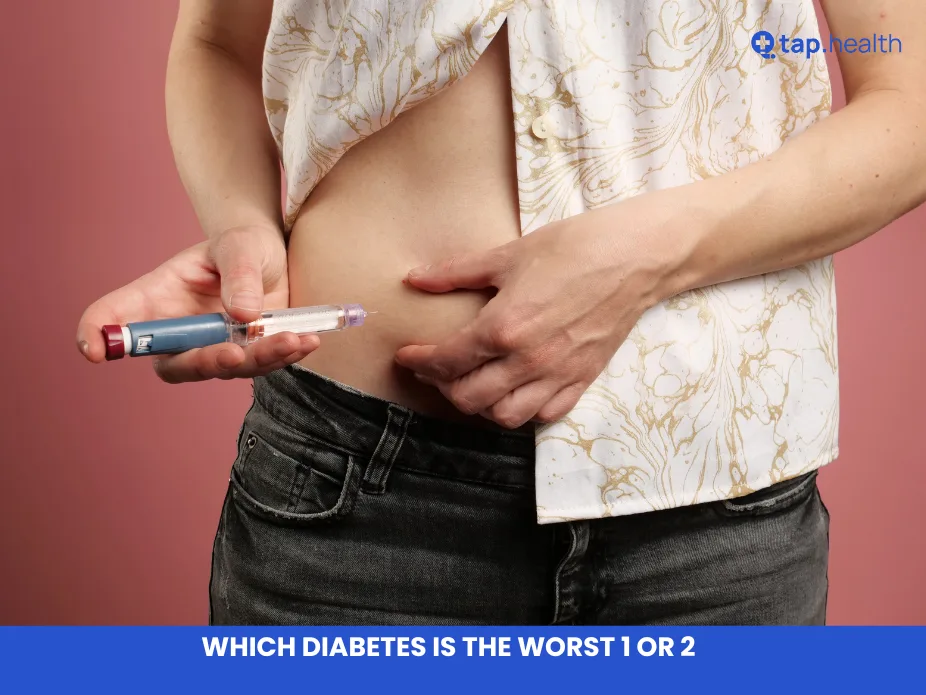
which diabetes is the worst 1 or 2

When it comes to diabetes, many people wonder, “Which type is worse, Type 1 or Type 2?” While both conditions affect blood sugar regulation and can lead to serious complications, their causes, management, and impact on daily life differ significantly. Let’s break this down in a simple, conversational way to help you understand the key differences and how each condition affects people.


Understanding the Basics of Type 1 and Type 2 Diabetes

Before we dive into comparisons, let’s clarify what these two types of diabetes entail:

What Is Type 1 Diabetes?

Type 1 diabetes is an autoimmune condition where the body mistakenly attacks the insulin-producing beta cells in the pancreas. This means the body can no longer produce insulin, a hormone that helps regulate blood sugar levels.

  • Cause: Autoimmune response (unknown triggers, possibly genetics or environmental factors).
  • Onset: Often diagnosed in children, teens, or young adults but can occur at any age.
  • Management: Requires daily insulin injections or an insulin pump.

What Is Type 2 Diabetes?

Type 2 diabetes occurs when the body becomes resistant to insulin or doesn’t produce enough insulin to maintain normal blood sugar levels.

  • Cause: A combination of genetic predisposition and lifestyle factors like poor diet, lack of exercise, and obesity.
  • Onset: Commonly diagnosed in adults over 45, but increasing in younger populations.
  • Management: Managed through lifestyle changes, oral medications, and sometimes insulin therapy.

Which Diabetes Is “Worse”?

The answer depends on the perspective. Let’s explore several factors:

Severity of Symptoms

  • Type 1 Diabetes: Symptoms often appear suddenly and are severe, such as extreme thirst, frequent urination, and rapid weight loss. This sudden onset can be life-threatening if not treated immediately.
  • Type 2 Diabetes: Symptoms develop gradually and may go unnoticed for years, making it harder to detect early.

Verdict: Type 1 is more immediate and severe at diagnosis, but Type 2 can silently damage the body over time.

Long-Term Complications

Both types of diabetes can lead to complications like heart disease, kidney damage, nerve damage, and vision loss if poorly managed.

  • Type 1 Diabetes: Long-term risks are similar to Type 2, but strict insulin management adds complexity.
  • Type 2 Diabetes: Higher association with obesity and lifestyle factors may lead to additional risks like fatty liver disease or metabolic syndrome.

Verdict: Both types have serious risks; the “worse” outcome depends on how well the condition is managed.

Daily Management

  • Type 1 Diabetes: Requires constant monitoring, insulin injections, and careful carbohydrate counting to maintain blood sugar balance.
  • Type 2 Diabetes: May initially involve fewer medical interventions, but progression can lead to similar management challenges as Type 1.

Verdict: Type 1 demands immediate and lifelong attention, while Type 2 can progressively become equally demanding.

Also read this – can vitamin b12 deficiency be a sign of cancer


Real-Life Scenarios: Living with Type 1 and Type 2 Diabetes

Let’s hear from real people who live with these conditions:

Arjun, a college student in Delhi, was diagnosed with Type 1 diabetes at 15. He says, “It was a big lifestyle change. Carrying insulin everywhere and checking my sugar levels multiple times a day was overwhelming at first. But with time, I’ve learned to manage it and not let it hold me back.”

On the other hand, Meera, a homemaker from Chennai, discovered she had Type 2 diabetes in her late 40s. “It felt like a wake-up call. My doctor said I needed to exercise and change my diet. It wasn’t easy at first, but now I feel healthier than ever.”

These stories show that both conditions require adjustments and can be managed successfully with the right approach.

Also read this – Diabetes and Piercings: Minimizing Infection Risk and Complications


Expert Contributions: Insights from Healthcare Professionals

Dr. Ramesh Kapoor, an endocrinologist in Bangalore, explains, “Neither Type 1 nor Type 2 diabetes is inherently worse—it’s about how well the individual manages their condition. Poorly managed diabetes, regardless of type, can lead to severe complications.”

Dr. Kapoor adds, “The good news is that with advancements in technology, such as continuous glucose monitors and new medications, managing diabetes is becoming more accessible and effective.”


Recommendations Grounded in Proven Research and Facts

Here’s how you can manage diabetes effectively, no matter the type:

1. Stay Informed

Understand your condition and its management requirements. Knowledge is power when it comes to living with diabetes.

2. Monitor Blood Sugar Levels

Regular monitoring helps you catch any fluctuations early and make necessary adjustments.

3. Adopt a Balanced Diet

Focus on whole grains, lean proteins, vegetables, and healthy fats. Avoid sugary and processed foods.

4. Stay Active

Exercise improves insulin sensitivity and helps maintain healthy blood sugar levels. Even a 30-minute walk can make a difference.

5. Follow Your Treatment Plan

Whether it’s insulin therapy for Type 1 or medications for Type 2, adhering to your prescribed plan is critical.


FAQs on Which Diabetes Is the Worst: Type 1 or Type 2?

Is Type 1 diabetes more dangerous than Type 2?

Not necessarily. Both conditions can be dangerous if not properly managed. Type 1 requires immediate insulin use, while Type 2 may progress over time.

Can Type 2 diabetes turn into Type 1?

No, they are distinct conditions with different causes. However, poorly managed Type 2 diabetes can require insulin, similar to Type 1.

Which diabetes is harder to live with?

Type 1 requires constant attention from the outset, while Type 2 may become progressively difficult to manage. Both have unique challenges.

Can lifestyle changes reverse Type 2 diabetes?

In some cases, significant lifestyle changes can bring blood sugar levels back to a non-diabetic range. However, this is not the same as a cure.

Are complications the same for both types of diabetes?

Yes, both types can lead to complications like heart disease, nerve damage, and kidney problems if poorly managed.

What Type of Diabetes Is Worse?

Both Type 1 and Type 2 diabetes are serious, but in different ways.

  • Type 1 diabetes is usually considered more severe in the short term because the body stops making insulin completely. Without insulin, blood sugar can rise quickly and become life-threatening. People with Type 1 must take insulin every day to survive.
  • Type 2 diabetes develops more slowly and is often linked to lifestyle factors. It can be managed with healthy eating, exercise, and medication. However, if left untreated, Type 2 diabetes can cause serious long-term complications like heart disease, kidney failure, and nerve damage.
Tags
A1C test diabetes heart health diabetic retinopathy fruit and blood sugar type 1 diabetes how to lower HbA1c diabetic breakfast ideas post-meal blood sugar Indian diabetes plate foods for diabetes shopping diabetes and alcohol low blood sugar at night diabetes excessive thirst insulin site rotation diabetes curd milk for diabetes can diabetics eat apple why diabetes is considered as a lifestyle disease blood pressure diabetes eye test rice and diabetes type 1 diabetes symptoms fasting sugar normal range PCOS and diabetes blood sugar after food diabetes portion control diabetes kidney tests alcohol blood sugar diabetes diabetes sweating at night diabetes dry mouth insulin lumps tea and coffee in diabetes can diabetics drink milk apple blood sugar Medicine lifestyle diabetes cholesterol diabetes kidney care can diabetics eat rice insulin diabetes high fasting blood sugar PCOS insulin resistance postprandial glucose low glycaemic index foods for diabetes urine albumin diabetes can diabetics drink alcohol diabetes headache frequent urination diabetes diabetes weight gain coffee diabetes best milk for diabetes eggs for diabetes Health type 2 diabetes lifestyle disease living with diabetes diabetic kidney disease diabetes diet India prediabetes diet reverse prediabetes naturally PCOS diabetes risk dawn phenomenon diabetes low GI foods India eGFR diabetes diabetes and dizziness high blood sugar headache diabetes fatigue diabetes and weight gain tea diabetes peanuts for diabetes are eggs good for diabetes Lifestyle exercise and diabetes diabetes habits kidney tests diabetes morning blood sugar prediabetes food prediabetes reversal gestational diabetes diet Indian morning sugar high diabetes low GI diet diabetes and dental problems dizziness diabetes low blood sugar headache diabetes tiredness insulin weight gain roti for diabetes are peanuts good for diabetes egg diabetes Home remedies blood sugar control diabetes management high blood sugar symptoms fasting sugar high lower diabetes risk how to prevent type 2 diabetes pregnancy diabetes diet high fasting sugar in morning diabetes and fatty liver diabetes gum disease low sugar dizziness blood sugar monitoring at home high blood sugar tiredness diabetes swollen feet best roti for diabetes peanuts blood sugar paneer for diabetes Fitness physical activity insulin resistance hyperglycemia symptoms dawn phenomenon diabetes and weight loss insulin resistance diet gestational diabetes meal plan diabetes and cholesterol fatty liver diabetes dry mouth diabetes diabetes leg pain when to check blood sugar diabetes constipation swollen feet diabetes chapati diabetes sweet potato for diabetes is paneer good for diabetes Prevention diabetes foot care insulin sensitivity diabetes warning signs diabetes myths weight loss diabetes Indian foods for insulin resistance diabetic foot ulcer diabetes lipid profile insulin resistance fatty liver diabetes urine infection diabetic leg cramps blood glucose monitoring diabetes and constipation diabetes foot swelling can diabetics eat dates can diabetics eat sweet potato paneer diabetes Hygiene diabetic foot type 2 diabetes risk normal blood sugar levels diabetes facts insulin resistance weight loss improve insulin sensitivity diabetes foot wound cholesterol in diabetes diabetes skin problems frequent UTI diabetes diabetes nerve pain legs metformin for diabetes constipation diabetes can diabetics eat banana dates for diabetes sweet potato blood sugar poha for diabetes Ailments foot health diabetes and sleep fasting blood sugar diabetes misconceptions diabetes medicine safety diabetic neuropathy symptoms diabetic foot ulcer warning signs can diabetics eat mango diabetes itching urinary infection diabetes diabetes slow wound healing metformin side effects diabetes numbness in hands banana for diabetes dates blood sugar jaggery for diabetes is poha good for diabetes Hindi gestational diabetes poor sleep blood sugar HbA1c diabetes symptoms in women diabetes medicines diabetes nerve damage diabetes and blood pressure mango and diabetes dark patches diabetes diabetes stomach problems diabetes wounds metformin safety diabetes tingling hands banana blood sugar papaya for diabetes is jaggery good for diabetes poha blood sugar skin diseases pregnancy diabetes sleep and diabetes diabetes in India women diabetes signs diabetes treatment advice tingling feet diabetes high blood pressure diabetes mango sugar diabetes walking after meals for diabetes diabetic gastroparesis diabetic wound care diabetes ketoacidosis warning signs diabetic neuropathy hands coconut water and diabetes is papaya good for diabetes gur for diabetes sprouts for diabetes acne vulgaris symptoms blood sugar pregnancy diabetes and stress diabetes risk factors India diabetes risk women Indian diabetic diet chart diabetes eye disease diabetes heart kidney risk diabetes reversal vs remission post meal walk diabetes diabetes bloating nausea diabetes yeast infection DKA symptoms fasting with diabetes coconut water for diabetes papaya blood sugar watermelon for diabetes are sprouts good for diabetes AI Search low blood sugar stress blood sugar diabetes prevention India diabetes symptoms in men diabetic meal plan diabetic eye test borderline HbA1c diabetes remission walking lowers blood sugar diabetes sick day rules diabetes fungal infection ketones diabetes diabetes fasting safety can diabetics drink coconut water oats for diabetes can diabetics eat watermelon sprouts blood sugar blood sugar hypoglycemia cortisol diabetes best fruits for diabetes men diabetes signs HbA1c test high protein breakfast for diabetes HbA1c 5.7 to 6.4 reverse type 2 diabetes diabetes grocery list India diabetes during illness diabetes vaginal itching diabetes blurry vision can diabetics fast curd for diabetes oatmeal diabetes watermelon blood sugar fasting glucose diabetes safety diabetes eye care diabetes fruits diabetes risk men HbA1c normal range diabetes breakfast India prediabetes HbA1c diabetes plate method diabetic food list India blood sugar fever infection diabetes night sweats high blood sugar blurry vision insulin injection sites is curd good for diabetes are oats good for diabetes apple for diabetes
More blogs
K. Siva Jyothi
K. Siva Jyothi
• May 30, 2026
• 19 min read

Apple for Diabetes: Blood Sugar Benefits, Best Time to Eat, Portion Size, and Juice Risks

A detailed guide to apple for diabetes, including fibre, blood sugar effects, portion size, apple juice risks, pairing ideas, and glucose monitoring.

Diabetes
which diabetes is the worst 1 or 2
Kazima Qureshi
Kazima Qureshi
• May 30, 2026
• 19 min read

Eggs for Diabetes: Blood Sugar Benefits, Cholesterol, Best Cooking Methods, and Meal Ideas

A practical guide to eggs for diabetes, covering blood sugar, protein, cholesterol, heart health, cooking methods, and Indian breakfast ideas.

Diabetes
which diabetes is the worst 1 or 2
Naimish Mishra
Naimish Mishra
• May 30, 2026
• 19 min read

Poha for Diabetes: Blood Sugar Impact, Portion Size, Add-Ins, and Healthier Breakfast Tips

A practical guide to poha for diabetes, including flattened rice, blood sugar impact, portion size, vegetables, peanuts, and healthier breakfast tips.

Diabetes
which diabetes is the worst 1 or 2
Do you remember your last sugar reading?
Log and Track your glucose on the Tap Health App
All logs in one place
Smart trend graphs
Medicine Reminder
100% Ad Free
Download Now

Missed your diabetes meds

again? Not anymore.

Get medicine reminders on your phone.

✓ Glucose diary and Insights
✓ Smart Nudges
✓ All logs at one place
✓ 100% Ad free
Download Free
tap health
tap.health logo
copyright © 2025
2nd Floor,Plot No 4, Minarch Tower,
Sector 44,Gurugram, 122003,
Haryana, India
  • About Us
  • Blog
  • Doctor login
  • Contact Us
  • Privacy Policy
  • Return / Shipping Policy
  • Terms and Conditions
Get Your Free AI Diabetes Coach